


Soldato
- Joined
- 22 Feb 2010
- Posts
- 5,321
- Location
- Southampton
crikey
crikey!!
crikey!!
Last edited:




 united24media.com
for interest
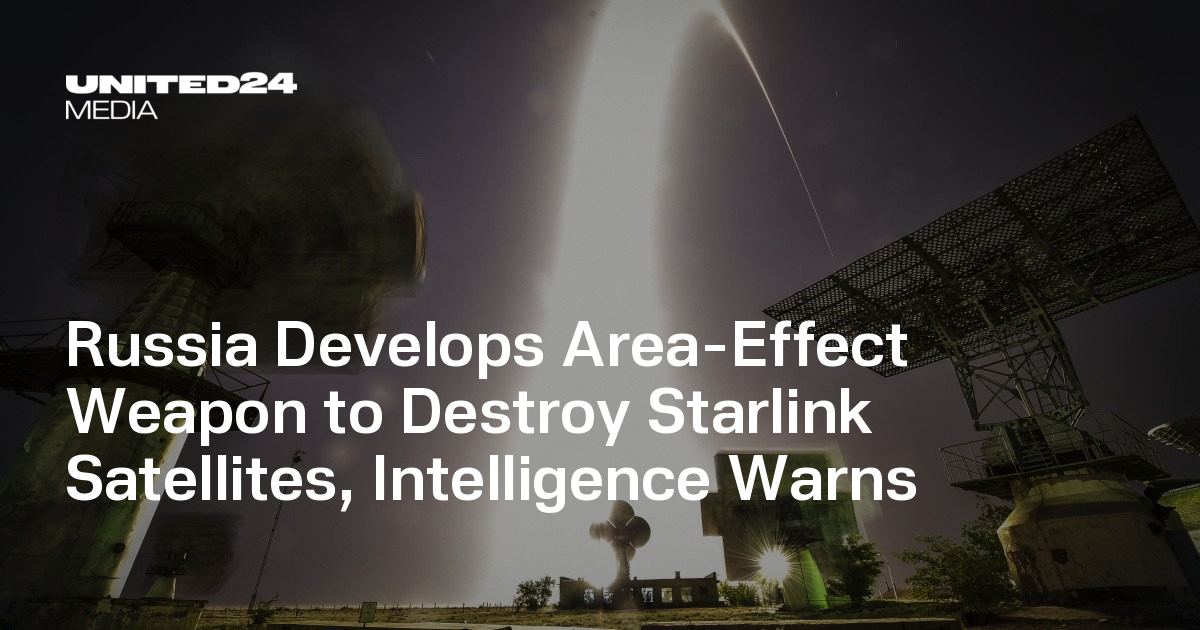
its not the only report ive seen floating aroundRussia Develops Area-Effect Weapon to Destroy Starlink Satellites, Intelligence Warns
Russia is reportedly developing a new anti-satellite weapon aimed at disrupting Starlink satellites, raising concerns over space debris and safety.
which i see potentialy a bigger issue of Kessler syndrome.. ISS and Chinas station as well/

Always the ******* Russians, at the is war the country needs to be cut up and divided to other nations.for interest
its not the only report ive seen floating aroundRussia Develops Area-Effect Weapon to Destroy Starlink Satellites, Intelligence Warns
Russia is reportedly developing a new anti-satellite weapon aimed at disrupting Starlink satellites, raising concerns over space debris and safety.
which i see potentialy a bigger issue of Kessler syndrome.. ISS and Chinas station as well/
Surely stuff like Starlink that are in a very low LOE that atmospheric drag would clear up that regions pretty quickly, I mean yeah They could make it risky and costly to operate satellites in LOE for a number of years. My understanding is that the risk to stuff in higher orbits is generally overstated at least at the moment, there isnt nearly enough saturation.for interest
its not the only report ive seen floating aroundRussia Develops Area-Effect Weapon to Destroy Starlink Satellites, Intelligence Warns
Russia is reportedly developing a new anti-satellite weapon aimed at disrupting Starlink satellites, raising concerns over space debris and safety.
which i see potentialy a bigger issue of Kessler syndrome.. ISS and Chinas station as well/
Surely stuff like Starlink that are in a very low LOE that atmospheric drag would clear up that regions pretty quickly, I mean yeah They could make it risky and costly to operate satellites in LOE for a number of years. My understanding is that the risk to stuff in higher orbits is generally overstated at least at the moment, there isnt nearly enough saturation.
Unless Russia were to send up hundreds or thousands of these to effectively saturate LOE it would have a limited, localised short lived impact.
*Edit* For some reason I thought Starlink operated much lower, seems I confused their initial deployment orbit for their operating orbit altitude.

Certainly doesn't sound like your run of the mill cough, cold or flu.Been a bit quiet on the space news front over the holiday period. However, Chris Hadfields post on social media brought my attention to current medical situation ongoing on ISS. Apparently a crew member from Crew 11 is unwell, from the reports its nothing critical, and they are reportedly stable. Out of caution they cancelled a planned spacewalk and have decided to return 4 crew members back a month early on the Dragon capsule to ensure the safety of the crew member.
That will leave the running of the station to 3 members (Soyuz team). This will mean experimentation and such will take a back seat until the next Dragon mission launches next month.
NASA will bring astronauts home early from ISS over medical issue
Crew-11 has been on the International Space Station since August last year and was due to return around May this year, but will now come home in the coming days.news.sky.com
Certainly doesn't sound like your run of the mill cough, cold or flu.
sounds like a rubbish sequel to spaceballsSpace Covid!
That is certainly what they used to do Apollo era and all that. I imagine there is a reduced window when they keep them isolated. Probably get tons of vaccinations too.Out of interest, how do they minimise stuff like flu etc in space. Before they go up as they essentially quarantined for a period of time?
That is certainly what they used to do Apollo era and all that. I imagine there is a reduced window when they keep them isolated. Probably get tons of vaccinations too.


As an aside, there was an astronaut called Jonny Kim who just landed back after a 6 month stint up there - besides being a Harvard medical doctor, he is also a Navy Seal and qualified naval pilot.
Jonny Kim - Wikipedia
en.wikipedia.org
I can just about get to work on timeThe literal best medical care available.
As an aside, there was an astronaut called Jonny Kim who just landed back after a 6 month stint up there - besides being a Harvard medical doctor, he is also a Navy Seal and qualified naval pilot.
Just in case you thought you were excelling at life
Jonny Kim - Wikipedia
 Thats impressive!