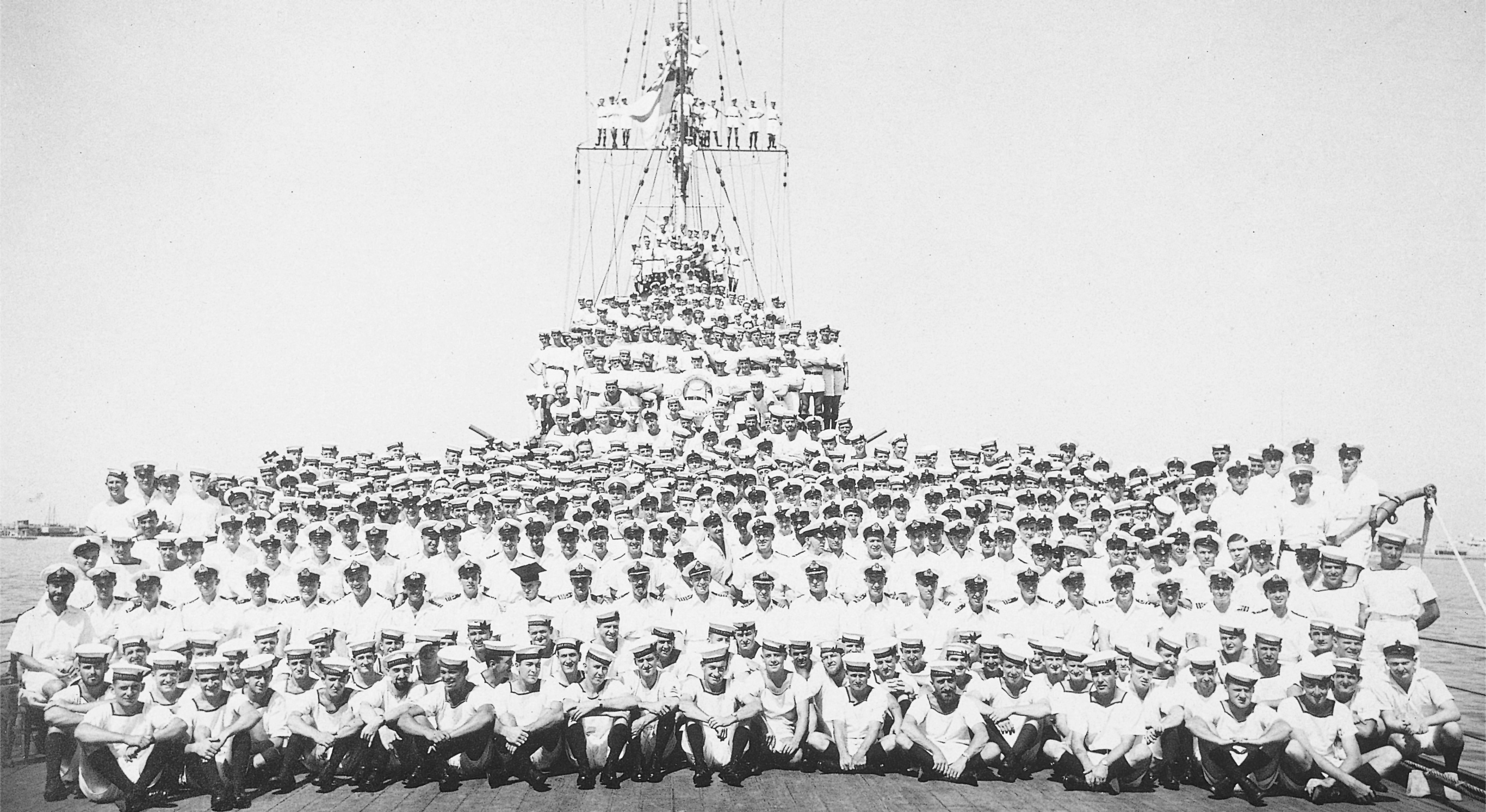
Its Currenty 2:47am Central Australian time. So Today the 25 of April is Anzac day.
Im posting this now because i wont be online during the day due to leaving the house at 5am for Anzac day.
Anzac day is the day we have down here to say Thank you for the Sacrifice our Soldiers have made over the years and gives the ex Service men and women and there familys to march through the citys with there units.
Anzac Day is Also the only day of the year were Two up is ment to be played
I have mades threads about it for the last 2 years if you want to look them up, they are both different.
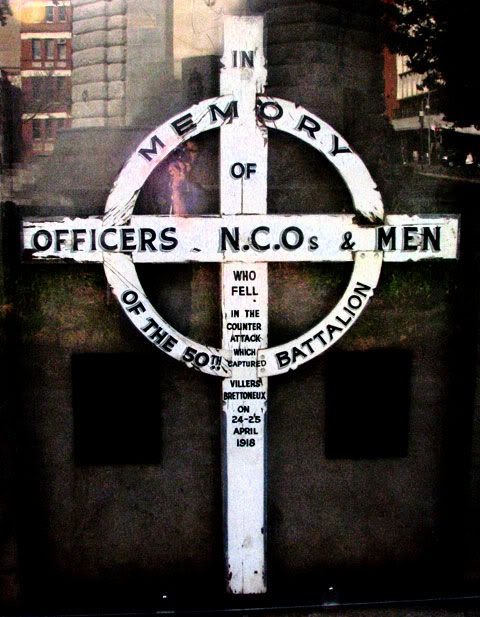
This year is the 90th anniversary of Austrialian Troops Recapturing the town of Villers-Bretonneux France.
Heres a small article from Wiki on it
And here is a News Article
http://www.theage.com.au/news/natio...1208743142170.html?page=fullpage#contentSwap2
Thats just one Battle, But there are many others in Australian History that shows the Willingness and Determination of our troops.
We have never had the biggest Army but we make up for it with Courage, Spirit and fight.
Remember the Anzacs
http://en.wikipedia.org/wiki/Anzac_day
Im posting this now because i wont be online during the day due to leaving the house at 5am for Anzac day.
Anzac day is the day we have down here to say Thank you for the Sacrifice our Soldiers have made over the years and gives the ex Service men and women and there familys to march through the citys with there units.
Anzac Day is Also the only day of the year were Two up is ment to be played
I have mades threads about it for the last 2 years if you want to look them up, they are both different.
This year is the 90th anniversary of Austrialian Troops Recapturing the town of Villers-Bretonneux France.
Heres a small article from Wiki on it
In the First World War, on 24 April 1918, the village of Villers-Bretonneux was the site of the world's first battle between two tank forces: three British Mark IVs against three German A7Vs. Neither side won, but the next day the village was liberated by ANZAC troops at a cost of over twelve hundred Australian lives. The people of Villers-Bretonneux remain indebted to Australia for this feat. The town's mayor spoke of the Australian troops in 14 July 1919 when unveiling a memorial in their honour:
"The first inhabitants of Villers-Bretonneux to re-establish themselves in the ruins of what was once a flourishing little town have, by means of donations, shown a desire to thank the valorous Australian Armies, who with the spontaneous enthusiasm and characteristic dash of their race, in a few hours chased an enemy ten times their number...They offer a memorial tablet, a gift which is but the least expression of their gratitude, compared with the brilliant feat which was accomplished by the sons of Australia...Soldiers of Australia, whose brothers lie here in French soil, be assured that your memory will always be kept alive, and that the burial places of your dead will always be respected and cared for..."
The Australian War Memorial in France is located in Villers-Bretonneux and within it lie the graves of over 770 Australian soldiers, as well as those of other Commonwealth soldiers involved in the campaign. The school in Villers-Bretonneux was built using donations from school children of Victoria, Australia (many of whom had relatives perish in the town's liberation), and above every blackboard is the inscription "N'oublions jamais l'Australie" (Never forget Australia). The annual ANZAC Day ceremony is held at this village on the weekend nearest the 25th April. Traditionally, Australian commemorations have focused on Gallipoli. However, the 2008 ANZAC Day commemoration focused on the Western Front, and the dawn service marking the 90th anniversary of the end of World War I was held at Villers-Bretonneux.
And here is a News Article
Ninety years ago today, decisive action by two Australian AIF brigades, led by Brigadier-General Pompey Elliott, saved a small French town. For the first time, an official dawn service will be held to honour the soldiers on the Western Front.
TODAY is not only the 93rd anniversary of the Gallipoli landing, it is also the 90th anniversary of an Australian exploit so special that Sir John Monash described it at the time as the finest thing done in the war by any soldiers of any army.
As a result, thousands of Australians are assembling today for a novel commemoration. For decades, the main overseas focus on Anzac Day has been Anzac Cove. This year is different. Today, for the first time, there will be a large-scale, official dawn service at the Western Front, with other observances to follow.
The main focus of these events, including today's service, is the French town of Villers-Bretonneux. The town is the site of Australia's main WWI memorial at the Western Front, and has a Victoria Street, a Melbourne Street and even a Kangaroo Restaurant. But it is what happened there 90 years ago that makes it so fitting a setting for this year's commemorations.
The Germans launched a massive offensive on March 21, 1918. At the Somme they drove the British back about 60 kilometres, an immense distance considering the conflict had been mostly static for more than three years. For the British, this was the biggest crisis of the war. There was widespread concern that after years of fierce fighting, awful hardships and frightful casualties, Britain and its allies might well lose the war. Units from the Australian Imperial Force were rushed to the rescue.
One of them, the 15th Australian Brigade, was led by an extraordinary character. Brigadier-General Harold Edward "Pompey" Elliott, the AIF's most famous fighting general, was a charismatic, controversial and conspicuously effective leader. A brilliant tactician and remarkably brave, he was renowned for never sending anyone anywhere he was not willing to venture himself. His volatile temperament created a stream of "Pompey" anecdotes that amused his men and disconcerted his superiors. No Australian general was more revered by those he led or better known beyond his own command.
Elliott had seen plenty of the war. He was wounded at the Gallipoli landing. At Lone Pine, where he was an inspiring frontline presence, four of his men won the Victoria Cross. His brigade was destroyed in the disaster of Fromelles, where 5533 Australians became casualties in the most tragic 24 hours in Australian history. Despite all that Elliott had endured since April 1915, he had no doubt that the German assault in March 1918 had ushered in the climax of the war.
He was intensely animated as his brigade was rushed here and there to fortify vulnerable sectors in the British defence.
He was also extremely proud. The Australians sent to vulnerable spots, like his own brigade, were undeterred by the dismay and disarray they encountered. Civilians whose homes had been in the path of the German advance were in terrified retreat, but some downcast French women became jubilant when they realised that Australians were arriving in their sector.
They turned around and retraced their steps amid fervent cries of "Vive l'Australie!", such was their faith that the AIF would halt the Germans. Reinforcing their confidence was the gruff reassurance from Australian soldiers: "Fini retreat madame, beaucoup Australiens ici." (No more retreat madame, many Australians here.)
"I was never so proud of being an Australian as I am today," Pompey Elliott declared.
However, he was concerned about the situation near Villers-Bretonneux. The Germans' massive offensive may have been beginning to over-extend, but this was not evident at the sharp end. On the contrary, there was still acute anxiety about the gravest crisis of the greatest war there had ever been. The Germans were still threatening the city of Amiens. In front of Amiens, overlooking it from the east, was the strategically vital town of Villers-Bretonneux.
Elliott was concerned because the important task of safeguarding Villers-Bretonneux had been allocated to a British division, and he believed its positioning was flawed. He concluded that the Germans would again attack the town, that the British would be unable to hold it, that his brigade (then stationed nearby) would be directed to recapture it, and that his favourite encirclement manoeuvre would do the trick. All four conclusions proved correct.
On April 24, 1918, the Germans did attack, the British were driven back, and Elliott was itching to put his plan into action — but had to wait with escalating frustration while the British wasted valuable hours attempting counter-attacks of their own that proved predictable failures. Concern about this state of affairs reached the highest levels.
Elliott was pacing around his headquarters pressing his superiors for permission to strike. For his men, who knew he wanted them to counter-attack and could not understand the delay, it was a long and trying day. Stretcher-bearer David Whinfield recorded in his diary that the strain of this "deadly suspense" was overwhelming. "It is a terrible time," he wrote. "Nerves are being shredded … It is too much for mortals."
At last, however, Elliott was authorised to counter-attack. The plan adopted was basically his, but with a significant variation. His brigade would not, as he had envisaged, be providing both pincers of his encirclement manoeuvre, but one, north of Villers-Bretonneux, while the 13th Australian Brigade would advance as the other pincer south of the town.
It was a daunting enterprise. Two independent spearheads were to penetrate deep into enemy-held territory, dealing with whatever resistance they encountered, and to maximise surprise there would be meagre artillery support. The 15th Brigade also had to manage several changes of direction during an unusually dark night.
Even some of Elliott's men felt the operation was a perilous gamble. Charles Bean, Australia's official correspondent who was familiar with the AIF and what it was capable of, felt very gloomy about the planned counter-attack: "I don't believe they have a chance. Went to bed thoroughly depressed … feeling certain that this hurried attack would fail hopelessly."
The late start of Elliott's brigade did not augur well. A company on its way to the start line was told to make a detour around a gassed area, and became lost in the dark. The brigade set off almost two hours late. They were "tugging and straining at the leash", Lieutenant-Colonel Jack Scanlan observed. After midnight passed, awareness spread that it had become April 25, and they had a chance to mark the third anniversary of the original Anzac Day with a distinctive feat. Elliott's men pressed on, quiet and resolute, despite barbed wire and sporadic shellfire. When they reached a road north of the town they paused to take bearings.
But they were detected by Germans not far ahead, who sent flares skywards. The Australians stopped still as one, a credit to their training and discipline, but a German machine-gun began firing erratically. Captain Eric Young, a 23-year-old St Kilda bookkeeper, gave the order to charge.
Elliott's men, unleashed at last after a day of unrelenting tension, charged forward with a raw spontaneous roar. The noise was terrifying, Scanlan wrote, "sufficient to make the enemy's blood run cold".
The unsettled Germans reacted with desperate but mostly inaccurate shooting. They were swiftly overwhelmed. The northern pincer advance was spectacularly successful. Private Whinfield steeled himself to participate so effectively, despite his frayed nerves, that he was awarded the Military Medal.
What, then, of the southern pincer? The men of Australia's 13th Brigade, commanded by redoubtable Queenslander William Glasgow, had just arrived having marched almost 13 kilometres to reach the battle zone. As they moved forward from the start line, a stumbling block became evident. The 13th Brigade had been assured by the British that they had quelled enemy resistance in a wood to the north, but machine-guns firing from this quarter inflicted such casualties that progress on the left of the 13th Brigade advance became impossible.
Two West Australians, Lieutenant Cliff Sadlier and Sergeant Charlie Stokes, led a small band of daredevils directly into the trees to silence the machine-guns. This impromptu initiative seemed suicidal, but their determination and audacity overwhelmed the startled Germans.
Sadlier, Stokes and their comrades (initially six) tackled and silenced no fewer than six machine-guns. When Sadlier, who was wounded twice, was knocked out of the fight, Stokes and only two men were left, but two resourceful corporals materialised to help complete the astonishing exploit. Sadlier was awarded the Victoria Cross and Stokes the Distinguished Conduct Medal.
With this stumbling block brilliantly removed, the left of the southern pincer's advance resumed. Glasgow's men encountered further machine-gun posts, wire and other obstacles but persevered, despite more casualties than Elliott's brigade. The two pincers did not connect east of Villers-Bretonneux as planned, but they ended up close enough to ensure success. Amiens was under threat no longer.
"In my opinion, this counter-attack, at night, without artillery support, is the finest thing yet done in the war, by Australians or any other troops," declared Major-General John Monash at the time. This was not trumpet-blowing: neither Monash nor his division were involved.
Commanders all the way up to the supreme Allied leader, Generalissimo Ferdinand Foch, acclaimed the outstanding feat. Foch extolled the "altogether astonishing valiance" of the 13th and 15th AIF brigades.
This was not Pompey Elliott's only connection with Villers-Bretonneux. He and his brigade were back there on August 8, 1918. Elliott was in a dug-out in the very path of his brigade's celebrated counter-attack, poised to advance as part of an ambitious assault.
The operation unfolded like clockwork. On August 8, the Australians advanced 11 kilometres in seven hours and captured 7925 prisoners and 173 guns, together with vital documents and copious engineering materials. It was a devastating day for the enemy. After this disaster, the chief German strategist acknowledged that victory for his side in the war was no longer feasible.
THE AIF's contribution in 1918 — not only in the weeks of desperate defence in March and April, but also later that year when they were prominent in the offensive that brought eventual victory — invites the conclusion that Australians were shaping the destiny of the world in 1918 more than Australians had ever done before and probably since.
It is Villers-Bretonneux's connection to both 1918 triumphs — the August 8 advance as well as the April 25 counter-attack — that makes the location of today's commemoration appropriate. So, too, does its enduring connection with Australia.
At the local school (rebuilt in 1927, thanks to donations collected by Victorian schoolchildren) there is not only a plaque praising the AIF's "heroic recapture of this town from the invader". There is also a stirring reminder in the main hall, every classroom and even prominently in the schoolyard: "N'oublions jamais l'Australie." (Never forget Australia.)
http://www.theage.com.au/news/natio...1208743142170.html?page=fullpage#contentSwap2
Thats just one Battle, But there are many others in Australian History that shows the Willingness and Determination of our troops.
We have never had the biggest Army but we make up for it with Courage, Spirit and fight.
Remember the Anzacs
http://en.wikipedia.org/wiki/Anzac_day