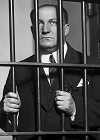
Man imprisoned for not giving police password.

The specific question was, if you are asked for a specimen, knowing you are not drunk would you provide it? Not if you are drunk would you provide a sample?

If you are involved in an RTA, you can be asked as a matter of routine for a breath sample, (source: Police Interceptors :D)..

And even then, you say you would provide a specimen if you knew you where drunk, but wouldn't provide your data if you know you have nothing to hide? this is sounding more and more odd by the minute..

There's nothing odd about it. You just don't get it. You're hurpan and a durpan on an entirely different train of thought.

 
Which is exactly my point, under those acts you are guilty of a crime despite sticking to your "right to silence", as such you are found imprisoned purely due to your silence.

That sort of legislation has NO place in what we try to consider a free country

Refusing to give the password is refusal to give a key to a locked box that they have a warrant to open. It is not really a right to silence issue. There is no right to retain the key to a locked box that is the subject of a warrant.

What if the police asked you to write down the password on a piece of paper and give it to them? Right of silence retained.
 
There's nothing odd about it. You just don't get it. You're hurpan and a durpan on an entirely different train of thought.


No, I get it, some people have a irrationally warped view of what is private and what isn't based on the most twisted logic, with the consequence that they would go to jail for a completely avoidable situation.

Tinfoil paranoia at it's finest..

:D
 
Refusing to give the password is refusal to give a key to a locked box that they have a warrant to open. It is not really a right to silence issue. There is no right to retain the key to a locked box that is the subject of a warrant.

What if the police asked you to write down the password on a piece of paper and give it to them? Right of silence retained.

I have the same view on other parts of the law that make you help the police, I believe that "right of silence" should be viewed as "right to not communicate", both writing and talking are forms of communication

Police are welcome to take the key off my person, but I will not communicate to them as to where it is.
 
Also a Solicitor is your best friend and they will defend the most dodgiest of people because it is your right and if they get you off then they have to live with it.
His Solicitor would have asked him what was on the drive and depending on his answer which was one of three things: 1) I'm not telling 2) kiddie porn 3) loads of dodgy software, porn, films & MP3's, he would then give him advice on what to do.
If he had told him kiddie porn (if the rules are the same as Counselors) he would have to tell on him.
He would also have to stitch him up if he told him he was going to commit a terrorist act or murder somebody.
(The above may not be fact but perhaps someone can confirm).

If he had told him it is Warez, MP3's, porno, self made porno with his girlfriend/boyfriend etc the Solicitor should advise him to not worry and he will try to do a deal with the cops.
If the cops agree, he gives his password, proves he's innocent of kiddie porn and walks free but with a blush because they saw his arse.

I know what I'd choose.
 
I guess your tough out of luck, you don't get a right to anonymity to the judicial system, nor should you if you fulfill the legal requirements to have your DNA/Fingerprints taken.

Are you a fully paid up member of the paranoid tinfoil hat brigage then? :D (yes, that's in jest!)

My objection is to long term storage on a database, not to anonymity from the judicial system. If my biometric data would be destroyed / discarded after I was cleared, I would have no real objection to providing it.

And no, I am not a tinfoil hatter. But I've worked with enough data storage systems to understand their lack of security and ease of abuse, and I know enough about biometric data to understand some of the potentially nefarious applications.

Is it really so wrong to dislike the idea of the state watching over you?
 
If he had told him kiddie porn (if the rules are the same as Counselors) he would have to tell on him.
He would also have to stitch him up if he told him he was going to commit a terrorist act or murder somebody.
(The above may not be fact but perhaps someone can confirm).

Again exceptions that should not exist, all your communication with your lawyer should be between you and him, never to be released
 
Which is exactly my point, under those acts you are guilty of a crime despite sticking to your "right to silence", as such you are found imprisoned purely due to your silence.

That sort of legislation has NO place in what we try to consider a free country

Do you think such RIPA legislation is used if little Jonny has a ripped copy of Wrestlemana XXV on his hard drive or do you believe it is only used in far more serious investigations ? RIPA isn't interested in little Jonny at all.

Do you believe that people should be free to store, for example, the sexual exploitation of children or perhaps information of use to or to instigate acts of terror ? Is that what a free society should be about ?

It is not Mega City One we live in contrary to what people may believe. A door doesn't just get smashed in for a random computer check. Some line investigation led to that man's door and his PC. The old adage is a legitimate thing to ask. What did he have to hide ? If nothing at all, why did he refuse to disclose his encryption code and do we know if his brief suggested that he refuse to disclose it after disclosure ?

I can't follow that lad's logic if he had nothing to hide and a cear cut opportunity to clear his name and send the cops packing.
 
I have the same view on other parts of the law that make you help the police, I believe that "right of silence" should be viewed as "right to not communicate", both writing and talking are forms of communication

Police are welcome to take the key off my person, but I will not communicate to them as to where it is.

We are in a difficult corner, as evidence can be stored in a manner not readily accessible to police with valid warrants. There's no way round it, short of limiting the use of encryption, which isn't really fair or just, or imposing stiffer sentences on those refusing to give up keys.

In a sense, he'll be punished enough by the fact that he'll have difficulties going forward as a result of this secrecy, but that doesn't tackle the issue of whether a crime took place or how to solve it.

In any case, he's an idiot for not using a duress key, which would have ensured his compliance with this law and cleared his name.
 
No, I get it, some people have a irrationally warped view of what is private and what isn't based on the most twisted logic, with the consequence that they would go to jail for a completely avoidable situation.

Tinfoil paranoia at it's finest..

:D

Uncalled for. Don't use such insults again please.
 
I can't follow that lad's logic if he had nothing to hide and a cear cut opportunity to clear his name and send the cops packing.

Indeed. As I've said umpteen times already - he's either a martyr or he has something to hide that is worth keeping secret more than going to prison and having his name tarnished for the foreseeable future.
 
My objection is to long term storage on a database, not to anonymity from the judicial system. If my biometric data would be destroyed / discarded after I was cleared, I would have no real objection to providing it.

And no, I am not a tinfoil hatter. But I've worked with enough data storage systems to understand their lack of security and ease of abuse, and I know enough about biometric data to understand some of the potentially nefarious applications.

Is it really so wrong to dislike the idea of the state watching over you?

No, it's not really wrong, it's just irrational.

It's worthless debating that subject, because it all boils down to people bringing up hypothetical situations of all these terrible things they can do with your data that you can't argue against, because however small a probability you can't deny something could occur, in the same way Aliens could turn up tomorrow..

But admittedly, I live my life by the "I have nothing to hide, so I don't mind the authorities knowing anything about me", it's worked so far, and the convenience of not jumping through hoops 'just in case' has made my life easier..
 
Last edited:
If he had told him kiddie porn (if the rules are the same as Counselors) he would have to tell on him.

I know of at least two solicitors / runners I have dealt with on a regular basis who would not and as there is no recording made of the consultation and the consultation notes are not disclosable then no issue would become of it.
 
Do you believe that people should be free to store, for example, the sexual exploitation of children or perhaps information of use to or to instigate acts of terror ? Is that what a free society should be about ?
I believe that we should not have the "problems" (ie criminals) in the first place ...
but since that is not possible I feel that what should then occur is akin to a game of wits between the criminal and the police. The criminals will try to use ever more sophisticated ways to hide their crime, the police will try to use ever more sophisticated ways to find out the info.

If police cannot gain access to his PC then they should try to trace where he got whatever it is that they suspect he got, and confirm it from that end. If everything along the route is encrypted then they need to let him go, find a weak point in the system and gain access to it that way in order to gain evidence and then arrest him again.

You, or Fox, or whoever are welcome to tell me to "go live in the real world", but it will not change how I view things.
What we ultimately must not do is sacrifice rights and freedoms merely due to the fact that technology in one area (encryption) has moved faster than technology in another (cracking encryption).

We are in a difficult corner, as evidence can be stored in a manner not readily accessible to police with valid warrants. There's no way round it, short of limiting the use of encryption, which isn't really fair or just, or imposing stiffer sentences on those refusing to give up keys.
Or we can do as I said above, if the UK gov. feels that they need access to encrypted data perhaps they should fund more research on breaking encryption and advanced computing methods.
 
Or we can do as I said above, if the UK gov. feels that they need access to encrypted data perhaps they should fund more research on breaking encryption and advanced computing methods.

Well, as I said was back in the early pages of this thread, properly coded strong encryption methods are as good as unbreakable, so the issue then becomes whether you allow people to use them.
 
Back
Top Bottom