


Power blackouts in Portugal and Spain

That's either racist, cryptic or a typo. Eh? :D

On a serious note there were/are widespread power outages in Ireland earlier this evening but nothing on the scale of what happened in Europe and seems to be a specific part of the grid which fell over rather than a grid wide event.
 
Spain is quite a large country with large expanses without major cities and long long power cables. I'm going to guess that high levels of capacitance between the cables and ground built up and with a largely solar and wind generation portfolio they got grid voltage issues because they couldn't change the MVARS (the bit which "pulls" or "pushes" the electricity to describe it in an understandable but utterly wrong way) with synchronous load. Eventually the some part of the grid protection tripped and then caused a cascade failure because the load shedding didn't respond quickly enough. In 2019 the UK mini black out was caused by two unrelated faults in close proximity but the grid shed demand to control the grid stability.

The UK is investing in synchronous compensators to manage the grid stability because there are increasing numbers of days where there is very little synchronous generation (thermal) precisely because static compensation and batteries don't cover the whole picture. Power stations in the centre of the UK are now routinely being asked to run when otherwise uneconomic to provide grid support services. Large synchronous generators can do things with their transformers to "pull" or "push" electricity through the grid by changing the impedance or capacitive reactance of the generating set. This typically is required at night when demand is lower and the grid itself is proportionally more significant part of the stability requirements.


I've personally been thinking for some time now about household resilience. Fuel strikes, then fuel shortages and then Covid plus overseas power cuts have highlighted that the World we rely on is becoming less resilient. I'm not talking doomsday prepping but I think having more cash in the house and more bottled water and food to be able to comfortably ride through a 2-7 day interruption seems ever more sensible. 20 years ago the idea would have been laughable but in the last 10 years the entire Western World seems more at risk of short term disruption.
 
Last edited:
There is an opposite of CT were people think everyone is nice in the world and nothing sinister is happening.

Many stories don't get coverage for all kinds of reasons, some because they don't want to acknowledge them (grooming gangs, long covid etc).


I think it comes down to what you think is local, regional or national.

All national news was local and/or regional news at one time.

I think half of Oldham being without power for 2 days, stopping all cashless trade is a worthy news story outside of Oldham.

When I read the story it made me think is this happening in other parts of the country? But because I don't live locally I wouldn't know.

IF areas are having over 24 hour power outages, and it's a regular occurrence then we, the public, need to know.

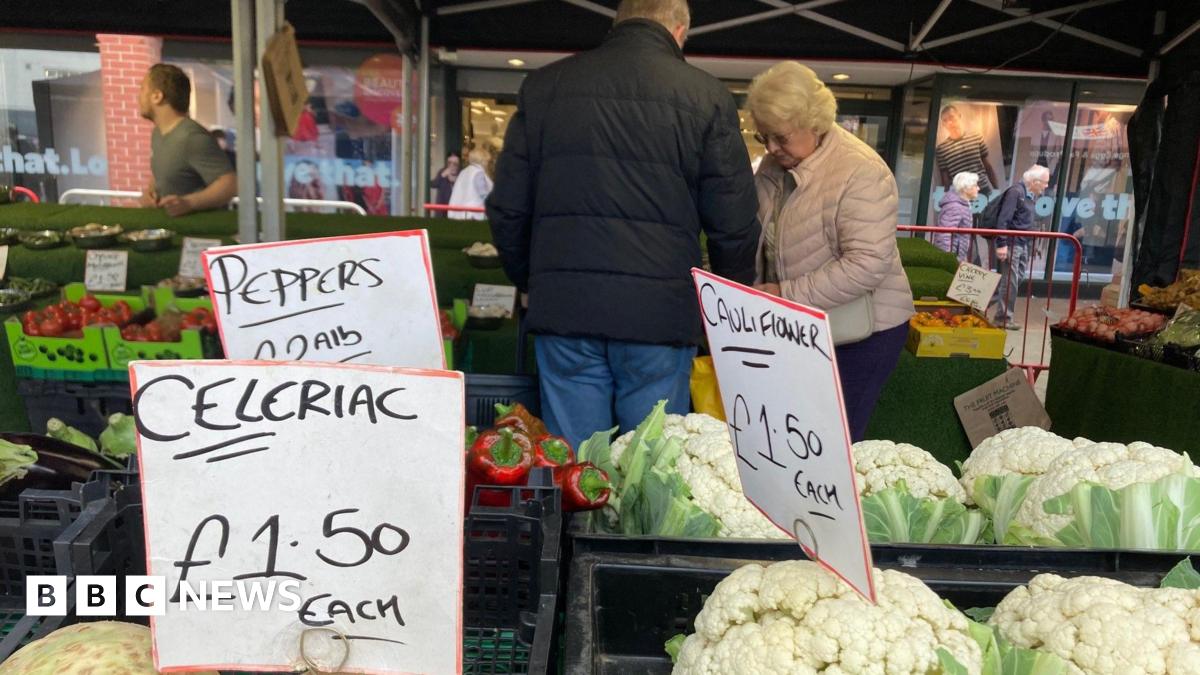
Nah CT is CT

There is no attempt to move away from cash, in fact almost as if someone in government saw your CT post... ;)


You do seem in a bit of a CT hole at times. I would broaden your reading and maybe think why you thing long covid is a cover up, its not.
 
Spain is quite a large country with large expanses without major cities and long long power cables. I'm going to guess that high levels of capacitance between the cables and ground built up and with a largely solar and wind generation portfolio they got grid voltage issues because they couldn't change the MVARS (the bit which "pulls" or "pushes" the electricity to describe it in an understandable but utterly wrong way) with synchronous load. Eventually the some part of the grid protection tripped and then caused a cascade failure because the load shedding didn't respond quickly enough. In 2019 the UK mini black out was caused by two unrelated faults in close proximity but the grid shed demand to control the grid stability.

The UK is investing in synchronous compensators to manage the grid stability because there are increasing numbers of days where there is very little synchronous generation (thermal) precisely because static compensation and batteries don't cover the whole picture. Power stations in the centre of the UK are now routinely being asked to run when otherwise uneconomic to provide grid support services. Large synchronous generators can do things with their transformers to "pull" or "push" electricity through the grid by changing the impedance or capacitive reactance of the generating set. This typically is required at night when demand is lower and the grid itself is proportionally more significant part of the stability requirements.

Ah I had seen that before but hadn't fully made the link, but after Spain (potentially) having this issue I see what the grid are doing now.
Makes total sense.

Looks like on the face of it, at least hopefully, the NG are ahead of this and maybe Spain were not. Spain at times generates bonkers levels of renewables so they must have something, but likely not enough.

All countries transitioning to renewables on this scale are probably facing the exact same choice on when to make these upgrades.
 
I think your making an assumption that I'm not for digital currencies?

Digital currencies will be the future. It's not a CT, and that wasn't what my post was about.

You were saying the government was promoting a cashless society. They aren't, in fact they are aware of the importance of the opposite.

The criticism is they are as ever sitting on their hands as the marketplace starts to try to withdraw from accepting cash*, and that the government needs to act fairly quickly to mandate a right to pay by cash before its too late.

* and its for commercial reasons. Its very expensive to handle cash, both directly and indirectly. Holding floats, protecting actual cash (safes/tills), ensuring you have change to function, having to send people to go and do banking etc.
 
I’m not really sure the government needs to mandate businesses take cash. The reason it’s falling out of favour is because it is less efficient and carries more risk.

The kinds of businesses that only accept cash tend to be the kind you’d expect to be committing tax evasion anyway (take aways, car washes, sole traders etc).

Cash is widely accepted anywhere it actually matters and the only tangible argument for mandating cash is ‘think of the old people’ which is becoming less and less relevant. Particularly given all their pensions are paid into a bank account.

There is little reason why the vast majority who don’t currently use cards can’t pay on card, they just choose not to. That sounds like a ‘them’ problem and not a government problem to be spending time on.
 
Last edited:
Nah CT is CT

There is no attempt to move away from cash, in fact almost as if someone in government saw your CT post... ;)


You do seem in a bit of a CT hole at times. I would broaden your reading and maybe think why you thing long covid is a cover up, its not.

Did you read the article? it's basically about protecting old and vulnerable people during a transition and the treasury committee didn't even recommend a change in law to protect them so it'll be businesss as usual. According to the article even the EU and Australia are only looking to protect people paying for essential services, why not protect cash more broadly?
 
Cash is resilient to IT infrastructure disruption. We ought to keep it and encourage people to have a small store to cover the inevitable breakdowns in our efficient but shallow resilience financial systems. It feels like stories of one payment system or one company being unable to process transactions is nearly a weekly event (it's probably not but it feels like it sometimes). Cash is a backstop and we should be actively creating fallback systems because genuine urban disruption will be the outcome when people are unable to buy food for a few days.
 
Did you read the article? it's basically about protecting old and vulnerable people during a transition and the treasury committee didn't even recommend a change in law to protect them so it'll be businesss as usual. According to the article even the EU and Australia are only looking to protect people paying for essential services, why not protect cash more broadly?

I did, did you even read the interchange where it started with the person claiming the government were promoting the cashless society.
And business as usual is exactly my point, its business and people driving the change, NOT the government promoting it.

I’m not really sure the government needs to mandate businesses take cash. The reason it’s falling out of favour is because it is less efficient and carries more risk.

The kinds of businesses that only accept cash tend to be the kind you’d expect to be committing tax evasion anyway (take aways, car washes, sole traders etc).

Cash is widely accepted anywhere it actually matters and the only tangible argument for mandating cash is ‘think of the old people’ which is becoming less and less relevant. Particularly given all their pensions are paid into a bank account.

There is little reason why the vast majority who don’t currently use cards can’t pay on card, they just choose not to. That sounds like a ‘them’ problem and not a government problem to be spending time on.

This. There is one minor benefit for everyone who isn't old and on a strict budget in that for some its easier to manage cash.
I am not sure how instant the balance is on a current account if you pay by card.

Its mainly old people though holding back progress.
This year was the first we didn't have to pay allotment subs by cheque, or at a push cash if you went to site on a very specific window to pay in cash.
Finally after committee changes they allowed bank transfer and they said over 90% did this. Its about 80 plots and there are a lot of oldies up there so even most of them did bank transfer.
Means I didn't have to do the annual thing of finding my cheque book to pay it, which has a grand total of 8 used cheques, every one of which was the allotment.
I had to order it just to pay the subs having thrown my other away years before.

At xmas I gave away my emergency £5 from my wallet to a charity collection when I bought my xmas tree (who only took cards).
I had about £100 in my wallet when the first COVID lockdown hit and it had taken 4.5 years to slowly whittle that down.
I must admit the rare time I would use cash was for small value transactions, such as a sarnie from a shop.
They used to hate low value card trans as the fees used to kill most of their profit.
 
Cash is resilient to IT infrastructure disruption. We ought to keep it and encourage people to have a small store to cover the inevitable

Yea you are right, like you said earlier, I have a small petrol generator, 25 litres of fuel, water, water purification tablets and food, I don't have cash though.

So I do need to have some in the house.

Again like you, not doomsday etc, but even the government were telling people to do this not long ago.
 
I’m not really sure the government needs to mandate businesses take cash. The reason it’s falling out of favour is because it is less efficient and carries more risk.

The kinds of businesses that only accept cash tend to be the kind you’d expect to be committing tax evasion anyway (take aways, car washes, sole traders etc).

Cash is widely accepted anywhere it actually matters and the only tangible argument for mandating cash is ‘think of the old people’ which is becoming less and less relevant. Particularly given all their preet shopping ensions are paid into a bank account.

There is little reason why the vast majority who don’t currently use cards can’t pay on card, they just choose not to. That sounds like a ‘them’ problem and not a government problem to be spending time on.

It is not mainly pensioners but a sub class who for reasons are not a high priority fir the. Banks to provide facilities. Cash does carry certain risks to the user however it is fully flexible and risks to the treasury income should not be a reason for its demise. If a business chose not to take cash I would tend to go elsewhere even having cards aplenty. If you are on a tight budget and only go out with cash, you have a limit.

I believe in high st shopping, abhor amazon and similar so I'm a dinosaur.
 
This. There is one minor benefit for everyone who isn't old and on a strict budget in that for some its easier to manage cash.
I am not sure how instant the balance is on a current account if you pay by card.

Its mainly old people though holding back progress.

Debit card transactions show instantly (may show as pending but it’s there), I get a notification on my phone within 3 seconds of spending on my physical card or by <insert flavour of phone> pay and it’s showing in the app/online.

Anyway, back to topic, cash has negligible value in the dooms day scenario anyway. My solar panels and MKW’s allotment on the other hand…

Any before anyone mentions electric cars, fuel pumps don’t work without power either and yes I can charge my car from my solar when there is a grid outage.

In the event of a power cut as was demonstrated in Spain, most shops just shut anyway because they can’t process the transactions or for other reasons like liability and health and safety.

For example food premises are not allowed to open if they are without hot water for a few hours for what should be obvious reasons.
 
In the event of a power cut as was demonstrated in Spain, most shops just shut anyway because they can’t process the transactions or for other reasons like liability and health and safety.
Which is ok for 24 hours. But if there were an interruption power or IT related that lasted more than 2 days people are going to need to buy things. If they can't buy them they will steal them the civil breakdown is better avoided rather than recovered. I live in a 5 bed house in the country with loads of storage room my ability to become relient is significant. If you live in a city centre flat you rely on money for the basics more than 24 hours without the ability buy stuff you are in fast fast reduction in living conditions. Cash might be their only mitigation to a loss of digital banking.

 
Last edited:
Which is ok for 24 hours. But if there were an interruption power or IT related that lasted more than 2 days people are going to need to buy things. If they can't buy them they will steal them the civil breakdown is better avoided rather than recovered. I live in a 5 bed house in the country with loads of storage room my ability to become relient is significant. If you live in a city centre flat you rely on money for the basics more than 24 hours without the ability buy stuff you are in fast fast reduction in living conditions. Cash might be their only mitigation to a loss of digital banking.

Nice strawman. There are 5 major banking groups (HSBC, Nat West, Lloyds, Barclays, TSB) in the U.K. and a bunch of other smaller providers.

Sure individual banks have as issues on occasion, but all at the same time? Getting your latest processed food fix in Tesco would be the least of your worries if that happened (and they still take cash).

Even if they did, you wouldn’t be able to withdraw any cash to buying anything anyway because your banks having IT problems.
 
Last edited:
Back
Top Bottom

