

-
Notice regarding image hosts and attachments. See here.
-
Competitor rules
Please remember that any mention of competitors, hinting at competitors or offering to provide details of competitors will result in an account suspension. The full rules can be found under the 'Terms and Rules' link in the bottom right corner of your screen. Just don't mention competitors in any way, shape or form and you'll be OK.
You are using an out of date browser. It may not display this or other websites correctly.
You should upgrade or use an alternative browser.
You should upgrade or use an alternative browser.
DLSS 5 preview
- Thread starter WiGgLr
- Start date
More options
Thread starter's postsI've just tried the new updated DLSS 5 Dll file. In Kingdom Come II I've been using a specific save at a specific location for proper testing over the last month or so for all the different versions etc......
Bloody hell, it's gone up from 67fps to 84fps! That's a 25% increase with no loss of quality I can see.
Back in March when DLSS 5 first showcased it needed x2 5090s to run! The performance is increasing month on month and if this rate continues DLSS5 will actually be very playable for many people soon. It's going to be good, I guarantee it.
Bloody hell, it's gone up from 67fps to 84fps! That's a 25% increase with no loss of quality I can see.
Back in March when DLSS 5 first showcased it needed x2 5090s to run! The performance is increasing month on month and if this rate continues DLSS5 will actually be very playable for many people soon. It's going to be good, I guarantee it.

Soldato
- Joined
- 9 May 2022
- Posts
- 3,163
- Location
- London

Associate
- Joined
- 4 Mar 2008
- Posts
- 1,873
- Location
- Scotland
It seems they've reduced the intensity of inferred AO and lighting a bit in the new DLSS5 model, but that's not necessarily a bad thing. It'll be more obvious in certain games.
Some people won't like the changes as you get less of that photo realism effect, mostly due to the greatly reduced simulated reflected light. Overall I think things look more accurate/natural now and 'hallucinated' reflections are almost completely gone from the instances I've checked.
That said, it's interesting that the old model is still available in the new DLL, perhaps they feel some developers will want to use the previous model instead for more of the simulated lighting etc.
Some people won't like the changes as you get less of that photo realism effect, mostly due to the greatly reduced simulated reflected light. Overall I think things look more accurate/natural now and 'hallucinated' reflections are almost completely gone from the instances I've checked.
That said, it's interesting that the old model is still available in the new DLL, perhaps they feel some developers will want to use the previous model instead for more of the simulated lighting etc.
Last edited:

Soldato
- Joined
- 19 Feb 2007
- Posts
- 16,185
- Location
- Sol
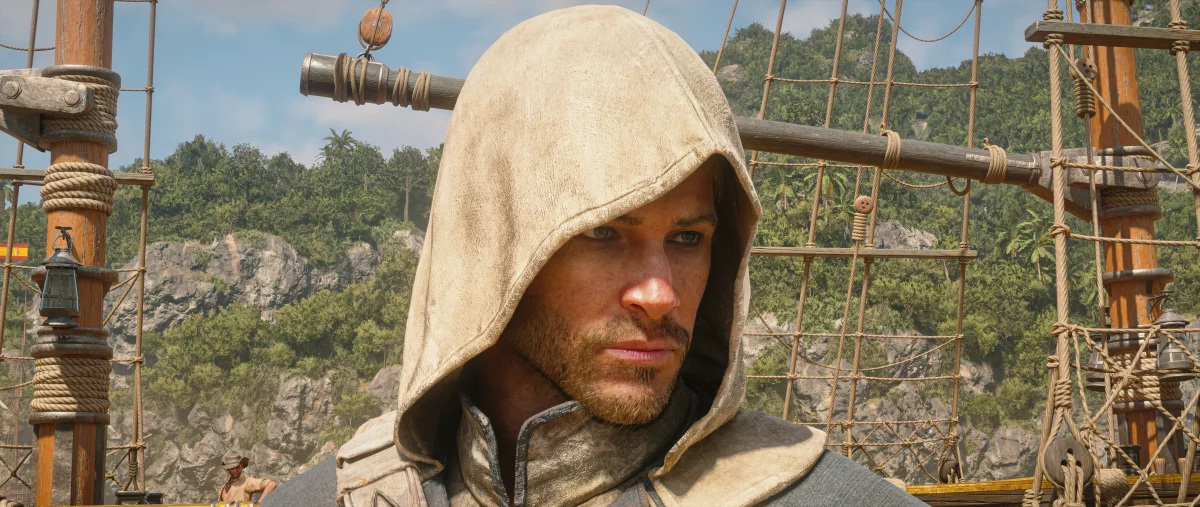
AC Blackflag Resynced, Performance is shockingly good using the new NR dll -
Last edited:
Soldato
- Joined
- 19 Feb 2007
- Posts
- 16,185
- Location
- Sol
So roughly the same visual quality with better perf, Not too bad.
The DLSS5 Swapper tool by Rakanki911 has been removed from GitHub and is under review by NexusMods (https://nexusmods.com/site/mods/2228) due to suspicion that the tool sideloaded a malicious version of ReShade into the AppData folder. It is not yet known if it was something intentional by the author.
 www.reddit.com

Last edited:
Soldato
- Joined
- 19 Feb 2007
- Posts
- 16,185
- Location
- Sol
Last edited:
Yep after digging some more you get this..
I checked my DLSS5 Swapper ReShade_Setup_6.8.0_Addon against the official one and they're exactly identical.
I checked my AppData/Local folder and didn't find anything weird.
I checked Windows Defender: Nothing weird.
My version is 2.2.7.0 from the 13th of September 2026.
OP says: Problem is it’s side-loading contents are malicious, it would side load a compromised version of ReShade tutorial into your system’s AppData folder (ReShade_Setup_6.8.0_Addon) and start acting like an info stealer.
AppData only contains Local, LocalLow and Roaming so this information is wrong. If there is an info stealer, it surely isn't in AppData. Also, what info stealer ? What's its name?
It's great to warn people, it's better to provide accurate informations.
and finally
RHI also installs ReShade_Setup_6.8.0_Addon so dont panic if you find it in RHI folder
Starting to wonder if the original poster installed some malware files and assumed it was from this file?
Soldato
- Joined
- 19 Feb 2007
- Posts
- 16,185
- Location
- Sol
Starting to wonder if the original poster installed some malware files and assumed it was from this file?
Probably yeah, Some of the biggest panic scenarios in history are started by people who got an F grade in kindergarden, The type who would make Forest Gump look like a genius

Last edited:
Soldato
- Joined
- 29 Mar 2007
- Posts
- 3,861
- Location
- Essex
When dlss 6

Caporegime
- Joined
- 30 Jul 2013
- Posts
- 31,242
So will the Nvidia app ever allow us just to enable DLSS 5 in games, or unlikely?
Will it have to be built in to games for official support?
Will it have to be built in to games for official support?
Soldato
- Joined
- 19 Feb 2007
- Posts
- 16,185
- Location
- Sol