Electronics Help - Dishwasher PCB

I use to own a Brown goods repair centre for Most major manufacturers. (largest in the NW) We used to have 14 x 4 drawer filing cabinets full of service manuals just for Tv's. It still irks me when people think they can "see" faulty components. Your eyes wont be able to tell you if a resistor is intermittent OC etc.

I had a neighbour bring his VCR round one day. (yeah that long ago) He said he had taken it into work and hooked it up to an oscilloscope but couldn't work out what was wrong...Well he wouldn't have. It was a stock Mech fault...

Good on the OP for having a go, But repairing down to component level is a little harder than looking

its entirely possible if you understand how the circuit works - Solenoids are driven by MOSFET switches or such - its not rocket science and complex circuits can be broken down to some simple sub blocks but you need to know what's going on. Replacing random parts in a Hail Mary fashion wont work unless you get very lucky

 
its entirely possible if you understand how the circuit works - Solenoids are driven by MOSFET switches or such - its not rocket science and complex circuits can be broken down to some simple sub blocks but you need to know what's going on. Replacing random parts in a Hail Mary fashion wont work unless you get very lucky


Maybe but you have to know how a circuit works. How do you know what comes out of each pin on a microchip without a Service manual.
 
Which needs knowledge and a service manual

Yeah well like I already said. I have a few degrees and a Masters in Electronics so it helps if you can understand this stuff - 'service' manuals don't really exist for this unless you get lucky on google - I think you mean schematic diagrams.

I watched a good documentary about a repair guy in Japan - a very skilled one - and he was tasked with repairing an old dishwasher that was integrated into someone's home, it was not rinsing a cycle completely and a replacement would mean a whole new fitted kitchen as it was ancient and the owner could not get one to fit in the same space. Anyway the fault was a reed switch which was used to detect the water level, it was not switching as the transistor used to drive it was broken - The repair guy had to fabricate a whole new pcb assembly with this circuit as he was unable to read the part numbers of the broken parts. Clearly he knew within a short time what was wrong and he zoned into the faulty circuit quite soon, then he went about fixing it.

In 90% of cases the woman would have to buy a entire new dishwasher and a new fitted kitchen so its good to fix stuff if you can - that Japanese repair guy had a huge spreadsheet of all the stuff his fixed with all part numbers and diagnosis

If the OP fixed it well done, its nice and has a certain satisfaction to get something fixed that would otherwise mean a new product
 
Last edited:
Thanks i gave repair a go, within what was reasonable for time and cost. I also sought expertise from electrical engineers at work. Even though the new board was £100 it was far more economical to replace it than further diagnose and keep changing components. Issue we had was to correctly diagnose bad components, we would have needed to remove them from the PCB. Glad I saved something going to landfill. More people need to be willing to repair than dispose.
 
Yeah well like I already said. I have a few degrees and a Masters in Electronics so it helps if you can understand this stuff - 'service' manuals don't really exist for this unless you get lucky on google - I think you mean schematic diagrams.

I watched a good documentary about a repair guy in Japan - a very skilled one - and he was tasked with repairing an old dishwasher that was integrated into someone's home, it was not rinsing a cycle completely and a replacement would mean a whole new fitted kitchen as it was ancient and the owner could not get one to fit in the same space. Anyway the fault was a reed switch which was used to detect the water level, it was not switching as the transistor used to drive it was broken - The repair guy had to fabricate a whole new pcb assembly with this circuit as he was unable to read the part numbers of the broken parts. Clearly he knew within a short time what was wrong and he zoned into the faulty circuit quite soon, then he went about fixing it.

In 90% of cases the woman would have to buy a entire new dishwasher and a new fitted kitchen so its good to fix stuff if you can - that Japanese repair guy had a huge spreadsheet of all the stuff his fixed with all part numbers and diagnosis

If the OP fixed it well done, its nice and has a certain satisfaction to get something fixed that would otherwise mean a new product

Yes a Service Manual is usually full of Schematics for each board
 
Thanks i gave repair a go, within what was reasonable for time and cost. I also sought expertise from electrical engineers at work. Even though the new board was £100 it was far more economical to replace it than further diagnose and keep changing components. Issue we had was to correctly diagnose bad components, we would have needed to remove them from the PCB. Glad I saved something going to landfill. More people need to be willing to repair than dispose.

well my original suggestion was a new board, its a good outcome many people would have forked out for a new product. Unless you are really skilled like that bloke in Japan its hard to do board level repairs

I think this is a huge problem actually, sending stuff to landfill that can be fixed. I don't have faulty appliances thankfully but if I had I would go about to repair it just like you done
 
I'm actually sat repairing a robot vacuum cleaner I was gifted right now. I must be mad.
2 diodes replaced on main board, some issues fixed, but think I've found another issue with the charger. There's a lovely satisfaction when things work again. Plus I'm learning and improving my repair skills.
 
Which needs knowledge and a service manual

seems annoying that there is no legal right for consumer to get their hands on these https://en.wikipedia.org/wiki/Electronics_right_to_repair


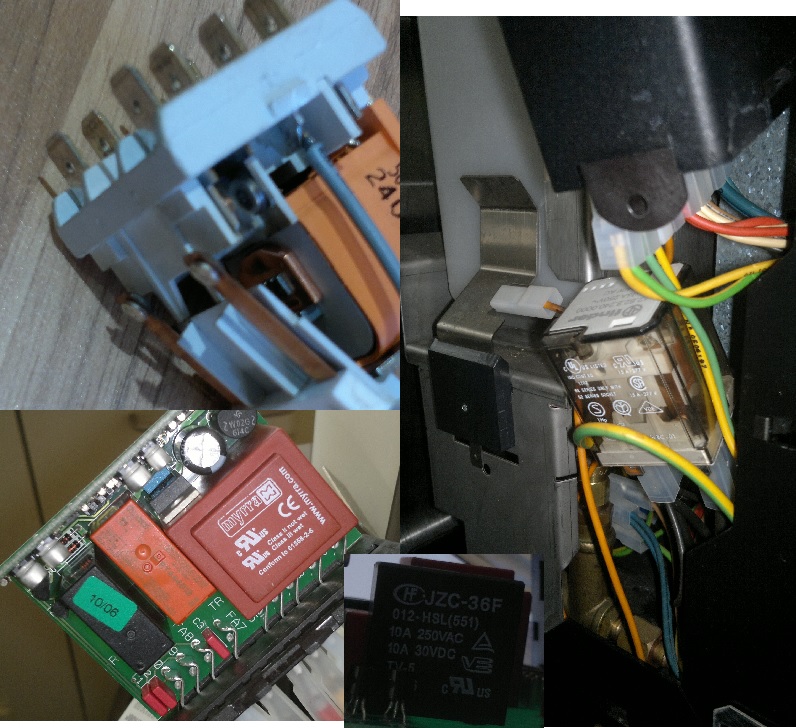
on a more practical level - coffee machine undergoing fixes
- what is the effective way to both label and remove, plastic covered spade connectors (ie bottom left) ?
is there some knack with pliers w/o damaging shroud, I do take pictures too, but even so.

documented parts so I can look at replacements.
50615852203_8f05f8d319_o_d.jpg

Does anyone have recommendations on a combined multimeter + esr measurer, for capacitor ?
 
Back
Top Bottom