

You are using an out of date browser. It may not display this or other websites correctly.
You should upgrade or use an alternative browser.
You should upgrade or use an alternative browser.
*** OFFICIAL - CES 2013 Thread***
- Thread starter kona786
- Start date
More options
Thread starter's posts

The press release for the Tegra 4:
NVIDIA Introduces World's Fastest Mobile Processor
Tegra 4 Features 72 Custom GPU Cores, Quad-Core Cortex-A15 CPU for Superb Performance and Efficiency; LTE Enabled with Optional Chipset
LAS VEGAS-CES-Jan. 6, 2013-NVIDIA today introduced NVIDIA® Tegra® 4 , the world's fastest mobile processor, with record-setting performance and battery life to flawlessly power smartphones and tablets, gaming devices, auto infotainment and navigation systems, and PCs.
Tegra 4 offers exceptional graphics processing, with lightning-fast web browsing, stunning visuals and new camera capabilities through computational photography.
Previously codenamed "Wayne," Tegra 4 features 72 custom NVIDIA GeForce™ GPU cores – or six times the GPU horsepower of Tegra 3 – which deliver more realistic gaming experiences and higher resolution displays. It includes the first quad-core application of ARM's most advanced CPU core, the Cortex-A15, which delivers 2.6x faster web browsing and breakthrough performance for apps.
Tegra 4 also enables worldwide 4G LTE voice and data support through an optional chipset, the fifth-generation NVIDIA Icera® i500 processor. More efficient and 40 percent the size of conventional modems, i500 delivers four times the processing capability of its predecessor.
"Tegra 4 provides enormous processing power and efficiency to power smartphones and tablets, gaming devices, auto systems and PCs," said Phil Carmack, senior vice president of the Tegra business at NVIDIA. "Its new capabilities, particularly in the area of computational photography, will help improve a whole range of existing products and lead to the creation of exciting new ones."
Computational Photography Capability
Among the Tegra 4 processor's breakthroughs is its Computational Photography Architecture, which automatically delivers high dynamic range (HDR) photos and video by fusing together the processing power of the GPU, CPU and the camera's image-signal processor.
Its HDR capability captures images, including those taken with a flash, the way they are seen by the human eye – with detail in both bright and dark areas.
Unprecedented Power Efficiency
Designed for maximum energy efficiency, Tegra 4 includes a second-generation battery saver core for low power during standard use, and PRISM 2 Display technology to reduce backlight power while delivering superior visuals.
Tegra 4 consumes up to 45 percent less power than its predecessor, Tegra 3, in common use cases. And it enables up to 14 hours of HD video playback on phones.
Tegra 4 Key Features
· - GeForce GPU with 72 custom cores
· - Quad-core ARM Cortex-A15 CPU, plus a 2nd Generation Battery Saver Core
· - Computational Photography Architecture
· - LTE capability with optional Icera i500 chipset
· - 4K ultra-high-def video support

 The first 28nm HPM chip from TSMC though, hope they can deliver. (All current Snapdragon S4s are 28nm LP)
A made up thing.What do we have here - DROOL!
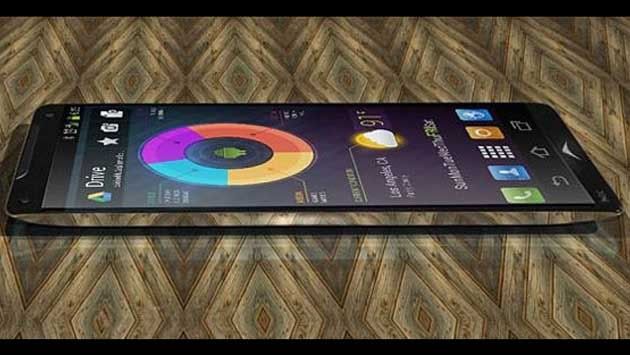
It's got HTC and Motorola logos, it's notification bar is a mashup, the soft buttons are Samsungs and it doesn't really look like a device designed by any of them.

Caporegime
- Joined
- 7 Apr 2008
- Posts
- 26,292
- Location
- Lorville - Hurston
Will the Tegra 4 deliver? The last two seem to have been a little bit of a let down. I wonder how it will fair against Samsung's Exynos A15s.
Doubt it

Soldato
- Joined
- 27 Oct 2006
- Posts
- 7,765
- Location
- London
Last edited:

A made up thing.
Of course it's made up - LULZ!
And the soft Nav buttons look like Sony/Motorola.


D.P. OOps
Is the fifth core on Tegra 4 an A15?
Wouldn't it be more useful to use a proper low power core like M7/A7 (Can't remember the exact name)
Can't be as all the literature says 4 A15 cores though I can't find any information stating what 'second-generation battery saver core' it is. Though this suggests it is a A7 like you said.
big.LITTLE Processing
big.LITTLE processing addresses one of today’s industry challenges: how to create a System on Chip (SoC) that provides both high performance as well as extreme power efficiency to extend battery life. big.LITTLE connects the performance of the ARM Cortex-A15 or Cortex-A57 processor with the energy efficiency of the Cortex-A7 or Cortex-A53 processors respectively, enabling the same application software to switch seamlessly between them. By selecting the optimum processor for each task, big.LITTLE can extend battery life by up to 70%.
It is using big.LITTLE right?
Last edited:
Just read from Anandtech:
http://www.anandtech.com/show/6550/...00-5th-core-is-a15-28nm-hpm-ue-category-3-lte
I swear Tegra 3's 'companion core' made f-all difference. I think this will be the same too.
The fifth/companion core is also a Cortex A15, but synthesized to run at lower frequencies/voltages/power. This isn't the same G in and island of LP process that was Tegra 2/3.
http://www.anandtech.com/show/6550/...00-5th-core-is-a15-28nm-hpm-ue-category-3-lte
I swear Tegra 3's 'companion core' made f-all difference. I think this will be the same too.
Yes, a pointless marketing gimmick. They should turn off the other 3 cores like Qualcomm/Samsung or use a proper low power core like ARM.
Shame it uses old GPU architecture too, where's the unified design Nvidia? Logan or Grey?
Oh and Sony already has HDR covered with 'on sensor' processing for 30/60fps not 4! (far more efficient too)
Tegra 4 isn't suitable for phones btw, check out that huge heat sink on the Shield controller!
Shame it uses old GPU architecture too, where's the unified design Nvidia? Logan or Grey?
Oh and Sony already has HDR covered with 'on sensor' processing for 30/60fps not 4!
(far more efficient too)Tegra 4 isn't suitable for phones btw, check out that huge heat sink on the Shield controller!
LOL thanks for the correction 
Really not moved by the T4 after the last two. I see one of the claims is that it has 2.6x faster web browsing than the T3 - wasn't the T3 a fair bit slower than some of the other quad core SoCs?
One of their slides shows the T4 against the Nexus 10 (dual core A15s right?) in a test that loads 25 high-traffic websites. The T4 easily wins (27 seconds vs 50 seconds). A high controlled test pitting a quad core against a dual core.......am I missing something?
Really not moved by the T4 after the last two. I see one of the claims is that it has 2.6x faster web browsing than the T3 - wasn't the T3 a fair bit slower than some of the other quad core SoCs?
One of their slides shows the T4 against the Nexus 10 (dual core A15s right?) in a test that loads 25 high-traffic websites. The T4 easily wins (27 seconds vs 50 seconds). A high controlled test pitting a quad core against a dual core.......am I missing something?
LOL thanks for the correction
Really not moved by the T4 after the last two. I see one of the claims is that it has 2.6x faster web browsing than the T3 - wasn't the T3 a fair bit slower than some of the other quad core SoCs?
One of their slides shows the T4 against the Nexus 10 (dual core A15s right?) in a test that loads 25 high-traffic websites. The T4 easily wins (27 seconds vs 50 seconds). A high controlled test pitting a quad core against a dual core.......am I missing something?
That test was seriously corrupt lol. It pitted the N10 using the notoriously slow Chrome browser vs their Tegra tablet using the much faster stock Android browser.
Take Nvidia tests with a grain of salt, they bigged up the Tegra3 to no end, and in the end it was hardly ground breaking. In fact it was pretty much a budget chip.