RWD?

Soldato
Joined
10 Jun 2010
Posts
5,158
Location
Scotland
So, over the time browsing here I've came to realise that RWD is for proper sports car and proper drivers.

I've also read RWD can get you into trouble if your inexperienced... This I don't understand? So it requires more skill to make it go fast, why is this?

Hot hatches all seem to be FWD, what's their draw back?

I'm very new to the car world and would love to learn all this. Please excuse my ignorance.

I've driven a Civic FN2 and an ST. Both were very easy to handle going semi quick and both confidence inspiring. I also drove a boxster S and it wasn't half as confidence inspiring. I was taking bends at half the speed of the other two cars. Yet the Boxster with its mid engine and rear wheel drive is the best.

Any info would be great.

 
• Better weight balance. Most rear wheel drive cars have the engine in the front and the drive components in the rear. Front drive cars have everything up front. By properly balancing the front and rear of the car you can improve the handling, acceleration, braking, and thus safety of a car.

• Better acceleration. On all but the slipperiest surfaces rear wheel drive cars accelerate faster than a front drive car from a stop. This is because when you accelerate quickly from a stop the weight of the car transfers to the rear of the car. In a rear drive car this places extra weight on the rear of the car, essentially jamming the tires into the road greatly increasing traction. In a front drive car, when the weight goes to the rear, weight is taken off of the front wheels. This allows the front wheels lose traction and spin easier. If the wheels are spinning not only does this slow you down but it also makes it difficult to steer the car. In the rear drive car the front tires are available for steering even if the rears have lost traction.

• Better Road Holding. The better weight balance of rear wheel drive allows the car to handle better. The more even weight allows the car to drive neutrally through a corner. This means both the front and rear of the car have near equal loads acting upon them. In a front drive car the the heavy front end causes the front end to have a higher load on it. This will cause the front tires to eventually lose grip well before the rear tires are fully loaded. Front tires on front drive cars do much more work than the rears causing them to wear out much faster. It is best to balance the load as best you can among the four tires. If you are accelerating or slowing down (engine braking) these forces will act upon the already heavily loaded front tires of a front drive car. In a rear drive car the front tires are left for steering even when accelerating or engine braking. Sharing the work among all four tires is the key.

• Better Stopping. Because of the better balance rear drive cars brake better. When you stop a front drive car the excess weight in the front of the car allows the force on the front tires to exceed the limits of the tires. The relatively low weight on the rear of a front drive car does not allow the tires to be used to their maximum ability. When panic stopping weight will transfer to the front in both rear and front drive cars but there is more weight left for rear braking action in the rear drive car.

• No Torque Steer. Front wheel Drive cars have a problem known as Torque Steer. This occurs when the acceleration of the engine effects the cars steering. Since the driveline is connected to the steering wheels the torque of the engine applies force to the front wheels causing the car to pull to the right during acceleration. Rear Drive cars do not have this problem since the engine is not connected to the steering gear.

• Better Ride and Feel. The light front end of the car allows it to "turn in" to a corner easier. The car feels more nimble and controllable. Since the front is not so heavy it is not burdened by needing strong springs to keep it under control. This allows the suspension to be set up softer while maintaining good control ability. The absence of drive shafts (half shafts) and CV joints in the front of the car allows the front suspension to be designed for maximum steering efficiency. The lower rotating weight of the front wheel assemblies improves steering response and ultimate grip. Granted that a rear drive car has more weight at the rear but it can be handled by the underutilized (compared to the front tires in a front driver) rear tires.
 
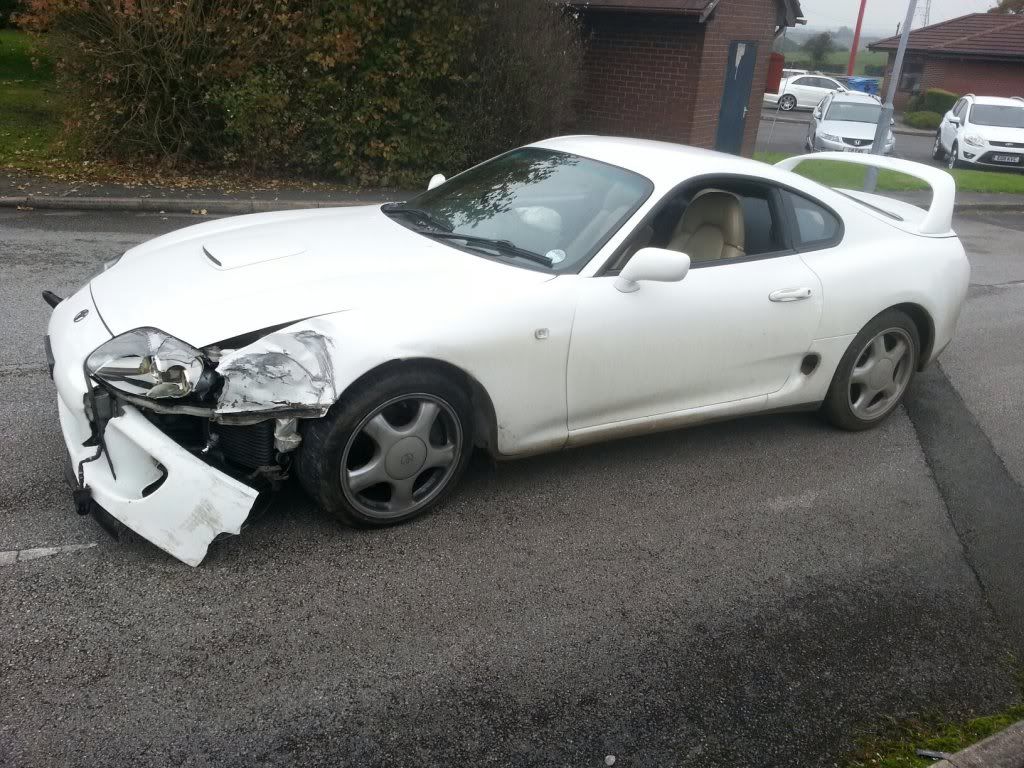
I hear Nathan is an expert in RWD.

I keep hearing jokes about him popping up, he wrote off a few cars in a short space of time?

DEAD GOOD I AM

supra-2.jpg


175498_10151167031353087_779868372_o.jpg
 
Don't be fooled into thinking RWD is always better than FWD. The BTCC championship is a great example of this, as is the Honda Type-R range.
 
Our traffic BMWs are usually the first casualties when snow and ice comes. Great in the dry but as with any RWD they bite bite in the wet and ice.

My old MR2 turbo was fantastic in the dry but mid engine, twin entry turbo along with RWD made for bricking it in the wet.
 
Rear wheel drive takes no more skill to drive than a front wheel drive car.

Its just the price for stupidity is higher.
 
RWD is MUCH more fun :)

imho FWD cars can be great fun to drive, but the RWD just feels a lot nicer to corner with.

Plus you can give a boot-full at any given opportunity and hang the bum out a bit :D (where safe to do so, on my own private road with a helmet on and wearing sports underwear)


 
Once you try RWD and get use to how to apply power in corners you really understand why people prefer the set up. It has its advantages and disadvantages of course, fwd is more suited to cars sub 200bhp and is also much more controllable in the wet/snow etc. RWD doesnt suffer from under steer so can usually corner better and if you fancy it power slides with the right diff etc. Im quite into my drifting so obviously i love it to bits :D
 
Our traffic BMWs are usually the first casualties when snow and ice comes. Great in the dry but as with any RWD they bite bite in the wet and ice.

My old MR2 turbo was fantastic in the dry but mid engine, twin entry turbo along with RWD made for bricking it in the wet.

They're only bad in the wet/slippy stuff if you have the wrong tyres on.
 
Ive gone from a RWD elise to a FWD Brera and to be honest the Brera scares the **** out of me, I found the elise so much more predictable even in the wet (although I did have a piroette moment once in the elise but I was being a bit of a muppet and pushing to/over its limits)
I think once you get used to RWD you will find it much more enjoyable unless its a 2.8 capri :D
 
True Dat.

I turnt the "IWantToSmashIntoAWallSideways" (TCS) button off in my Bimmer in last years snow.

Surprisingly enough, I smashed it into a wall :-(

That's the only way I got up my hill :) DSC off and floor it, otherwise I just span one wheel and went no where.

RWD sucks in the snow, is very planted in the wet(unless you drive like an idiot) and is fantastic in the dry, also a nicer drive in general, nicer pulling out of junctions when turning etc
 
Don't be fooled into thinking RWD is always better than FWD. The BTCC championship is a great example of this, as is the Honda Type-R range.

...is exactly what someone with a pesky FWD car would say :p

In all seriousness though OP it depends what you want, ci is correct in that RWD isn't necessarily faster. I take my 328 to track which has approx 195 bhp/ton yet I get hassled by people in 10 year old clios, and subsequently overtaken.

I still maintain that rwd is more fun though, although I'm comparing my old 1.6 focus and my mrs's old fiesta to a bmw 328 and an mx5.
 
Back
Top Bottom