

-
Notice regarding image hosts and attachments. See here.
You are using an out of date browser. It may not display this or other websites correctly.
You should upgrade or use an alternative browser.
You should upgrade or use an alternative browser.
When would you have 'Dinner'
- Thread starter Guest2
- Start date
More options
Thread starter's posts


Caporegime
- Joined
- 20 Oct 2002
- Posts
- 79,722
- Location
- Wish i was in a Ramen Shop Counter
This thread again.
Main meal of the day, so no set time.
What if you have your main meal first thing in the morning?


What if you have your main meal first thing in the morning?
Well then its just dinner, lunch, then supper. Simples!


Soldato
- Joined
- 7 Jul 2009
- Posts
- 16,234
- Location
- Newcastle/Aberdeen
Lunch = 12-1pm
Dinner/Tea = 5-7pm
Yup. Dinner and Tea are interchangeable.
If I ask you out to dinner, i am expecting waiter service, sit down, evening meal.
Not appropriate.
Caporegime
- Joined
- 20 Oct 2002
- Posts
- 79,722
- Location
- Wish i was in a Ramen Shop Counter
I don't put out on the first date.
Sorry
Sorry
What if you have your main meal first thing in the morning?
Well not dinner.
However it used to be used for the first meal of the day, but more lunchtime rather than morning.
Originally, dinner referred to the first meal of a two-meal day, a heavy meal occurring about noon, which broke the night's fast in the new day. The word is from the Old French (ca 1300) disner, meaning "breakfast", from the stem of Gallo-Romance desjunare ("to break one's fast"), from Latin dis- ("undo") + Late Latin ieiunare ("to fast"), from Latin ieiunus ("fasting, hungry").[3][4] The Spanish word "desayuno", the Romanian "dejun", and the French "déjeuner" retain this etymology (such as Portuguese "desjejum", while referring to breakfast). Eventually, the term shifted to referring to the heavy main meal of the day, even if it had been preceded by a breakfast meal.
[edit]

[FnG]magnolia;23043727 said:Hey, if I had a sandwich and cut it in two would I have two sandwiches?
Depends on what kind of sandwich. General rule of thumb that for ham sandwiches the answer is 'yes', for chicken the answer is 'no' and if it has no meat content then the answer is 'sack up, noncebucket.'
The terms "breakfast", "lunch" and "dinner" are more commonly used worldwide though... I mean, even when booking reservations at restaurants they call it breakfast/lunch/dinner - e.g:
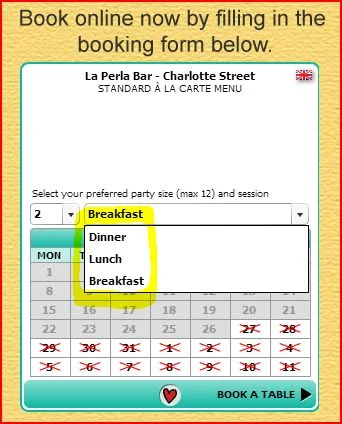
People who call lunch = dinner and dinner = tea are just..... strange!
People who call lunch = dinner and dinner = tea are just..... strange!
Dine just means eating a meal, you can dine at breakfast, lunch, dinner, tea etcNo no no no!
When someone wine and dine someone, dine is a sit down, take your time, evening type meal.
Dine doesn't mean "to eat dinner".

Soldato
- Joined
- 24 Apr 2011
- Posts
- 5,455
- Breakfast
- Lunch (12-2)
- Tea (3-5)
- Dinner (7-9)
- Lunch (12-2)
- Tea (3-5)
- Dinner (7-9)

Breakfast, lunch, and dinner. It's as simple as that, I can't believe people even argue over this stuff.
From Wiki...
Originally, dinner referred to the first meal of a two-meal day, a heavy meal occurring about noon, which broke the night's fast in the new day. The word is from the Old French (ca 1300) disner, meaning "breakfast", from the stem of Gallo-Romance desjunare ("to break one's fast"), from Latin dis- ("undo") + Late Latin ieiunare ("to fast"), from Latin ieiunus ("fasting, hungry").[3][4] The Spanish word "desayuno", the Romanian "dejun", and the French "déjeuner" retain this etymology (such as Portuguese "desjejum", while referring to breakfast). Eventually, the term shifted to referring to the heavy main meal of the day, even if it had been preceded by a breakfast meal.
I use it for the evening meal too though!
Dinner is ~7pm
If someone said to you 'Are you coming for Dinner' Would you assume this is at ~1pm or ~7pm?
I wouldn't assume anything because the time at which dinner happens varies from household to household so I'd ask "what time is Dinner?".
'tea' is a hot beverage and it should be
Lunch = 12-1pm
Dinner = 5-7pm
Thats right