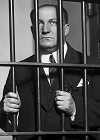
Man imprisoned for not giving police password.

Surely, what you have written is the opposite of what is true?

Just to clarify, what you have written is that:
1. if I fraudulently acquire £50 and I admit this to my solicitor, the solicitor must dob me in.
2. if I have committed a major terrorist act, killing 5 people in the process and admit this to my solicitor, my solicitor is not legally obliged to inform any other authorities about my admission.

Have I got this correct?


No, if you tell the solicitor you are GOING to commit fraud then they must disclose.

If you tell the solicitor you HAVE committed fraud then they don't.

All this is of course in the course of your engagement with the solicitor, not just if it's random chit chat :D

Essentially a solicitor can't help you commit crime.

 
No, if you tell the solicitor you are GOING to commit fraud then they must disclose.

If you tell the solicitor you HAVE committed fraud then they don't.

All this is of course in the course of your engagement with the solicitor, not just if it's random chit chat :D

Essentially a solicitor can't help you commit crime.

That just doesn't work though

Say ...
I'm arrested due to attempted terrorism.
I tell my lawyer, my comrades will carry on with the act (ie an act that I planned, as such failure to tell the police mean he's helping me).
However, if he tells the police the above then he is removing a possible bargaining chip from me (ie I cannot use the info that I give him as a bargaining chip to lower my sentence/pardoned)
 
That just doesn't work though

Say ...
I'm arrested due to attempted terrorism.
I tell my lawyer, my comrades will carry on with the act (ie an act that I planned, as such failure to tell the police mean he's helping me).
However, if he tells the police the above then he is removing a possible bargaining chip from me (ie I cannot use the info that I give him as a bargaining chip to lower my sentence/pardoned)

I don't get how it doesn't work :confused:

A solicitor can't facilitate crime. If you tell the solicitor that the attack will still occur then the solicitor should disclose.

Merely because a client is speaking or writing to his or her solicitor does not make that communication privileged - it is only those communications between the solicitor and the client relating to the matter in which the solicitor has been instructed for the purpose of obtaining legal advice that will be privileged

BTW, IANAL, this is my interpretation of the Law Society's guidance :D
 
I don't get how it doesn't work :confused:

A solicitor can't facilitate crime. If you tell the solicitor that the attack will still occur then the solicitor should disclose.

Merely because a client is speaking or writing to his or her solicitor does not make that communication privileged - it is only those communications between the solicitor and the client relating to the matter in which the solicitor has been instructed for the purpose of obtaining legal advice that will be privileged

BTW, IANAL, this is my interpretation of the Law Society's guidance :D

Yes, but the crime is related to why I was arrested and why I'm speaking to a lawyer (but the police don't know about there being more people involved hence they can still do the act unless my lawyer tells police there are more people)
 
What's the deal on having nekkid pics of your own kids? I'm pretty sure my mother has a nekkid pic of me somewhere when I was about 12 months old. Should I tell her to destroy it before she gets locked up?
 
Not really.

I'm sure that you would not feel comfortable with Government-monitored telescreens in every room of your house, and regular checks by authorities of everything in your life (1984-style). So from there downwards, it's just a matter of degrees.

Try to understand that different people have different perspectives on privacy. This is inevitable in a society of free-thinking individuals, and is the way that it should be. The law (in this country at least) seeks to balance the need to protect its citizens against the right to privacy. The boundaries between the two are ever changing, and are always open to debate as technology changes and the expectations of society evolve. To simply assume that your personal viewpoint is inherently correct, and to label any other perspectives as "irrational" or "tinfoil hat" is rather naive and quite short sighted.

I'm certainly not naive, nor short sighted, I understand exactly what your view is, and how you arrive at it, I accept it as a possibility, however, it is irrational on many levels especially when you present a hypothetical scenario that is based on some fiction and a large dose of perceived worse case scenario's that are quite illogical on many levels.

Not only that, but you are basing your current actions and beliefs around it, which is fine, but you are actually fighting against the system based on a strong belief this narrow future scenario will come true.

I like to consider the larger picture, and look at what keeps society balance throughout history, and can only see your view of a future state if society devolves massively, which is quite extreme. This is why I consider it irrational, and I am not totally hell bent on causing offence, but I don't want to enter yet another debate about a subject where hypothetical worse cases are made up which are impossible to completely dismiss, but it requires all worse cases to stack together to arrive at the desired view..
 
Last edited:
To not co-operate and reveal information and be convicted of not doing so is quite unique to RIPA and perhaps sections of the Terrorism Act.

Certain elements of the RTA remove the right to non-incrimination too don't they? i.e. you've got to admit whether it was you driving the vehicle at the time?

No, if you tell the solicitor you are GOING to commit fraud then they must disclose.

If you tell the solicitor you HAVE committed fraud then they don't.

All this is of course in the course of your engagement with the solicitor, not just if it's random chit chat :D

Essentially a solicitor can't help you commit crime.

A solicitor cannot also lie in court for you according to the code of professional ethics, that's not to say some don't though... However a solicitor can defend someone knowing they are guilty of a crime of course, it's a choice they make but in that instance they will simply present your mitigation in the best possible light and make the prosecution prove their case.

That just doesn't work though

Say ...
I'm arrested due to attempted terrorism.
I tell my lawyer, my comrades will carry on with the act (ie an act that I planned, as such failure to tell the police mean he's helping me).
However, if he tells the police the above then he is removing a possible bargaining chip from me (ie I cannot use the info that I give him as a bargaining chip to lower my sentence/pardoned)

Then frankly it's tough for you isn't it. You've a) managed to get caught and b) were engaged in attempted terrorism - at this point you've accepted the risks of the game you were playing and if that means the bargaining chip is removed then it is what it is. Not for nothing but you could also inform the police of it and bargain with them before your solicitor comes on the scene - that's if a plea bargain is what you want.
 
Again exceptions that should not exist, all your communication with your lawyer should be between you and him, never to be released

This is what I believe. Your conversation between you and your solicitor should always be private. The last thing a client wants to do is feel that they can't tell their solicitor the truth for fear that the solicitor may dob the client in.

Ultimately, the solicitor will be unable to give his client proper advice as the client hasn't told the solicitor the full story.
 
I forgot about that one tbh. You don't have to admit driving but you can be convicted of not disclosing the requested information albeit in limited circumstances.

Not limited at all, failure to answer S172 is an offence in itself.

And you DO have to admit driving, as you have to say who was driving at the time on the S172 (which would be you)
 
A solicitor cannot also lie in court for you according to the code of professional ethics, that's not to say some don't though... However a solicitor can defend someone knowing they are guilty of a crime of course, it's a choice they make but in that instance they will simply present your mitigation in the best possible light and make the prosecution prove their case.

LPP isn't an ethical matter however, it's a legal one as it's enshrined in common law is it not?
 
Not limited at all, failure to answer S172 is an offence in itself.

How about limited offences then ? Will that do ? It is not carte blanche to all sections of the RTA. In other words limited circumstances.

And you DO have to admit driving, as you have to say who was driving at the time on the S172 (which would be you)

You don't have to say. There is nothing stopping the suspect saying that he will not disclose who was driving or remain silent but there is a penalty in not doing so.
 
I'm certainly not naive, nor short sighted, I understand exactly what your view is, and how you arrive at it, I accept it as a possibility, however, it is irrational on many levels especially when you present a hypothetical scenario that is based on some fiction and a large dose of perceived worse case scenario's that are quite illogical on many levels.

Not only that, but you are basing your current actions and beliefs around it, which is fine, but you are actually fighting against the system based on a strong belief this narrow future scenario will come true.

I like to consider the larger picture, and look at what keeps society balance throughout history, and can only see your view of a future state if society devolves massively, which is quite extreme. This is why I consider it irrational, and I am not totally hell bent on causing offence, but I don't want to enter yet another debate about a subject where hypothetical worse cases are made up which are impossible to completely dismiss, but it requires all worse cases to stack together to arrive at the desired view..

Hypothetical worst-case scenarios? How many examples of confidential data being misplaced do you need? From top-secret laptops being left on trains to personal data being distributed via torrent sites, leaks of data occur all the time. We only hear about the high-profile cases, and even then only a small subset that actually gets reported. If you want to believe that such things only occur in "the worst case scenario" of some "hypothetical future" then go right ahead. Give your information freely, and vote for those who wish to further the distribution of "private" data, whoever they may be at the time. No-one is stopping you. I, however, reserve the right to resist giving away my personal data to the fullest extent of the law, and if I feel that the laws have overstepped what I think to be reasonable, I reserve the right to emigrate. Thankfully I have enough marketable skills to make this a viable option.

Besides all this, my personal viewpoint is really quite simple; that I don't want anyone looking through my stuff, or gathering information on me. This isn't based on some grandiose ideal of a utopian model for society, it's just based on the fact that I don't want anyone looking through my stuff, whether or not I have anything illegal or embarrassing in my possession. Everyone else can mind their own business. it really is as simple as that. No amount of name-calling, or attempts to categorise a set of viewpoints into cliche'd and stereotyped categories will change that. Sticks and stones...


On a side note: I take it that you have never been accused of committing a crime that you were not guilty of? I have, and it is NOT a pleasant experience. Even when the police found the guy responsible, and prosecuted him, I was still left with a particular stigma. It was not nearly as serious an offence as that which is alleged in this article, but still - it left me with a very real sense of what is reasonable to expect from law enforcement. I hope you are never left in this situation, as it is rather unpleasant.
 
This is what I believe. Your conversation between you and your solicitor should always be private. The last thing a client wants to do is feel that they can't tell their solicitor the truth for fear that the solicitor may dob the client in.

Ultimately, the solicitor will be unable to give his client proper advice as the client hasn't told the solicitor the full story.

And what of the issue that the client could potentially be making the solicitor an accessory? I know it's not de rigeur to think that solicitors have consciences but despite all evidence to the contrary they are, in fact, human with all the ancilliary problems that brings. They're also under certain obligations both professional and legal regarding what they can and cannot do.

I forgot about that one tbh. You don't have to admit driving but you can be convicted of not disclosing the requested information albeit in limited circumstances.

[TW]Fox;17530391 said:
Section 172.

Cheers gents, I couldn't remember it off the top of my head but thought it was in there. It's more as a matter of interest than actually adding much to the discussion.

LPP isn't an ethical matter however, it's a legal one as it's enshrined in common law is it not?

As it says in the document you linked to it's a fundamental human right so common law covers it, however it could be over-ridden by statute if so chosen. We are slightly talking at cross-purposes though I think as I wasn't actually disagreeing with your point, more explaining why a solicitor cannot lie for their client - over and above any duty they have to their client they have a duty to the court to be truthful.
 
After that incident, what are you feelings towards the Police?

I don't really blame them for it... Looking objectively, it was reasonable for them to come and question me about the incident, since it took place at my parents house. It would have been nice if, once they found the right guy, they would have taken the time to come back and tell my parents that I wasn't responsible (I was 16), but the real damage was already done. Everyone at my school already thought that I was a pervert, and I was stuck with that label for the next two years. If anything, it made me determined to protect myself better in the future.

I appreciate that situations like this aren't really "the norm", but it did drill into me the importance of self-protection, and the power of perception: That absolute innocence or guilt are largely irrelevant, and that perception is reality. I guess that it also made me a little more defensive than I would otherwise have been.
 
Blimey, 19 seems young. Doesn't fit into the anoraked greasy 60 year old paedo stereotype at all. Daily Mail please tell me what to think!

I always assumed they'd have one of those Hollywood-type de-encryption software things.
that is a myth/chid molester come in all ages,sad fact mate
 
2615 82 9943 5156 3965 6745 73 3965 6745 73 69 7943

(look at your keyboard numbers)
translation: "what is love baby dont hurt me dont hurt me no more"

I can type this again without looking at it again and not even looking at it once. totally crackable :)
 
Back
Top Bottom