


Cheers. I've checked and it's currently limited and correctly set...but it still merrily plots moves beyond range. Trying to do a 2D Pocket instead of a faceing, it also plunges the whole tool and shaft through the stock and the bed...which is helpful. If you simulate with machine, it does at least spot there is overtravel and collision. I might need to reconfigure the Z axis limits as currently they're -30odd to +30odd which if I remember matches what the machine spits out but might not be helpful for programming.
-
Notice regarding image hosts and attachments. See here.
You are using an out of date browser. It may not display this or other websites correctly.
You should upgrade or use an alternative browser.
You should upgrade or use an alternative browser.
Project: Silent Overkill
- Thread starter Cenedd
- Start date
More options
Thread starter's postsWell, time for some updates. Nothing too exciting but it's news at least.
Firstly, we are, at least in theory, moving house. "in theory"? Well, it's complicated. The sale of this house is all lined up...finally. The move date is set and our buyer can just about do that date before their mortgage disappears. Our solicitor has agreed the date with everyone...and THEN said that by the way, we might not be ready to buy the new house by then. *facepalm* So yeah, at the moment it's pack-and-pray.
So onto directly related stuff. I found that the nice relay I'd built into the CNC's PSU to start and stop the router works nicely....apart from the fact the router refuses to spin when you restore power with the switch turned on. So, some open-router surgery, new flex and we now have both a switched live and a permanent live. Restart protection bypassed and it works nicely. At some point, it might be possible to do speed control if I essentially remove the pot and substitute in something providing the voltage level it's looking for. A project for another time though.
I worked out the CAD issues so that the Z coordinates aren't crazy and I worked out how to constrain it to an area so it doesn't go out of bounds. But oddly, it left an uncut ridge on the CAD. Whack in a negative amount of stock to leave and bam, perfect....except now the coordinates are negative again. So somehow, despite carefully calculating it all, I can't get right to the edge without hitting the limit switch and having it e-stop. I had a play but it's not going to work....so I escalated things
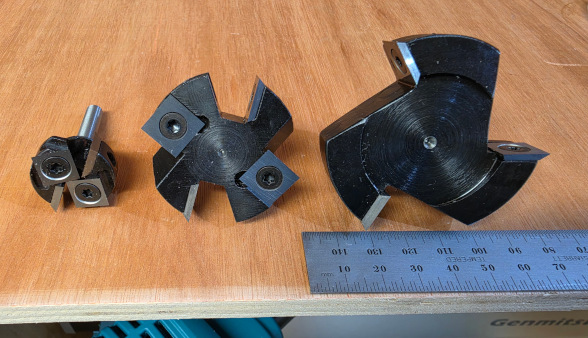
If 45mm won't reach, maybe 60mm will! I've turned down the 12mm shank (that won't fit in the collet on my router) to 8mm. Is that wise for a cutter this big?! No, almost certainly not...but then it's only going to be taking a very shallow cut in some quite soft plastic...so I reckon it'll be ok.
We've got this weekend and next before we have to move...so I suspect that making chips is going to have to wait until after that...and after moving in...and after getting stuff sorted...and...and....ah, I'll get there someday!
Firstly, we are, at least in theory, moving house. "in theory"? Well, it's complicated. The sale of this house is all lined up...finally. The move date is set and our buyer can just about do that date before their mortgage disappears. Our solicitor has agreed the date with everyone...and THEN said that by the way, we might not be ready to buy the new house by then. *facepalm* So yeah, at the moment it's pack-and-pray.
So onto directly related stuff. I found that the nice relay I'd built into the CNC's PSU to start and stop the router works nicely....apart from the fact the router refuses to spin when you restore power with the switch turned on. So, some open-router surgery, new flex and we now have both a switched live and a permanent live. Restart protection bypassed and it works nicely. At some point, it might be possible to do speed control if I essentially remove the pot and substitute in something providing the voltage level it's looking for. A project for another time though.
I worked out the CAD issues so that the Z coordinates aren't crazy and I worked out how to constrain it to an area so it doesn't go out of bounds. But oddly, it left an uncut ridge on the CAD. Whack in a negative amount of stock to leave and bam, perfect....except now the coordinates are negative again. So somehow, despite carefully calculating it all, I can't get right to the edge without hitting the limit switch and having it e-stop. I had a play but it's not going to work....so I escalated things
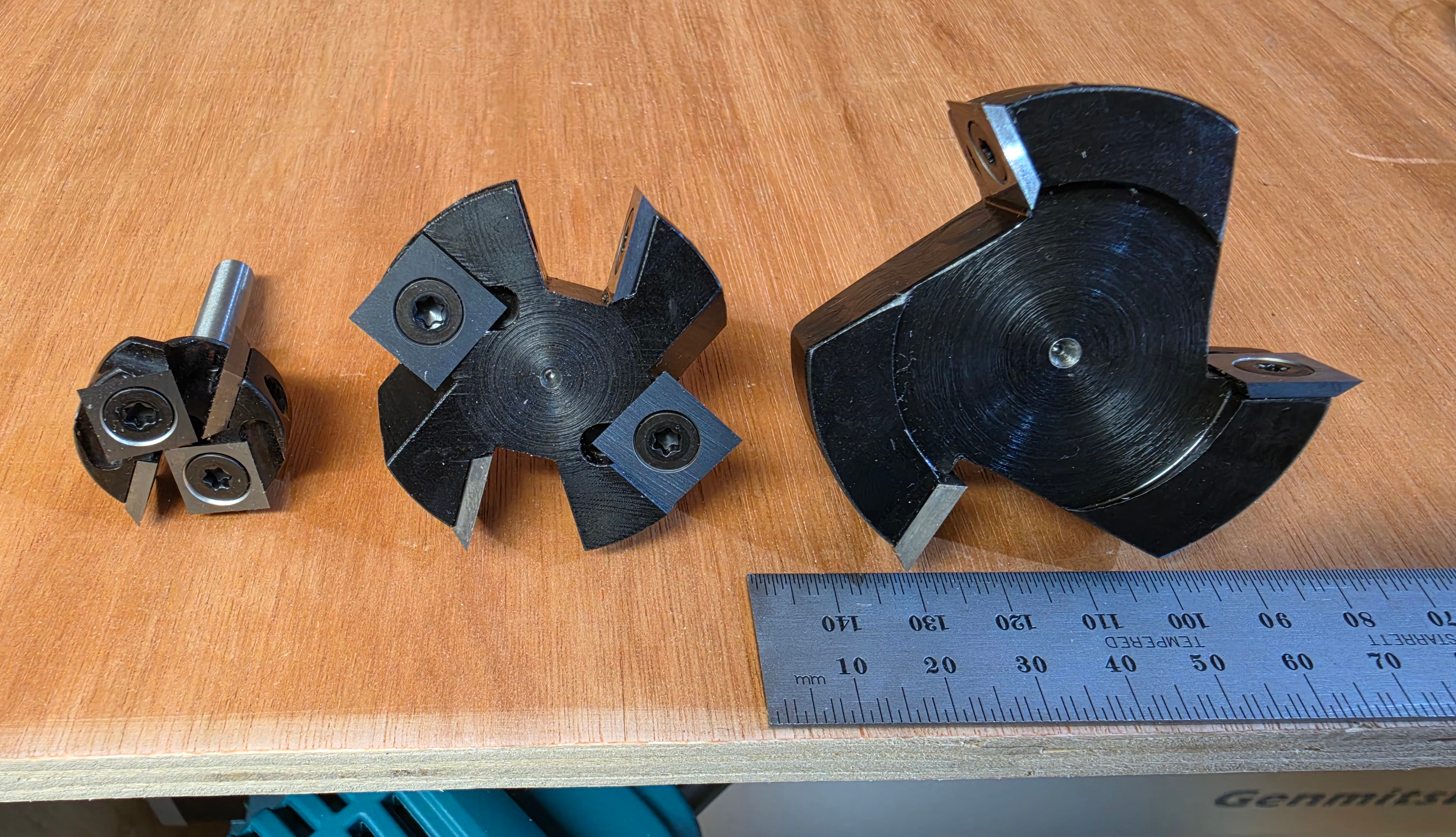
If 45mm won't reach, maybe 60mm will! I've turned down the 12mm shank (that won't fit in the collet on my router) to 8mm. Is that wise for a cutter this big?! No, almost certainly not...but then it's only going to be taking a very shallow cut in some quite soft plastic...so I reckon it'll be ok.
We've got this weekend and next before we have to move...so I suspect that making chips is going to have to wait until after that...and after moving in...and after getting stuff sorted...and...and....ah, I'll get there someday!

Right, time for an update! You've made some progress? Well, no...not exactly. Strictly speaking, I've made the opposite of progress but that's more because I effectively took a massive step backwards and landed myself with a bucket-load of extra jobs that all took priority
So, house move is complete...well, as complete as these things ever are. Lots of work done and lots still to be done. Getting an internet connection that wasn't a 4G router balanced on the windowsill took 5 weeks! The joys of telegraph-pole mounted wiring with the pole being the 'wrong' side of the road and covered in trees...and with a car parked blocking access. Still, FTTP is in and running ...at less than one third of the speed ordered. Fixing that has been another two weeks...so far!
I've been running network cables to all the essential places and getting wifi up and running. Lovely cable run to the middle of the ceiling. Mounted the wifi point...dead. Took me a while to work it out but somehow that wifi point has lost the ability to request PoE. Plug it into the switch and the switch sits there 'looking for load'. Give it a dumb injector and it fires up. For now, I've set the switch to force PoE on...and hope that I never plug in something that will release its magic smoke!
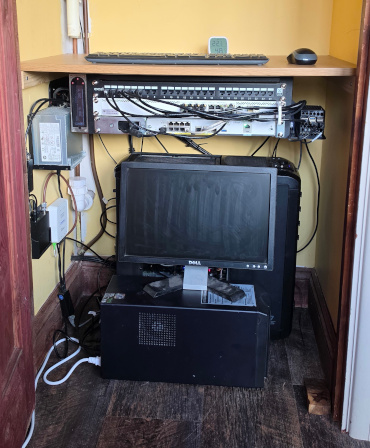
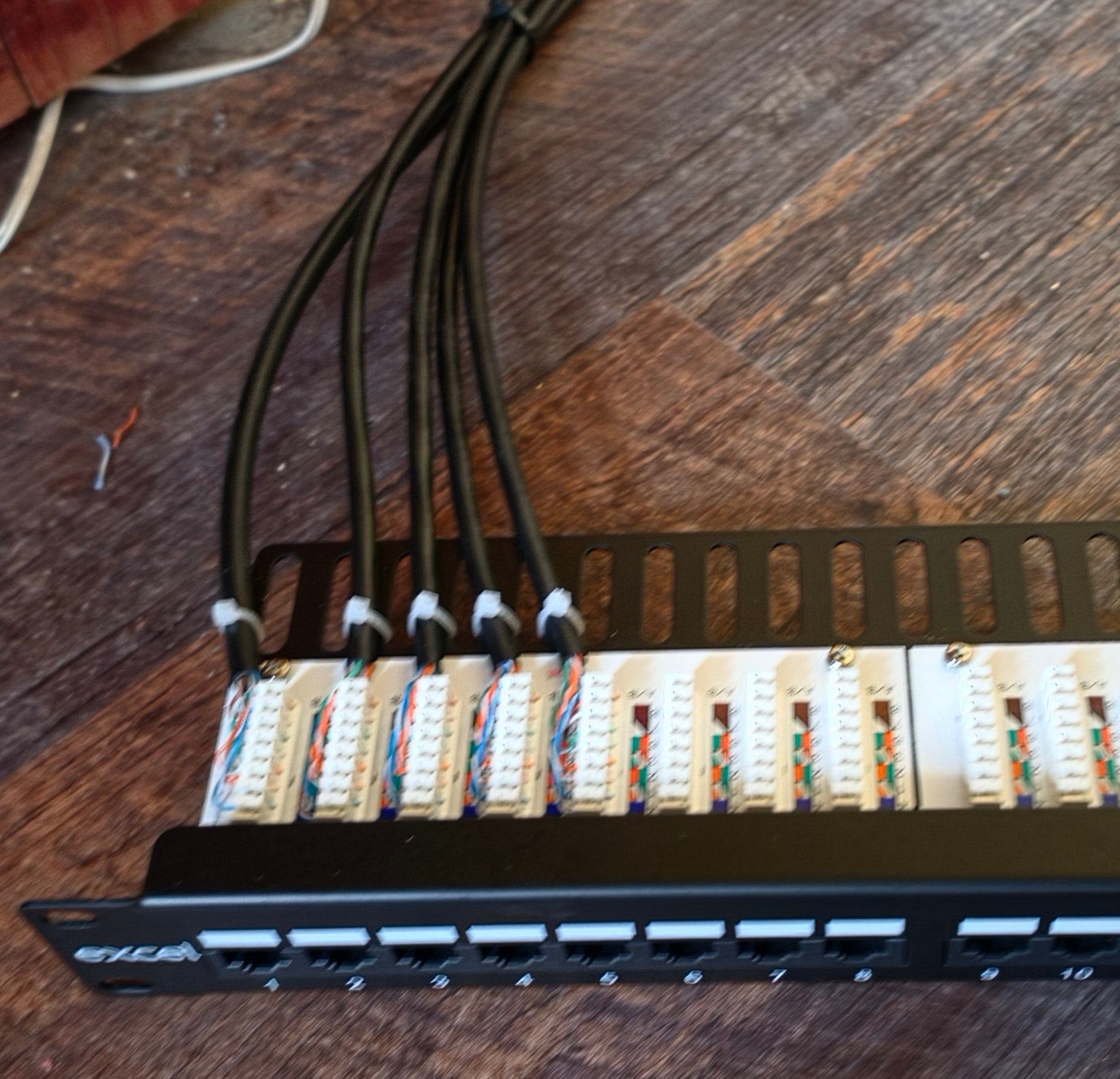
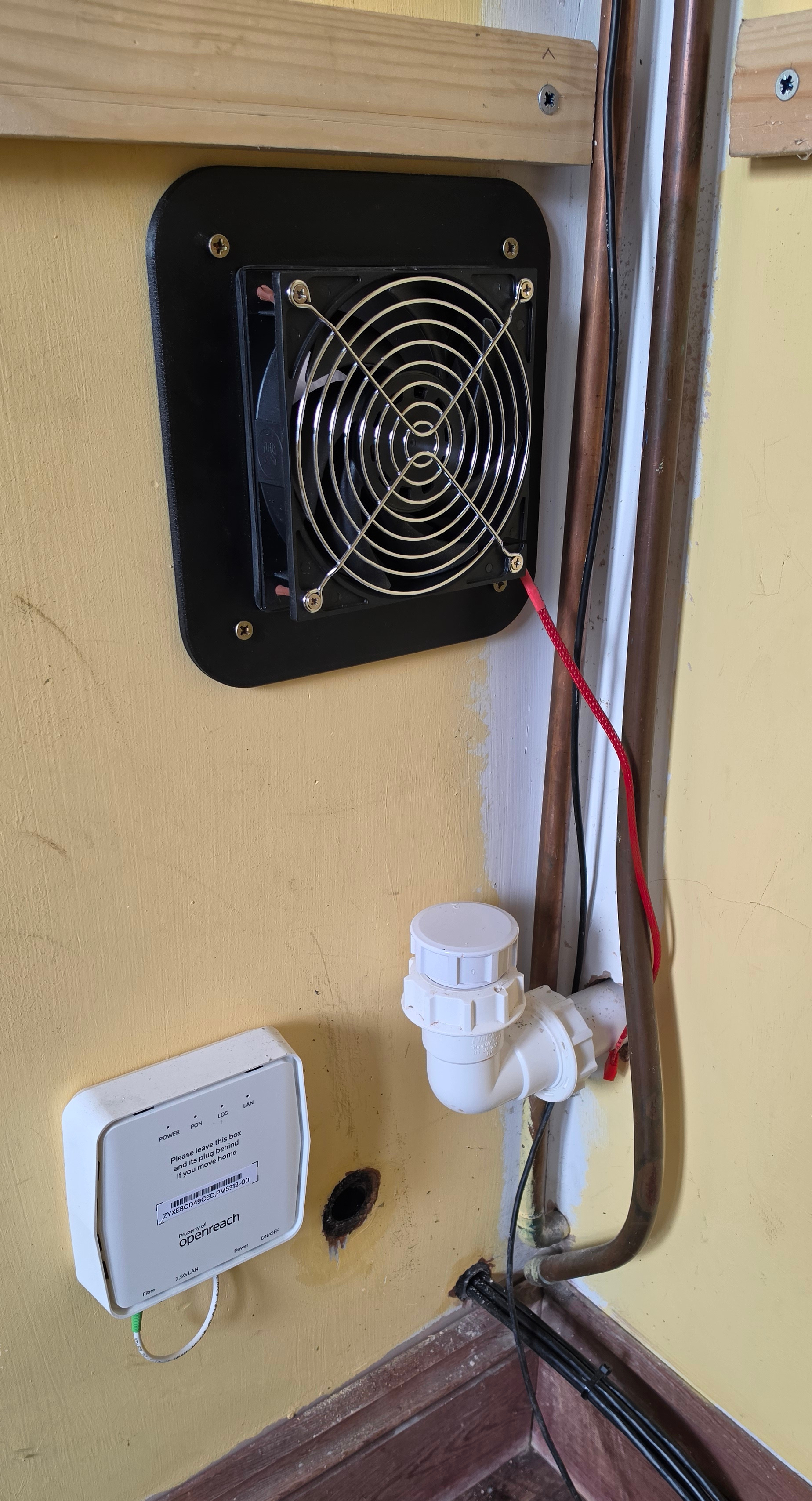
Next up, the server. Built it a nice cupboard: shelf, patch panel, UPS, 127mm core drill through the wall for a 120mm Furious Varder extractor:
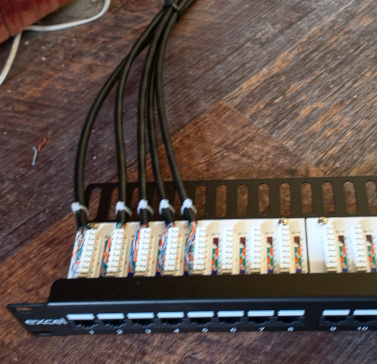
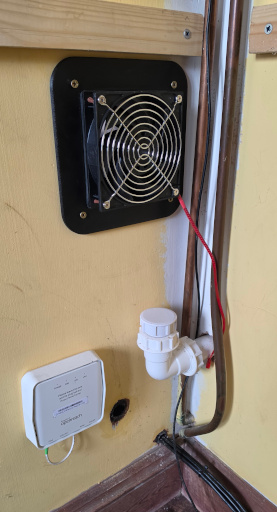
Nice. Plugged in the server....dead. There's a theme here with IT kit that's been moved...and it's all weird. Server powered up but sat there not POSTing with the debug display showing 00. Looked it up and apparently it's usually the CPU. So clearly things have shaken loose in transit and a rebuild will fix it...right? Well, you already know how that's going to go! But, I managed to find my Kryonaut (this alone was a challenge as for everything I need: It's in a box....somewhere...probably at the bottom of the stack and as far back as possible), reseated it and re-pasted it. Simplified it down to the bare essentials and....nope. Faffed about with it and it sprang to life. All the components back in and we're golden. All working fine. So I unplugged it and moved it to its cupboard....dead. So, I tried in vein unplugging and plugging stuff...and then went for a sulk.
A bit more blind luck and research and it seems it fails to cold-boot. If you have power applied and it's booting, it's fine...but remove the power or flick the switch on the PSU and it's pot-luck if it'll turn on again. Research on this suggests it could be the CMOS battery. I've never seen that cause anything other than a defaulting of settings...but it's worth a go and it would make sense if it's been unplugged for a month. I've got loads of CR2032's as well....they're in a box...damnit! Ordered some more (that I didn't really want but it saved my sanity some) and looked at fitting it. At least that'll be easy, right?! Surprise! On this board, it has metal shrouding round the PCIE slots for aesthetics. The battery (and an M.2 type slot with bluetooth in) are underneath that. No problem, it'll unclip or unscrew, right?! Well, yes, it unscrews....from the rear of the board. Who does that?! So entire board out, undo two screws at the back and it comes tantalisingly close to coming off. The rest is joined to the southbridge heatsink....and as far as I can tell, would need the entire SB heatsink unscrewing and removing...as well as the piece that's connected by a heatpipe. Nope. Some careful poking with a long screwdriver released teh battery form the slot and some colourful language tempted the new one in with just the clearance afforded by the two removed screws. If at first you don't succeed....CHEAT!
Reassembled it all, plugged it all in and....SHE LIVES!! Now, for morbid curiosity, I tested the voltage on the old 3V battery. It measured....wait for it....3V. So, it might be the change of battery that's made it work or it could be just blind luck that plugging it in that time brought it up. Given that I've looked up the price of 64GB of DDR5 (or even DDR4!) to build a new server, I'm not about to unplug it to find out!!
As it was, it had wiped the CMOS so getting everything back up and booting was...a joy! But now we have self-hosted forum pictures working again...and I've got those sync'ing those to a server elsewhere so at worst, I can ressurect them if the server dies again.
All assembled, we have this:
Aquaero on the left of the rack running the extractor fan based on a temp curve - a sensor near the fan (top back of the cupboard) and a sensor bottom front of the cupboard to see a delta. Mount is 3D printed and mounts sandwhiched between the rack and the things screwed into it.
PSU nest to it is for the Aquaero - I did try a much smaller one but it lacks the 5V line and without that, the temperature sensors don't seem to work in the Aquaero.
Black box is a network quad Freeview tuner feeding Plex on the server.
To the right of the rack frame is a Pi5 on another 3D printed mount, running Home Assistant (smart home control) and Frigate (CCTV)
So that's the networking, wifi and server about back to where we were before the house move, what about the CNC for making some actual progress on this project? Well, the workshop is currently still a garage...in the traditional sense of garages everywhere: full of boxes to the point you can't really walk in! Some of the CNC is in a box on a bench...and some is in storage still. Either way there isn't enough space currently to set it up. I'll get some space back once bits of the house are finished enough that their boxes can be put back where they belong. I also need a new door (one that isn't at risk of derailing and can't be opened with the tin-opener on a penknife!) and two new windows - one's rotted and one to replace the disaster of a man-door that was there before. When I can close off the gaps round the windows, I can set off the spider bomb and clean out the webbing - it's a bit like the wood in Harry Potter at the moment!
So getting there slowly...just not quite back to where I was pre-move. It WILL be better though!
So, house move is complete...well, as complete as these things ever are. Lots of work done and lots still to be done. Getting an internet connection that wasn't a 4G router balanced on the windowsill took 5 weeks! The joys of telegraph-pole mounted wiring with the pole being the 'wrong' side of the road and covered in trees...and with a car parked blocking access. Still, FTTP is in and running ...at less than one third of the speed ordered. Fixing that has been another two weeks...so far!
I've been running network cables to all the essential places and getting wifi up and running. Lovely cable run to the middle of the ceiling. Mounted the wifi point...dead. Took me a while to work it out but somehow that wifi point has lost the ability to request PoE. Plug it into the switch and the switch sits there 'looking for load'. Give it a dumb injector and it fires up. For now, I've set the switch to force PoE on...and hope that I never plug in something that will release its magic smoke!
Next up, the server. Built it a nice cupboard: shelf, patch panel, UPS, 127mm core drill through the wall for a 120mm Furious Varder extractor:
Nice. Plugged in the server....dead. There's a theme here with IT kit that's been moved...and it's all weird. Server powered up but sat there not POSTing with the debug display showing 00. Looked it up and apparently it's usually the CPU. So clearly things have shaken loose in transit and a rebuild will fix it...right? Well, you already know how that's going to go! But, I managed to find my Kryonaut (this alone was a challenge as for everything I need: It's in a box....somewhere...probably at the bottom of the stack and as far back as possible), reseated it and re-pasted it. Simplified it down to the bare essentials and....nope. Faffed about with it and it sprang to life. All the components back in and we're golden. All working fine. So I unplugged it and moved it to its cupboard....dead. So, I tried in vein unplugging and plugging stuff...and then went for a sulk.
A bit more blind luck and research and it seems it fails to cold-boot. If you have power applied and it's booting, it's fine...but remove the power or flick the switch on the PSU and it's pot-luck if it'll turn on again. Research on this suggests it could be the CMOS battery. I've never seen that cause anything other than a defaulting of settings...but it's worth a go and it would make sense if it's been unplugged for a month. I've got loads of CR2032's as well....they're in a box...damnit! Ordered some more (that I didn't really want but it saved my sanity some) and looked at fitting it. At least that'll be easy, right?! Surprise! On this board, it has metal shrouding round the PCIE slots for aesthetics. The battery (and an M.2 type slot with bluetooth in) are underneath that. No problem, it'll unclip or unscrew, right?! Well, yes, it unscrews....from the rear of the board. Who does that?! So entire board out, undo two screws at the back and it comes tantalisingly close to coming off. The rest is joined to the southbridge heatsink....and as far as I can tell, would need the entire SB heatsink unscrewing and removing...as well as the piece that's connected by a heatpipe. Nope. Some careful poking with a long screwdriver released teh battery form the slot and some colourful language tempted the new one in with just the clearance afforded by the two removed screws. If at first you don't succeed....CHEAT!
Reassembled it all, plugged it all in and....SHE LIVES!! Now, for morbid curiosity, I tested the voltage on the old 3V battery. It measured....wait for it....3V. So, it might be the change of battery that's made it work or it could be just blind luck that plugging it in that time brought it up. Given that I've looked up the price of 64GB of DDR5
(or even DDR4!) to build a new server, I'm not about to unplug it to find out!!As it was, it had wiped the CMOS so getting everything back up and booting was...a joy! But now we have self-hosted forum pictures working again...and I've got those sync'ing those to a server elsewhere so at worst, I can ressurect them if the server dies again.
All assembled, we have this:
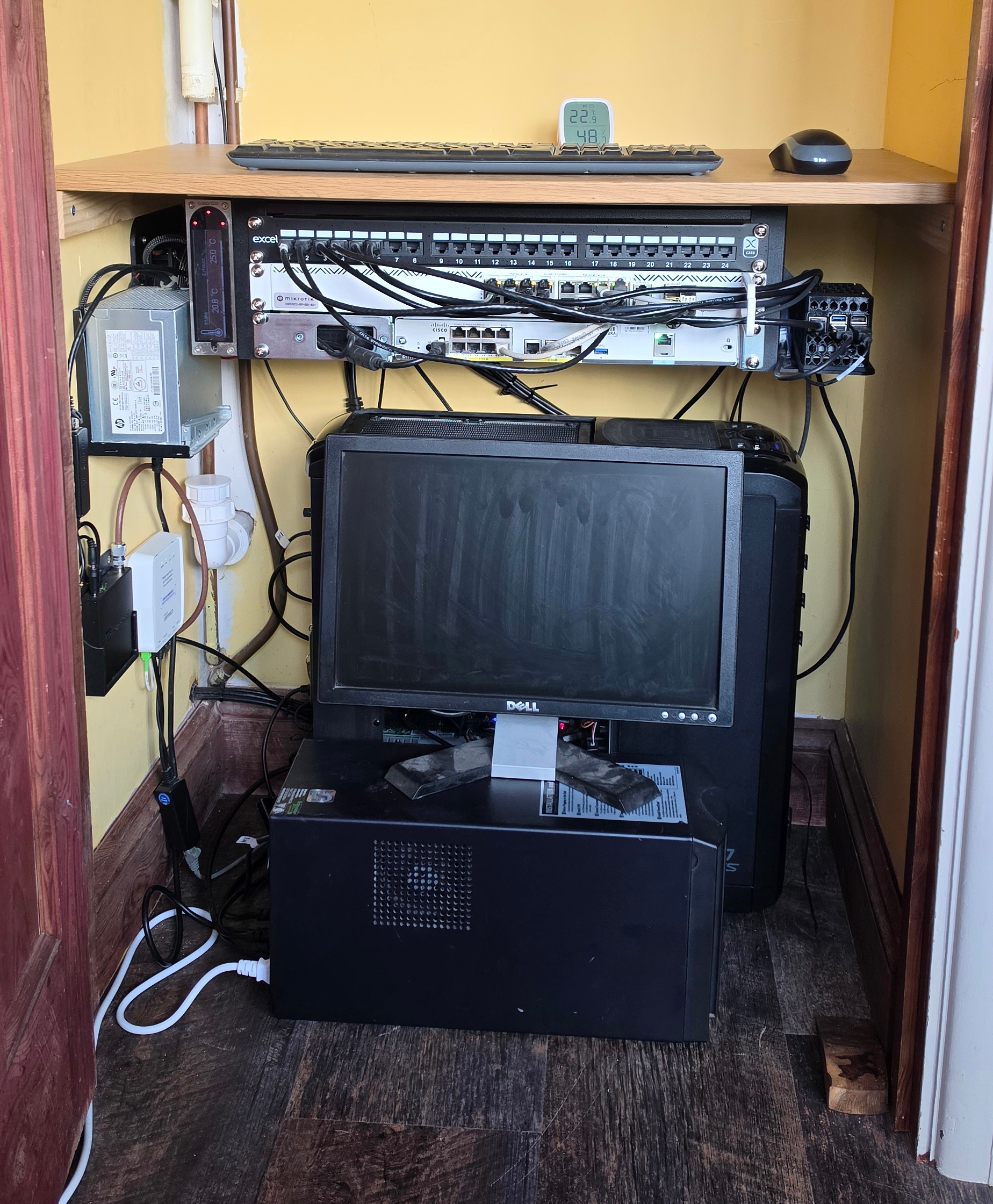
Aquaero on the left of the rack running the extractor fan based on a temp curve - a sensor near the fan (top back of the cupboard) and a sensor bottom front of the cupboard to see a delta. Mount is 3D printed and mounts sandwhiched between the rack and the things screwed into it.
PSU nest to it is for the Aquaero - I did try a much smaller one but it lacks the 5V line and without that, the temperature sensors don't seem to work in the Aquaero.
Black box is a network quad Freeview tuner feeding Plex on the server.
To the right of the rack frame is a Pi5 on another 3D printed mount, running Home Assistant (smart home control) and Frigate (CCTV)
So that's the networking, wifi and server about back to where we were before the house move, what about the CNC for making some actual progress on this project? Well, the workshop is currently still a garage...in the traditional sense of garages everywhere: full of boxes to the point you can't really walk in! Some of the CNC is in a box on a bench...and some is in storage still. Either way there isn't enough space currently to set it up. I'll get some space back once bits of the house are finished enough that their boxes can be put back where they belong. I also need a new door (one that isn't at risk of derailing and can't be opened with the tin-opener on a penknife!) and two new windows - one's rotted and one to replace the disaster of a man-door that was there before. When I can close off the gaps round the windows, I can set off the spider bomb and clean out the webbing - it's a bit like the wood in Harry Potter at the moment!
So getting there slowly...just not quite back to where I was pre-move. It WILL be better though!
Alright some more progress. It's going to seem massively off-topic but weirdly it's entirely connected. To finish this, I need a CNC router (or a CNC mill, but let's not be greedy  ) and to do that, I had to have more space, and to do that, I had to move house. That's the only reason, no others
Now I have the space, I have to get it in a fit state to use...and currently it's like garages everywhere; rammed to the gunnels with 'stuff'. There has literally been no room to move at points - even getting in the garage meant climbing a step ladder, crawling across a workbench and then back down a ladder to a small island of space surrounded by boxes that may or may not contain what you're looking for.
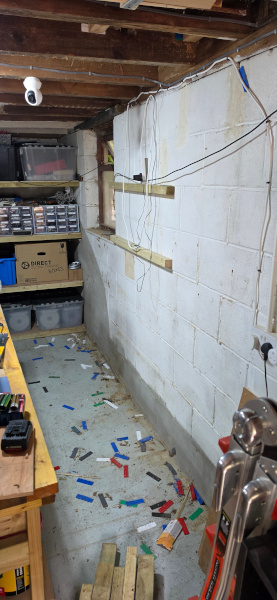
So I set about demolishing the shelves down half of one wall, the weird plinth thing to the left of them and the floor-to-ceiling vertical drawer things to the right. Good idea but they didn't work...and all were a pain to dismantle.
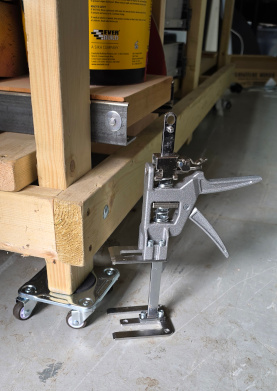
Space clear, I could start moving things about...but the smaller of the benches weighs about 100kg. The larger maybe more...and it's also got another 100kg of lathe on it! It wasn't looking like I'd get several strong builders (work ongoing in the house) at the same time for a while so I bought these:
Two benches and some hairy moments* later and we get this:
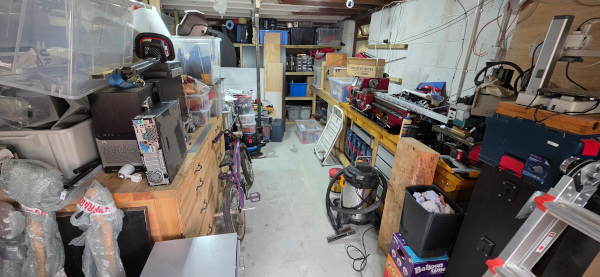
Tidy? Er, no. Not yet. But now it's possible to walk in, open the drawers in the benches and actually store things in them. Now I just have to wait for more time... and less knackered'ness!
* Turns out that when the floor isn't level over the whole length of a bench, one dolly can come adrift and suddenly you're tipping towards a totally unsupported corner!
) and to do that, I had to have more space, and to do that, I had to move house. That's the only reason, no others Now I have the space, I have to get it in a fit state to use...and currently it's like garages everywhere; rammed to the gunnels with 'stuff'. There has literally been no room to move at points - even getting in the garage meant climbing a step ladder, crawling across a workbench and then back down a ladder to a small island of space surrounded by boxes that may or may not contain what you're looking for.
So I set about demolishing the shelves down half of one wall, the weird plinth thing to the left of them and the floor-to-ceiling vertical drawer things to the right. Good idea but they didn't work...and all were a pain to dismantle.
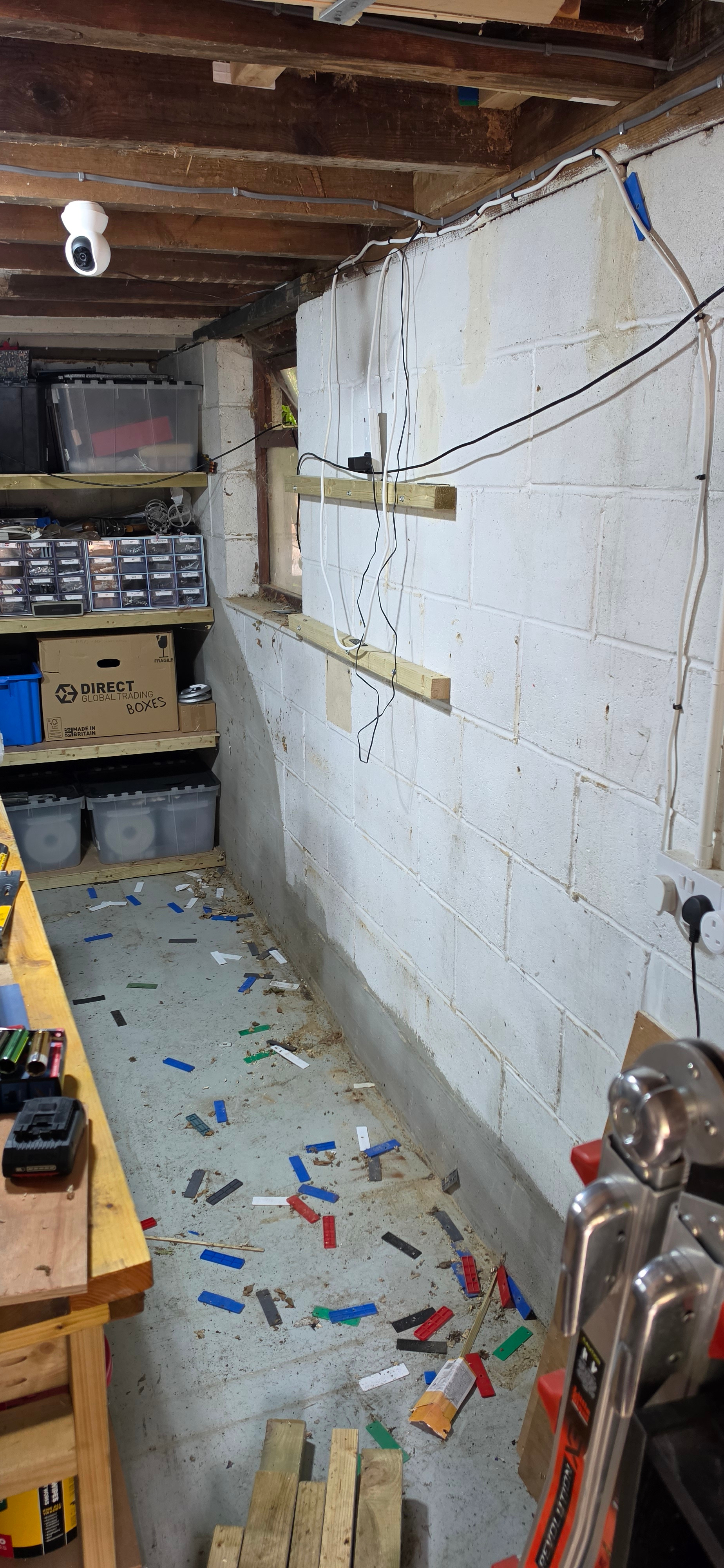
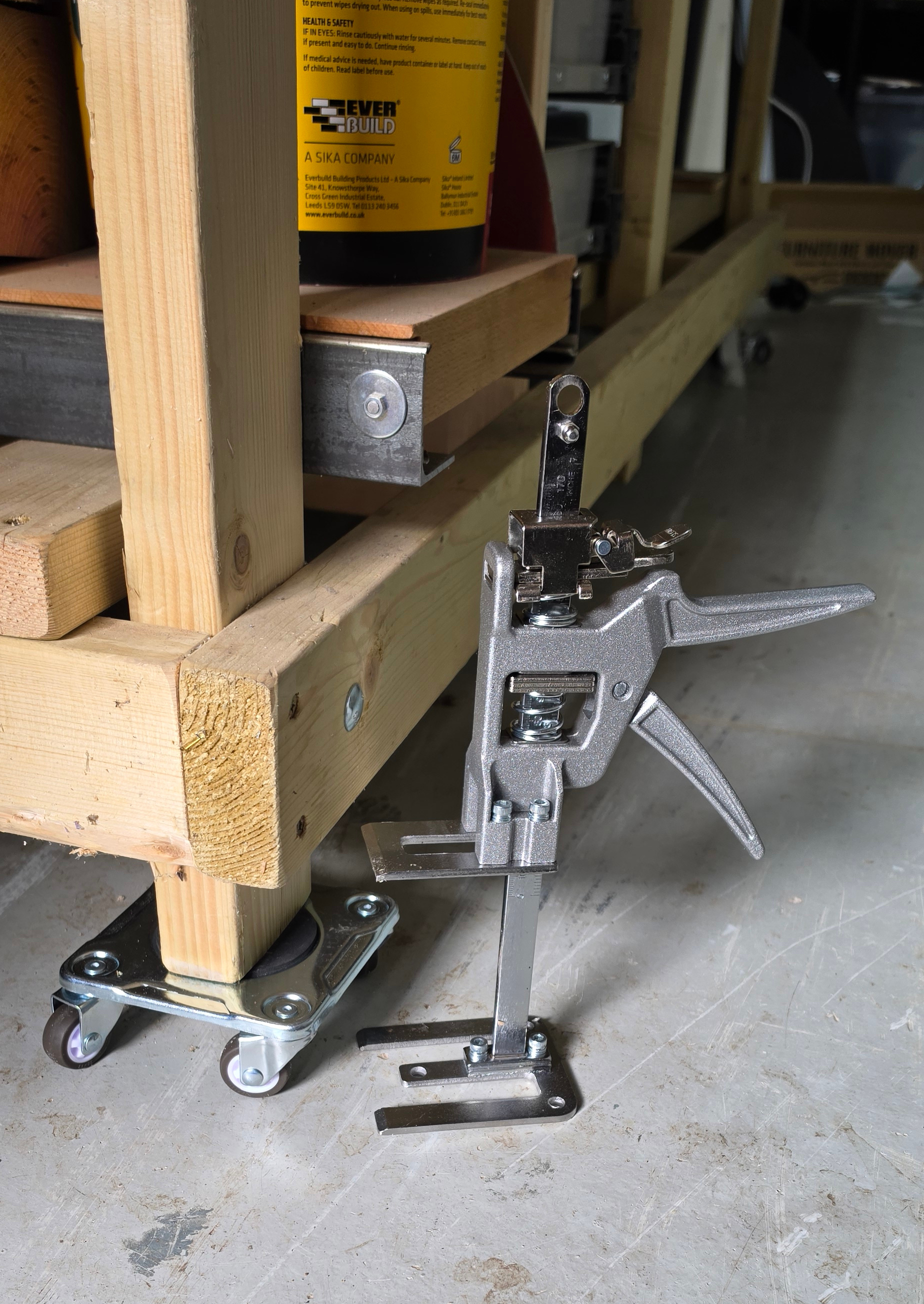
Space clear, I could start moving things about...but the smaller of the benches weighs about 100kg. The larger maybe more...and it's also got another 100kg of lathe on it! It wasn't looking like I'd get several strong builders (work ongoing in the house) at the same time for a while so I bought these:
Two benches and some hairy moments* later and we get this:
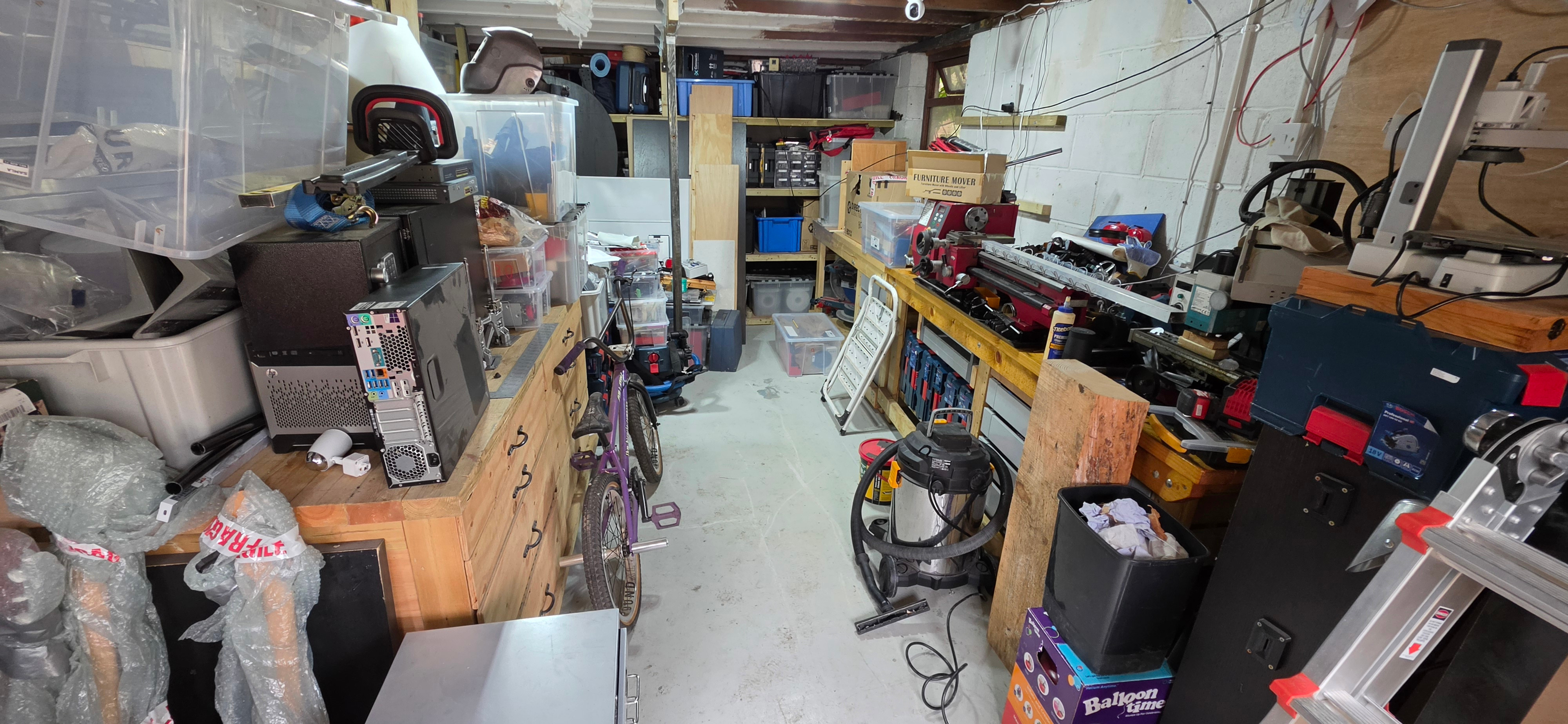
Tidy? Er, no. Not yet. But now it's possible to walk in, open the drawers in the benches and actually store things in them. Now I just have to wait for more time... and less knackered'ness!
* Turns out that when the floor isn't level over the whole length of a bench, one dolly can come adrift and suddenly you're tipping towards a totally unsupported corner!
 Not only 'The Persuader' but also a variety of demolition bars....and where that wasn't sufficient, I've got a 6ft solid steel digging bar and we used that for leverage to persuade the old door frame out before we bricked half of it up.
The plan was to put a new double glazed window in the other half and replace the rotten, jammed window at the other end. However, given the quote for two windows was a thousand quid, we may brick up the rotten window as it is behind a massive Wisteria so won't let in much light. Might be able to find a suitable window on eBay and shove that in the other hole. Main thing will be the doors but I've not had a price for that yet.
Got a load of dado trunking and new sockets to install when I get time. Turns out that you can get 3m of trunking in a GT86 if you try hard enough!
Its about the money for the windows yeah, i think its still worth it for light and air but guess you could just brick it up pretty cheaply!
The plan was to put a new double glazed window in the other half and replace the rotten, jammed window at the other end. However, given the quote for two windows was a thousand quid, we may brick up the rotten window as it is behind a massive Wisteria so won't let in much light. Might be able to find a suitable window on eBay and shove that in the other hole. Main thing will be the doors but I've not had a price for that yet.
Got a load of dado trunking and new sockets to install when I get time. Turns out that you can get 3m of trunking in a GT86 if you try hard enough!
Right. See that workbench on the left? That's not one of mine - I mean, I own it but I didn't build it...it came with the house. I've been umming and ahhing about demolishing it because it's a workbench and I could probably make it useable. After swearing about having moved houses for more space and finding myself still grubbing around on the floor to use a mitre saw and having evverything in the way, I decided I don't need THAT workbench. And so:
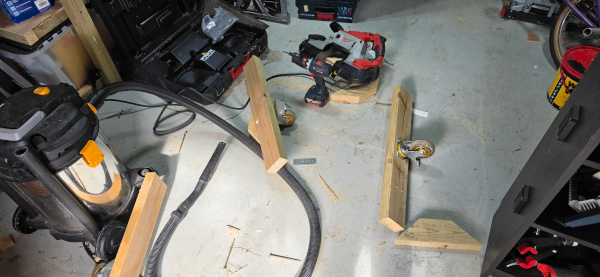
Nothing wins an argument against an angry bandsaw! ...before you ask, they're ALL angry!
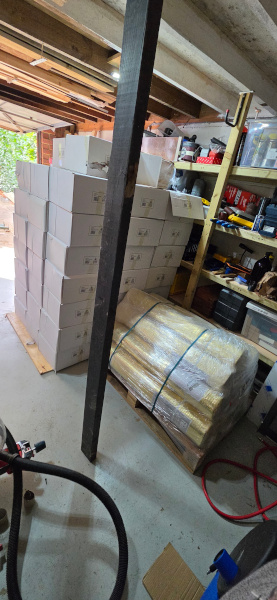
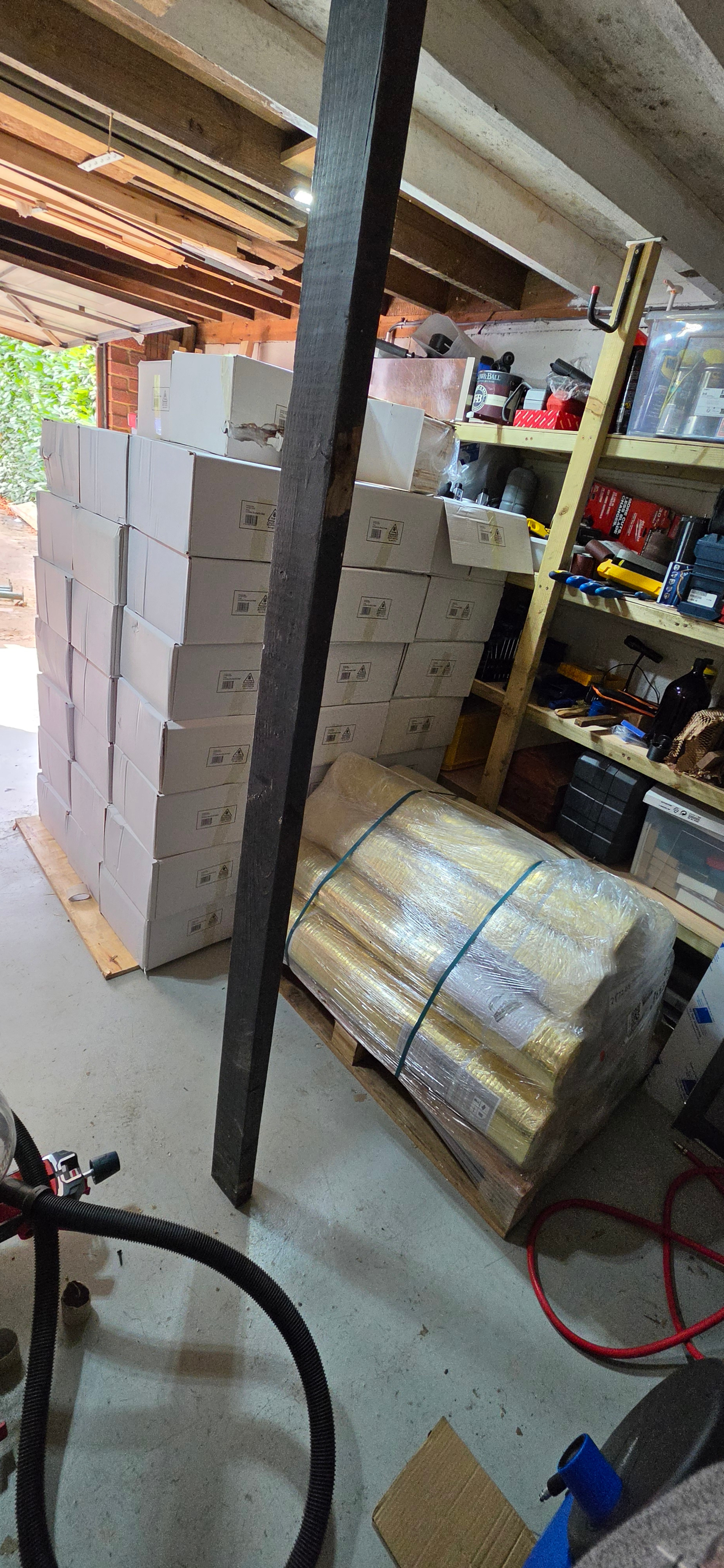
So now I have lots of space, right? Well...predictably...no! Literally as soon as I'd finished, a truck turned up with literally (I know, but I do mean it in the dictionary sense!) a half ton of flooring...and a pallet of underlay. A whole 'downstairs' worth - if I'm going to be mortgaged until I'm 70, we might as well do it properly!
I have managed to get some dado trunking installed along the wall behind the benches with a bunch of sockets in. Managed to fish the wires through the cavity rather than in surface mounted conduit - much tidier, quite smug if I'm honest Also ran a return leg so it can be converted to a ring at some point...but apart from not being able (courtesy of the flooring) to get to the other side of the room to finish that, I believe that would be notifiable (or at least require certification) so it'll have to wait until I sort out some Part P certs for other parts of things....like the outbuilding where blue is neutral - but also live - and black is neutral - but also earth - and brown is live...but sometimes neutral. Other joys like euro sockets, lights on the same circuit as sockets, light switches switching potential 16A loads, boxes splitting one flex in all directions and 3-core wiring where every colour is either live or switched live...with no sleeving to identify them. In fact, I'll leave this here for those with enough familiarity to go through the many levels of WTF. Enjoy!
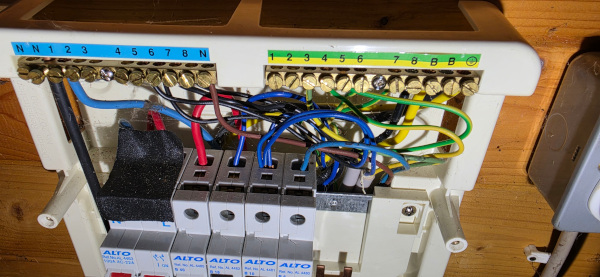
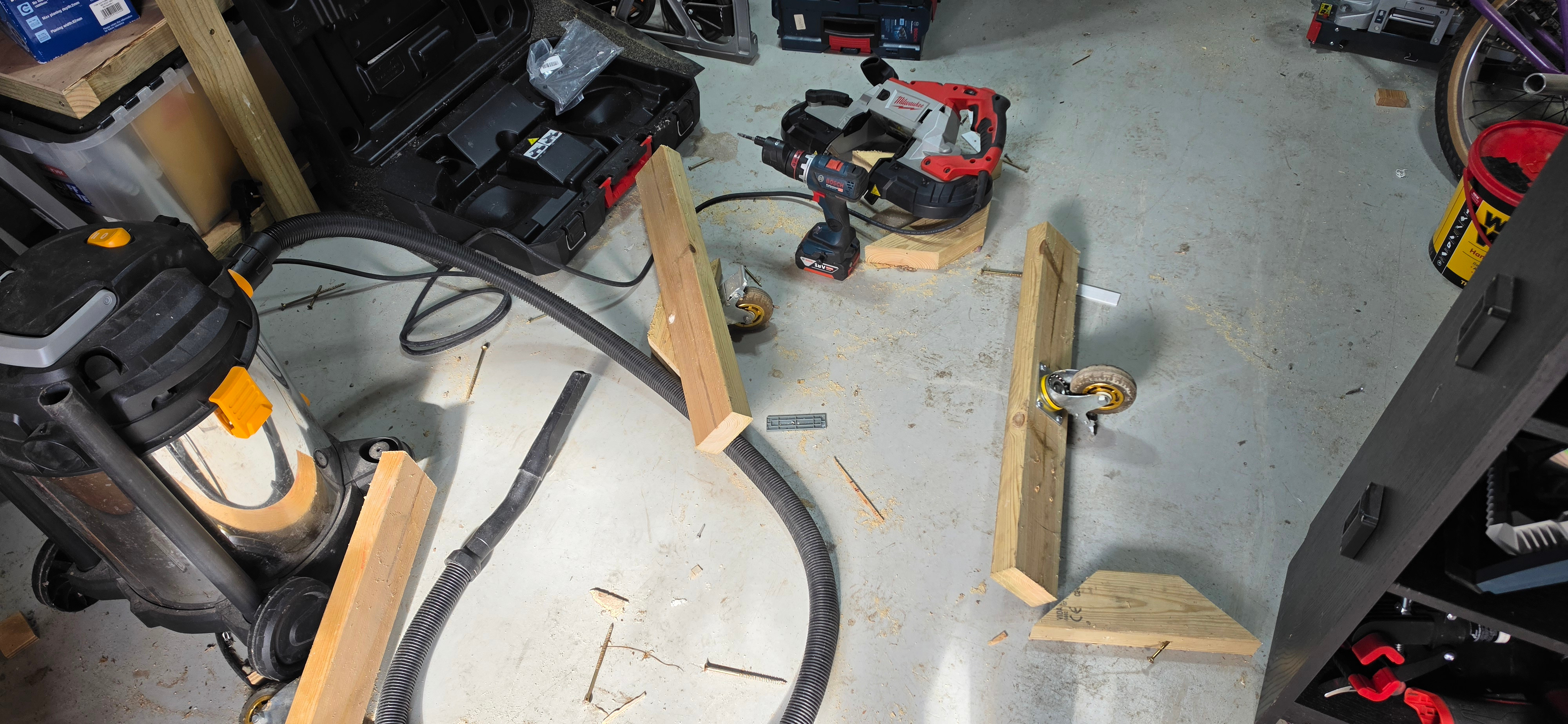
Nothing wins an argument against an angry bandsaw! ...before you ask, they're ALL angry!
So now I have lots of space, right? Well...predictably...no! Literally as soon as I'd finished, a truck turned up with literally (I know, but I do mean it in the dictionary sense!) a half ton of flooring...and a pallet of underlay. A whole 'downstairs' worth - if I'm going to be mortgaged until I'm 70, we might as well do it properly!
I have managed to get some dado trunking installed along the wall behind the benches with a bunch of sockets in. Managed to fish the wires through the cavity rather than in surface mounted conduit - much tidier, quite smug if I'm honest
Also ran a return leg so it can be converted to a ring at some point...but apart from not being able (courtesy of the flooring) to get to the other side of the room to finish that, I believe that would be notifiable (or at least require certification) so it'll have to wait until I sort out some Part P certs for other parts of things....like the outbuilding where blue is neutral - but also live - and black is neutral - but also earth - and brown is live...but sometimes neutral. Other joys like euro sockets, lights on the same circuit as sockets, light switches switching potential 16A loads, boxes splitting one flex in all directions and 3-core wiring where every colour is either live or switched live...with no sleeving to identify them. In fact, I'll leave this here for those with enough familiarity to go through the many levels of WTF. Enjoy!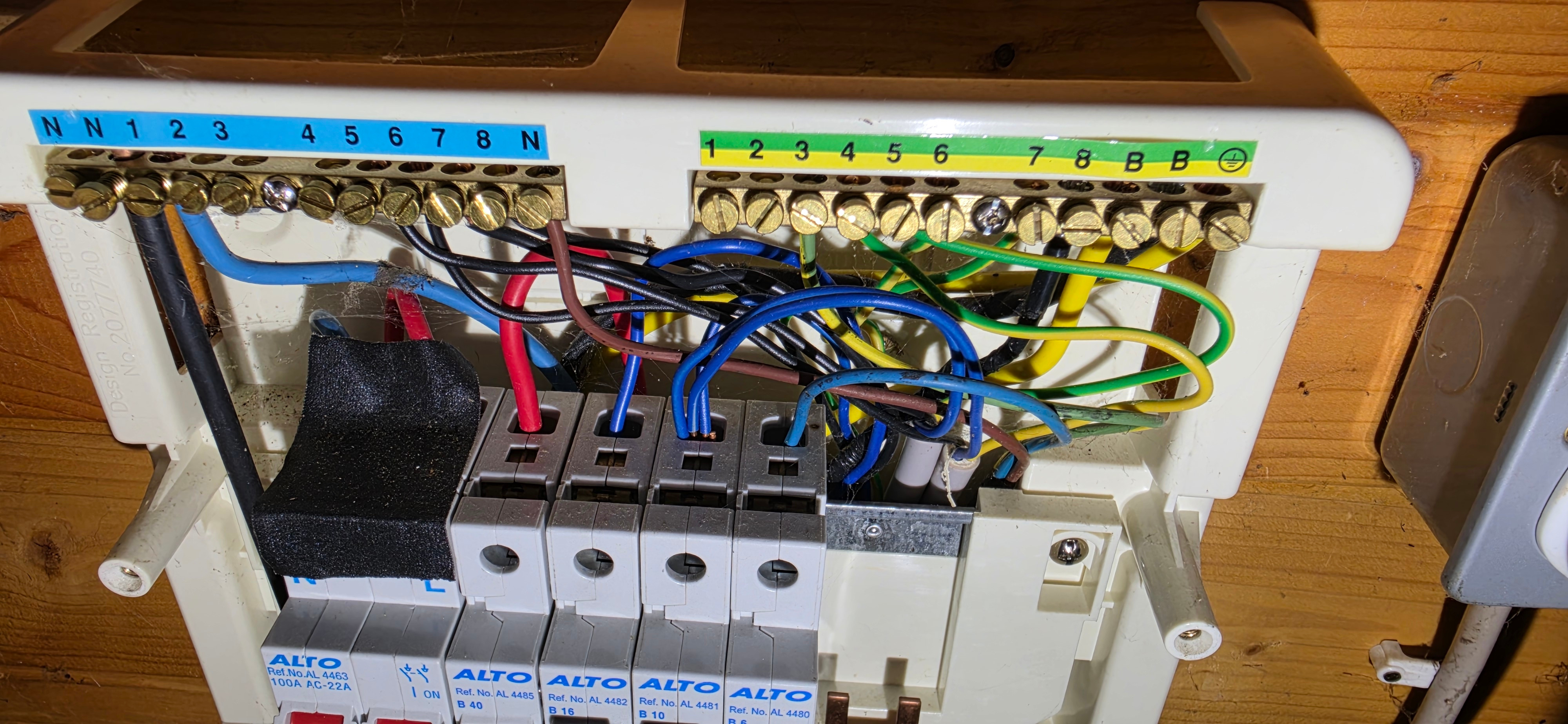




Cheers. I certainly hope so guys. At the moment it's definitely one of those things that the more you scratch the surface, the more things you find you wish weren't there. The one I've been dealing with is that once the spiderwebs were vacuumed off, there were a load of little black dots that didn't wipe off. Put my glasses on and discovered they were woodworm holes. Does explain why they didn't wipe off though! Maybe they're historic and perfectly fine...but I've been spraying them anyway to be safe. Got one stretch that I can't get to yet because of all the stuff - and that's multiplied because I've just emptied the storage unit rather than renew it.
I think the next issue will be that black wooden column in the picture. It goes under a beam but it's clearly not weight-bearing because it's on joist hangers and there's a gap between it and the joists. Must have been for something to hang from, right? Well, no. I took off the plate screwing it to the horizontal and figured it would come out easily...but there's enough weight on it that you can't move it even though it's in no way attached. For some reason this worries me! Now the roof is a flat roof but previous owners have lined the top with artificial grass, put a bench up there and some planting troughs. My first thought was that it was odd...but it is nicer looking out your front window (house ground floor is higher) on a 'garden' than on a grey flat roof. Problem is that the joists weren't spec'd for the extra load....so fixing that will be 'fun'! It can't come top of the priority list though as we still don't have windows in the back half of the ground floor yet. Got hot water and heating this weekend just gone. Now you might think that all the heat would escape out the window holes...but you'd be wrong as we currently have almost no radiators on the ground floor to create the heat to escape. Ah the romance of moving house and turning it into a building site! To add insult to injury, there seems to be some sort of plague spreading round all the builders so we're at a dead stop for the minute. On the plus side, the copious amounts of wet stuff falling from the sky (it can't be rain or they'd have cancelled the hosepipe ban!) is at least staying on the outside. This is a definite step forward!
I think the next issue will be that black wooden column in the picture. It goes under a beam but it's clearly not weight-bearing because it's on joist hangers and there's a gap between it and the joists. Must have been for something to hang from, right? Well, no. I took off the plate screwing it to the horizontal and figured it would come out easily...but there's enough weight on it that you can't move it even though it's in no way attached. For some reason this worries me!
Now the roof is a flat roof but previous owners have lined the top with artificial grass, put a bench up there and some planting troughs. My first thought was that it was odd...but it is nicer looking out your front window (house ground floor is higher) on a 'garden' than on a grey flat roof. Problem is that the joists weren't spec'd for the extra load....so fixing that will be 'fun'! It can't come top of the priority list though as we still don't have windows in the back half of the ground floor yet. Got hot water and heating this weekend just gone. Now you might think that all the heat would escape out the window holes...but you'd be wrong as we currently have almost no radiators on the ground floor to create the heat to escape. Ah the romance of moving house and turning it into a building site! To add insult to injury, there seems to be some sort of plague spreading round all the builders so we're at a dead stop for the minute. On the plus side, the copious amounts of wet stuff falling from the sky (it can't be rain or they'd have cancelled the hosepipe ban!) is at least staying on the outside. This is a definite step forward!