

-
Notice regarding image hosts and attachments. See here.
-
Competitor rules
Please remember that any mention of competitors, hinting at competitors or offering to provide details of competitors will result in an account suspension. The full rules can be found under the 'Terms and Rules' link in the bottom right corner of your screen. Just don't mention competitors in any way, shape or form and you'll be OK.
You are using an out of date browser. It may not display this or other websites correctly.
You should upgrade or use an alternative browser.
You should upgrade or use an alternative browser.
DLSS 5 preview
- Thread starter WiGgLr
- Start date
More options
Thread starter's poststhe ghost of dual GPU gaming setup is still alive

This is literally what Nvidia did with it initially to have it run at all. So not really new, more like "we replicated Nvidia's own method".
 And yes, maybe soon enough Nvidia will start selling AI accelerator cards for DLSS5 and higher?
 just very little memory as those models are tiny, 1GB should be enough then next year bigger model and 2GB memory released to buy again and then next year, each 1GB more. That's an idea for Nvidia to have more sales and not actually hit their enterprise market.
Last edited:
The problem with nvfp4 is that it cuts quality a lot and it hits small models the most. Big dense LLM tend to be able to use it much better (the bigger the brain the more inaccuracy/damage it can tolerate and still work well) than small models where such accuracy loss can hurt really badly. This is likely why they didn't actually realise it as nvfp4 but as fp8 - that's already quantised ("compressed") but quality is usually still very good comparing to full sized f16 model.I'm not too bothered about the faces to be honest, The environmental enhancements though I really like and once Nvidia move it over from FP8 to NVFP4, Happening in the next 1-2 months, We should get a nice perf increase which will hopefully also mean lower power use.
And just to drop it here - I create and benchmark a lot of my own LLM models so I can see where and how nvfp4 fails in practice. It has it's own use and it's faster to compute but the cake really isn't free in this case, it's a compromise.
Last edited:

Associate
- Joined
- 8 Nov 2012
- Posts
- 418
This feels like when we got the original DLSS and ray tracing with Turing. Cool proof of concept but needs more work and better hardware before it can really go mainstream. It's been neat to test it but the extra power draw and the performance hit puts me off using it any more than that.

The problem with nvfp4 is that it cuts quality a lot and it hits small models the most. Big dense LLM tend to be able to use it much better (the bigger the brain the more inaccuracy/damage it can tolerate and still work well) than small models where such accuracy loss can hurt really badly. This is likely why they didn't actually realise it as nvfp4 but as fp8 - that's already quantised ("compressed") but quality is usually still very good comparing to full sized f16 model.
And just to drop it here - I create and benchmark a lot of my own LLM models so I can see where and how nvfp4 fails in practice. It has it's own use and it's faster to compute but the cake really isn't free in this case, it's a compromise.
Quantization has trade-offs sure, but your LLM benchmarks don’t tell us how DLSS 5 handles NVFP4. It’s a different model doing a different job and “smaller model = worse quantization” isn’t a universal rule. Using FP8 doesn’t establish that they tried NVFP4 and found the quality unacceptable. Without a DLSS-specific comparison or a statement from Nvidia, your explanation is just guesswork.
It really is, it's just maths. You simply can't squeeze as much accuracy into 4 bits that you can into 8, that's not even open for discussion. It affects sound models, image generators and LLMs the same way - you always lose quality and you lose more the smaller the model is. That's a known fact for years now, nothing new nor surprising.Quantization has trade-offs sure, but your LLM benchmarks don’t tell us how DLSS 5 handles NVFP4. It’s a different model doing a different job and “smaller model = worse quantization” isn’t a universal rule.
It doesn't but also nowhere they said they will go to nvfp4 in 1-2 months, AFAIK. That's just wishful thinking. And since they claim DLSS5 is 5k optimised and should run only on 5k series (4k series to come officially later etc.), plus it really doesn't work on 4k series without modding (CUDA differences, in short words), it's safe to say they squeezed out of 5k series what they could at the moment. Sure, the work isn't done, but quantizing to nvfp4 of such small model takes minutes at most on their super computers, likely just seconds - and yet they didn't release that. We can only have educated guesses why.Using FP8 doesn’t establish that they tried NVFP4 and found the quality unacceptable.
Actually, it's an educated guess based exactly on what they said and released, plus my own experiences with modern AI models. If you have some better info, do share.Without a DLSS-specific comparison or a statement from Nvidia, your explanation is just guesswork.
It really is, it's just maths. You simply can't squeeze as much accuracy into 4 bits that you can into 8, that's not even open for discussion. It affects sound models, image generators and LLMs the same way - you always lose quality and you lose more the smaller the model is. That's a known fact for years now, nothing new nor surprising.
I think you're conflating numerical precision with output quality. Four bits represent fewer values than eight but that doesn’t prove every model suffers a noticeable quality loss or that smaller models always suffer more. The maths establishes the precision limit, not the effect on DLSS.
It doesn't but also nowhere they said they will go to nvfp4 in 1-2 months, AFAIK. That's just wishful thinking. And since they claim DLSS5 is 5k optimised and should run only on 5k series (4k series to come officially later etc.), plus it really doesn't work on 4k series without modding (CUDA differences, in short words), it's safe to say they squeezed out of 5k series what they could at the moment. Sure, the work isn't done, but quantizing to nvfp4 of such small model takes minutes at most on their super computers, likely just seconds - and yet they didn't release that. We can only have educated guesses why.
Converting weights in seconds isn’t the same as producing and validating a shipping implementation. Its absence doesn’t tell us whether quality, performance or unfinished engineering is the reason.
Actually, it's an educated guess based exactly on what they said and released, plus my own experiences with modern AI models. If you have some better info, do share.
I agree that NVFP4 in 1–2 months is speculation too. I don’t need a better guess to point out that neither explanation has been established.

Star Citizen with DLSS5
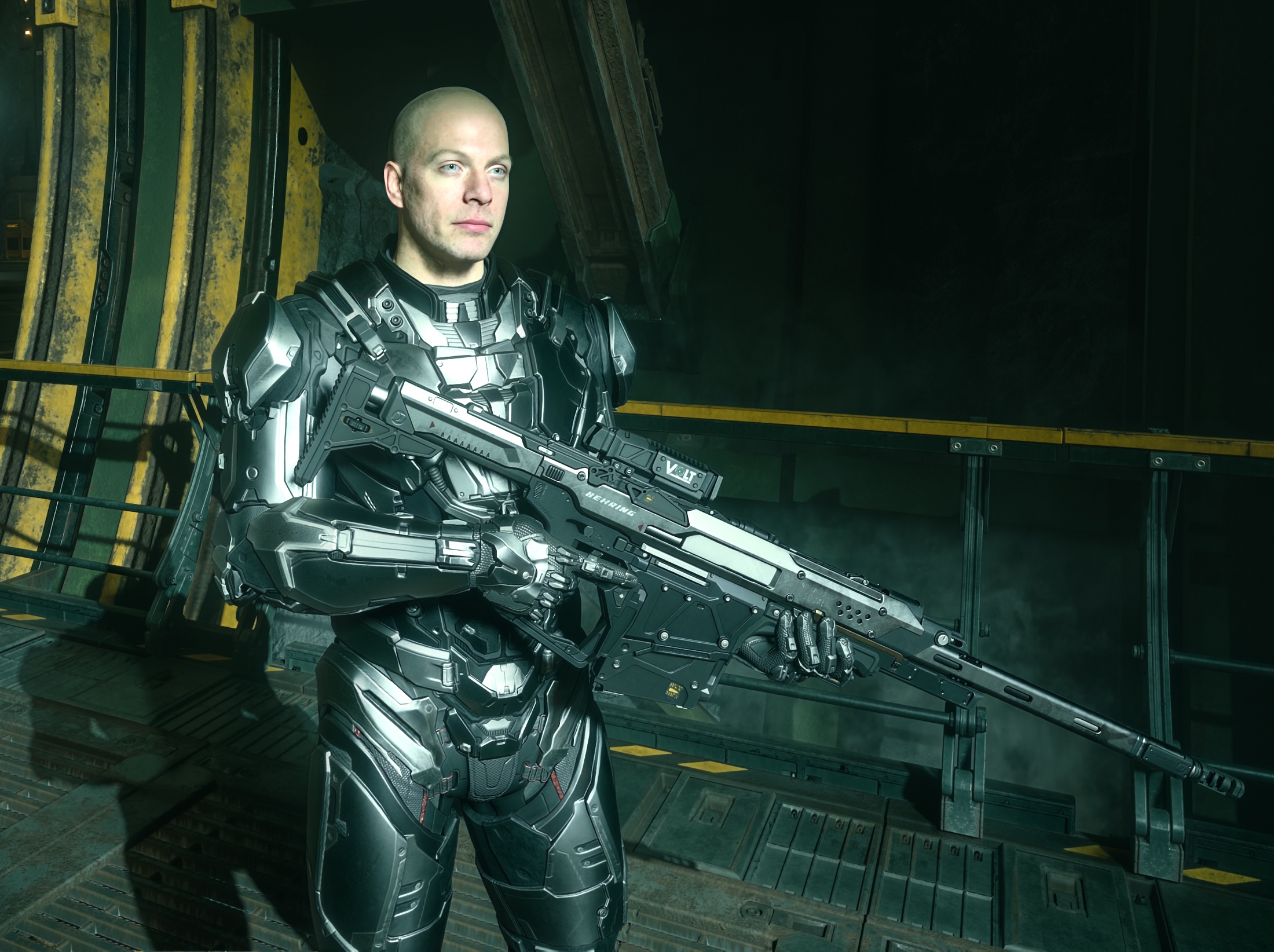
Ive never paid any attention to random Levski NPC's... is that gun real? are they carrying that around? Looks like a modified P6 with a 12" barrel extension.
the ghost of dual GPU gaming setup is still alive
Glory days. I ran 2 980Tis about 10 years ago in SLI. I felt like a boss king. Don't miss the heat and noise though and don't think I can go back to a dual card setup.
I was thinking this whole AI thing might bring about dedicated PCIe AI accelerators for consumer market. And games might get an option to use them for ai gen graphics or extra content generation (like convo or dynamic back story)

Soldato
- Joined
- 18 May 2010
- Posts
- 24,589
- Location
- London
Double post
Last edited:
Soldato
- Joined
- 19 Feb 2007
- Posts
- 16,218
- Location
- Sol
Ive never paid any attention to random Levski NPC's... is that gun real? are they carrying that around? Looks like a modified P6 with a 12" barrel extension.
That's my character in my hangar, P6-LR with flash muzzle type thingy IIRC

Soldato
- Joined
- 19 Feb 2007
- Posts
- 16,218
- Location
- Sol
I do love the way it makes Shadow of the TR look, but the power bump and making my 5070ti fans really ramp up is putting me off using it a bit, as I'm worried I'm going to burn out the card lol
Use DLSS5 Autopilot and choose the Neural Upstream method when installing to a game folder, Really drops the power use and ups performance.
I use some software called RHI which does all the injection of files etc. Was messing around with it again earlier today and think I added that, as I could scale resolution.Use DLSS5 Autopilot and choose the Neural Upstream method when installing to a game folder, Really drops the power use and ups performance.
Haven't compared the wattage on vs off, but it does make my GPU usage jump up to 98% and the fans still kick in, even at 0.75 scale.

Nvidia would love that!I was thinking this whole AI thing might bring about dedicated PCIe AI accelerators for consumer market. And games might get an option to use them for ai gen graphics or extra content generation (like convo or dynamic back story)
Soldato
- Joined
- 19 Feb 2007
- Posts
- 16,218
- Location
- Sol
I use some software called RHI which does all the injection of files etc. Was messing around with it again earlier today and think I added that, as I could scale resolution.
Haven't compared the wattage on vs off, but it does make my GPU usage jump up to 98% and the fans still kick in, even at 0.75 scale.
With the Neural Upstream option it runs before DLSS so usage and power in a few scenarios should go down.