

• Notice regarding image hosts and attachments. See here.

low pressure fuel pump error code

Soldato
Joined
3 May 2012
Posts
11,451
Location
Wetherspoons
Just wana sense check this.

My Volvo S60 T3 2012 is throwing up a P254022 fault code on scanning, which is "Low Pressure Fuel System Circuit Range / Performance. General signal Failures. Signal too high.

It came up about 6 months ago and I reset it, and it didn't come back so I forgot about it. It came up last week, reset it again, but now its come up again so I think there actually may be an issue.

The car is driving absolutely fine. Which would lead me to assume..... the actual fuel pump is ok.

Am I correct in thinking?

- The fuel pump is just powered by a dumb 12v feed, as in, car is on, fuel pump is fed 12v, it's not "controlled" in any other way?
- Therefore if the sensor is playing up, in theory it shouldn't actually affect the running of the car other than throwing up the fault code?

I checked and it looks like replacing the low pressure fuel sensor is actually pretty easy, it's located on the top of the engine along the fuel rail and I haven't properly looked in to it, but on the face of it is a pretty easy 30 minute job. The part is reasonably cheap as well. Hopefully.... its not the actual fuel pump as that is another story, to be honest I would just get the local garage to do that.

Reason I am asking is, whilst I will get around to changing the sensor, I'm trying to gauge if there is any urgency.

 
fuel filter done ? under maintenance schedule -
had had some trepidation doing it myself so gave the part to the garage when they did other stuff.
 
fuel filter done ? under maintenance schedule -
had had some trepidation doing it myself so gave the part to the garage when they did other stuff.

No never done that.

I assume that's on the arse end on the fuel tank so like you Id just get the garage to do that.

I watched a good YouTube video since posting that shows you how to test the sensor using a meter so I'll try that in a bit.

I was wondering though if the filter was blocked enough to start setting off fault codes would you not feel it through the car? It does drive absolutely fine.

I guess I need to test this sensor and see what it's doing, or not.... (Hopefully the latter)
 
when does it register code during warm up when engine would make higher demands on pump/filter ... or erratically during drive perhaps suggesting sensor.
 
when does it register code during warm up when engine would make higher demands on pump/filter ... or erratically during drive perhaps suggesting sensor.

Just came on on startup.

Right........

Annoyingly, I cannot find any youtube video or even image showing the low pressure fuel sensor location for my particular engine, its a B4164T3 engine (actually a ford engine) even searching for ford stuff I cant find it, also on any part on any part site the part (even if I put the reg in) it's showing the low pressure fuel sensor is like a T shaped part, with the sensor going in the top and 2 ends either side you plum the fuel line in, there isn't anything that looks like that on my car.

What I think.....is the low pressure sensor is just a single cylinder shaped part the connects in to a hard metal fuel line, but it isn't the one at the end of the fuel rail, which I believe would be the high pressure sensor.

I plugged the diagnostics in again and found where it will give you the live voltage reading out of the sensor, car with ignition on, engine not running was 2 something volts, and I started it, the voltage went up to something like 4.7v, which I am guessing it about right. I watched another youtube video of not the same engine, but similar volvo and the sensor works off 3 pins, a ground, one 5v feed, and then a 5.7v "sensing" current, there is a proper name for this but I cant remember.

The fact the voltage is reading what seems about right, not erratic, and is changing after starting the engine would lead me to believe, at least when I tested it just now, the sensor is ok.

So.........either, there is something intermittent with the sensor, or it is related to the filter/pump itself. The wierd this is, watching the voltage on the sensor whilst running the car and revving it a little, it seemed absolutely fine, I even cleared the fault code, ran the engine for 5 minutes and no issues.......no fault code, although I am sure it will be back.

I might fill up with premium and put some reddex it in, probably wont do anything but worth a go I suppose.
 
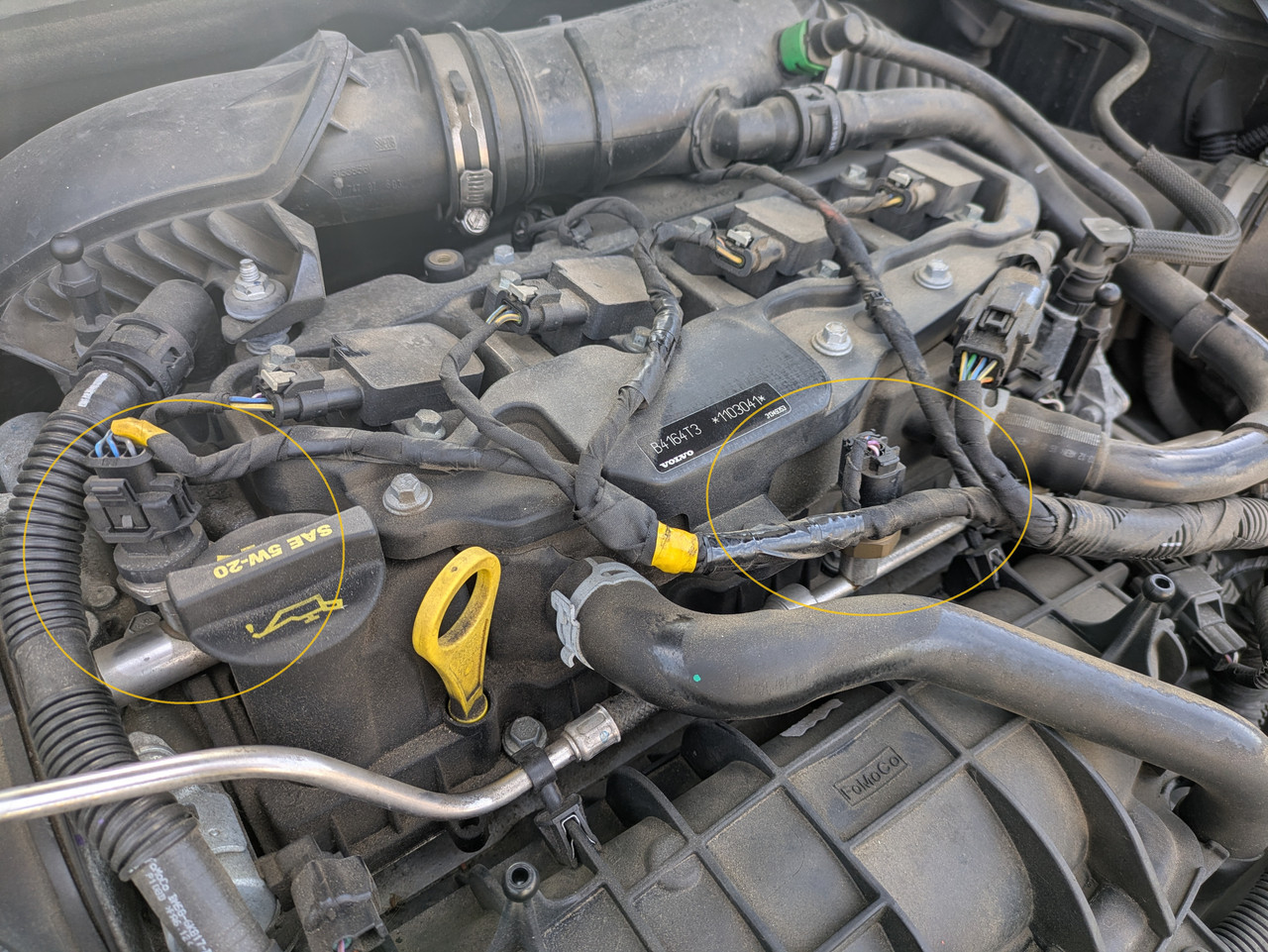
1000026679.jpg


The left side one circled I think is the high pressure sensor and the right side low pressure.


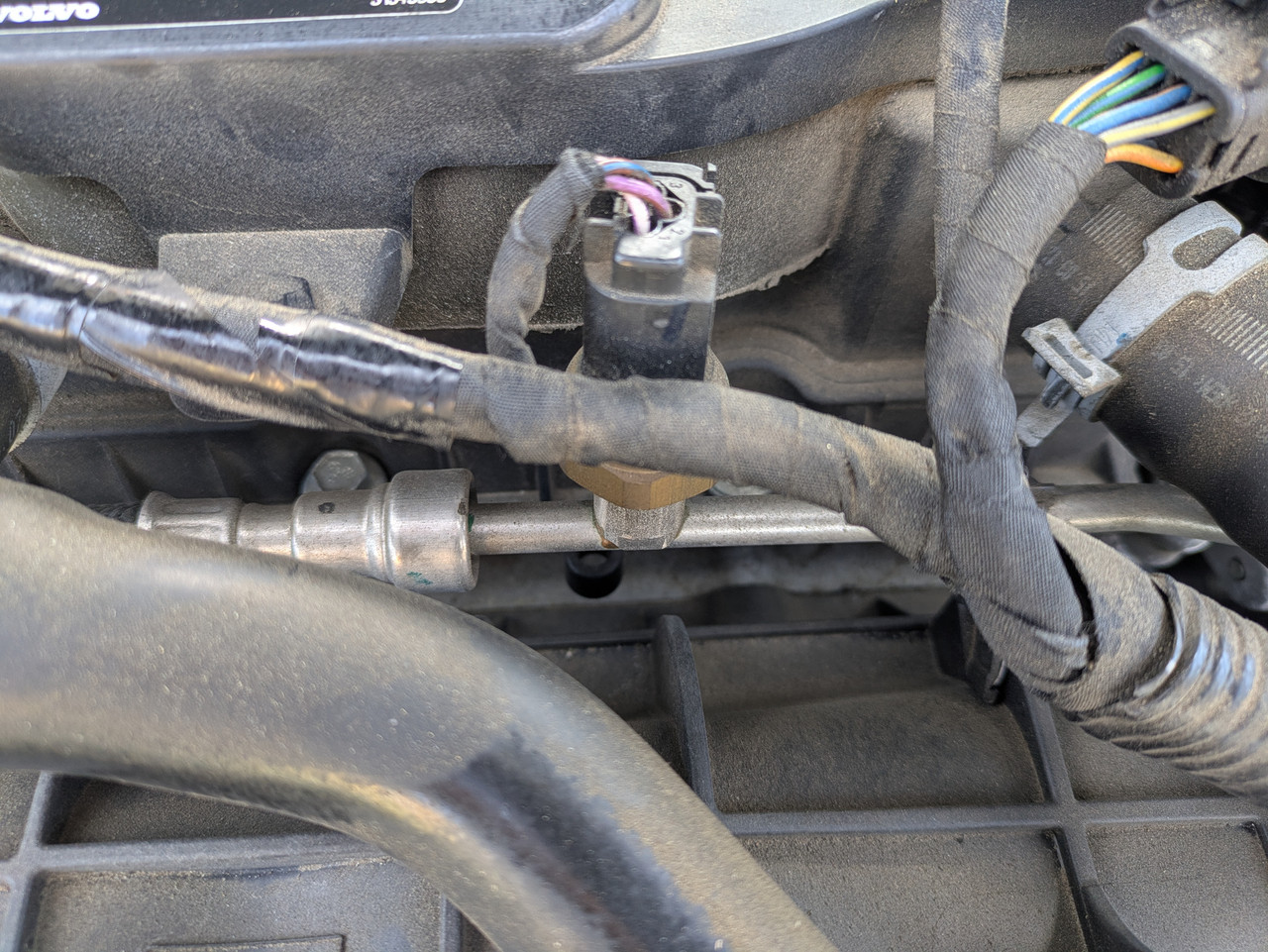
1000026680.jpg


Low pressure sensor

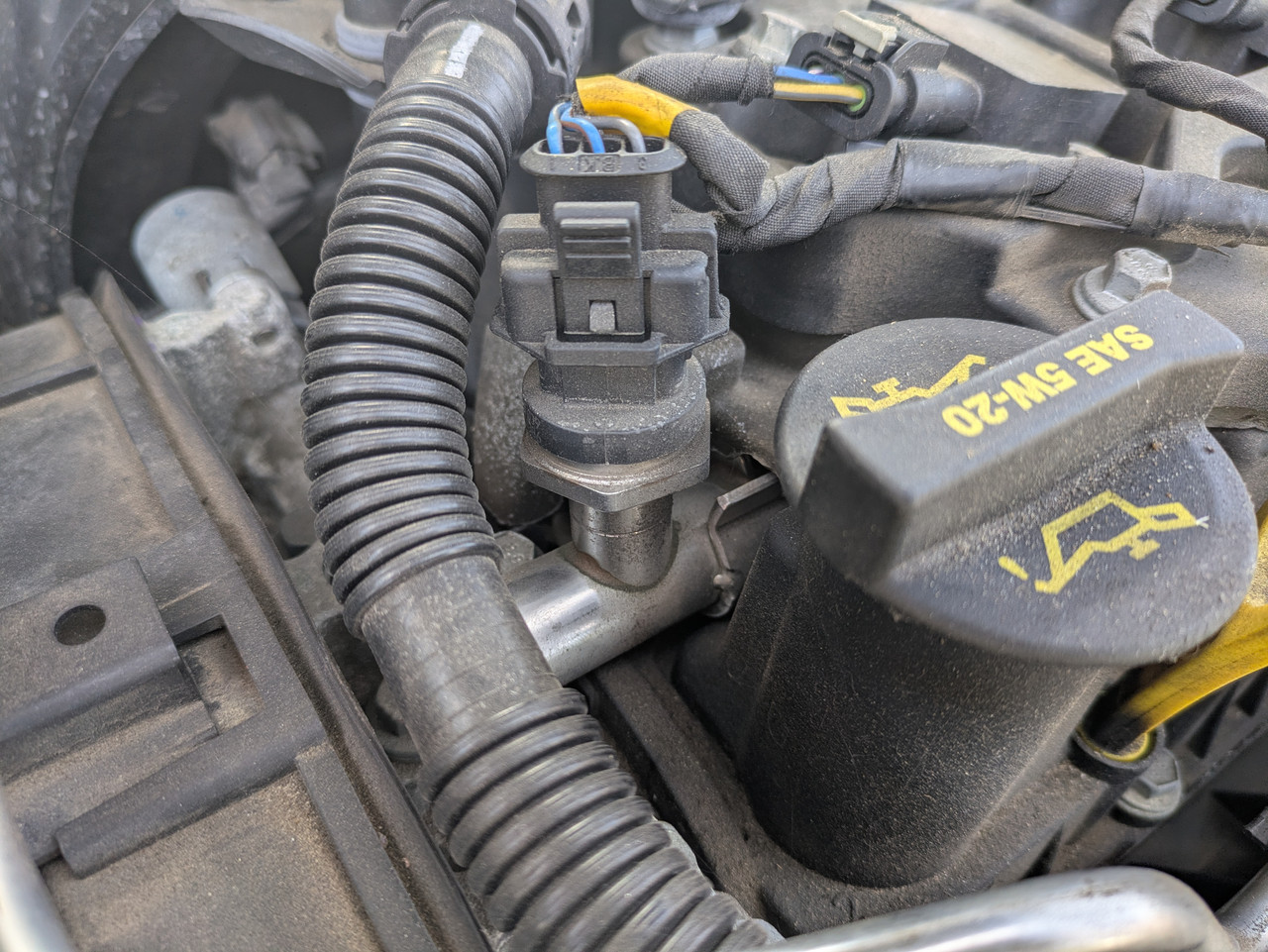
1000026681.jpg


High pressure sensor.


...... I think.
 
hmm actually, it seems replacing the fuel filter might not be that hard.

I'll have a look under the car tomorrow and see if the one on my car looks anything like this youtube video, going by my luck so far probably not lol.

EDIT: Nope scratch that:

On a 2013 Volvo S60 T3 ( petrol engine), there is no external, serviceable fuel filter. Instead, the fuel filter is integrated directly into the fuel pump assembly inside the petrol tank. It is designed as a "lifetime" component and is not intended to be changed during routine maintenance.

And I checked the part it very much looks like an integrated fuel filter :(
 
Last edited:
do you get further errors after warm up - perhaps if you don't get further errors after warm up that further exonerates the sensor, not erratic anyway.
 
do you get further errors after warm up - perhaps if you don't get further errors after warm up that further exonerates the sensor, not erratic anyway.

Cheers.

No I don't.

I have done a little more testing since yesterday. Seems it's only throwing up the fault code on a cold start. I drove yesterday, reset the code, parked up for about an hour, maybe hour and a half. Got back back in, fired up and drove about 6 miles home no warning light at all.

Fired it up this morning and straight back on, it basically stays on at the start, doesn't go away after ignition on and engine start.

Car is still driving absolutely fine.

I am tempted.....for the sake of £40 or so, to change the sensor anyway, even though I am not convinced it is that, to see if I get lucky. Other then finding the correct part (which is proving to be a right pain in the arse) actually changing it is dead easy.
 
Right made some good progress today.

Was testing it a bit more, pulled the connector out put it back in, had the diagnostic connected to it, and it was showing voltage running between 4.74 / 4.75. Reset code, engine running no warning light from cold.

Car off, back on again, warning light back on, check the voltage and its frozen. Unplugged connector, plugged back in, nothing.....

Checked the fuel pump voltage and everything looking absolutely fine, behaving.

So pretty sure it is just the sensor after all, seems to be intermittent, sometimes its working, sometimes not, seems every time its powered it decides if its working and either carries on working until that car if off again, or not at all.

New part was an pain in the arse to find, as every single reference was pointing towards this t shaped part, which it definitely is not. Eventually found what I believe to be the right part, £16 on ebay.

Fingers crossed that fixes it and job done, not so bad in the end.
 
Car off, back on again, warning light back on, check the voltage and its frozen. Unplugged connector, plugged back in, nothing.....
guess that once rail is eventually pressurized by pump that takes a while to dissipate and can muddy future measures.

hope sensor will fix it ... must be some depressurization needed or an enveloping rag
 
guess that once rail is eventually pressurized by pump that takes a while to dissipate and can muddy future measures.

hope sensor will fix it ... must be some depressurization needed or an enveloping rag
Start the engine and pull the fuel pump fuse. Engine will eventually stall once the fuel is exhausted. That's about as empty as the fuel lines are going to be for a job like this. Although, the low pressure side wouldn't concern me with a rag, TBH.

@BUDFORCE the high pressure side will have the injectors on it. The low pressure side will just be a single feed going to the HPFP, which is usually mounted on the engine somewhere. Your best bet is to find the HPFP and follow it away from the injector side to know you're definitely on the low pressure side.
 
Last edited:
Start the engine and pull the fuel pump fuse. Engine will eventually stall once the fuel is exhausted. That's about as empty as the fuel lines are going to be for a job like this. Although, the low pressure side wouldn't concern me with a rag, TBH.

Yes that's the plan, pull the fuse, run it dry.

Don't forget to put the fuse back in haha.
 
Well..........

You know how I said it's not the fuel pump and just the sensor.

I might have been the fuel pump..... currently sat on the side of the road waiting for breakdown recovery, car lost power driving, stalled.

Try and start it, it fires up a tiny bit at like 500 rpm before quickly stalling.

I scanned it whilst broken down, low fuel pressure readings both high and low and high pressure side as well.

Been sat here nearly 2 hours now and they said they might be another hour yet.....

Frustrating though it had been driving absolutely fine, if not I would have taken it more seriously, but it's just died quite suddenly.
 
This is one of those things where HPFP is usually easier to change but more expensive, whereas the low pressure pump is significantly cheaper but much harder to change! You are going to get half screwed whichever one it is.

I would wager it's likely the low pressure pump due to the low pressure readings on both sides.

Hope you get recovered soon!

Cheers yea got home about 20 past 10, broke down at about 7, so not terrible managed to get it recovered back to my preferred garage then dropped home.

It could have been a lot worse.

The garage I use are pretty good local indy I been using for years I'm sure they'll be able to sort it, I don't fancy trying to change the fuel pump it likely involves dropping the tank, not something I want to try myself.
Agreed, it depends if the tank is accessible from inside the car. It's usually under the backseats/boot. Just a lock ring, one/two hoses and a harness connection to get into the tank if you can get to the top. The worst part is sticking your hands in the tank to get the pump out and then getting the seal spot on when reinstalling, or you end up with a car ponging of fuel. :D

If it's a tank out job then I'd fully understand outsourcing that.

Let us know how you get on!
 
Back
Top Bottom