


I have spent a few weeks going through the pain of migrating my Frogger-inspired tech-demo to use an NvRTX branch of Unreal Engine 5. It now renders using path tracing and supports DLSS, (M)FG, Ray-Reconstruction, MegaLights, Nanite and some other bits. All shadows and reflections are traced (no shadow maps or screen-space effects) and volumetric fog, atmospheric scattering, volumetric clouds are used too. Not that many of these features are evident in this early tech demo.
-
Notice regarding image hosts and attachments. See here.
You are using an out of date browser. It may not display this or other websites correctly.
You should upgrade or use an alternative browser.
You should upgrade or use an alternative browser.
What are you coding?
- Thread starter FredFlint
- Start date
More options
Thread starter's posts


Rather than post in mid_gen's thread - this won't mean much to anyone who hasn't modded Quake 2 but I implemented a mouse driven UI using the existing HUD functionality driven by the server side code only (so not implemented in the client) - it is pretty hideous but was always a challenge I wanted to do when we only had access to the gamex86.dll source code and not the full game code but back in those days I never properly cracked it.
It freeze's updates to the player movement and repurposes the pitch (so limited to 180 horizontal units) and yaw and fire button input to implement mouse input at a blistering 10Hz which is the server tick rate of the game.
These days with full client code could do a nice high res, native input implementation but meh.
Last edited:


Today, I'm starting Rust. Just out of curiosity having dabbled with C in the Harvard CS50 course.
Ah you’re on the bounce between languages phase.
Ah you’re on the bounce between languages phase.
Flipping heck, shall we go on Mr & Mrs?
Flipping heck, shall we go on Mr & Mrs?
Only if I can be the Mrs
Only if I can be the Mrs
Deal. You seem to know me better than myself.

Deal. You seem to know me better than myself.
I think it’s quite common and something I absolutely do not do myself

Rather than go on a tangent in sHo0sH's thread in GD https://forums.overclockers.co.uk/threads/can-you-beat-the-warden.19015072/ - an interesting one for me is the use of AI (Claude in that case) in this kind of situation, making games is fun but for me a lot of the fun and enjoyment comes from the gameplay coding and really getting some satisfying nice coding down, though there are some areas like shaders I'd probably make use of AI as they can be just tedious without any real pay off. But I can understand the fun as well in having a vision for a game and making it a reality even with heavy use of AI.
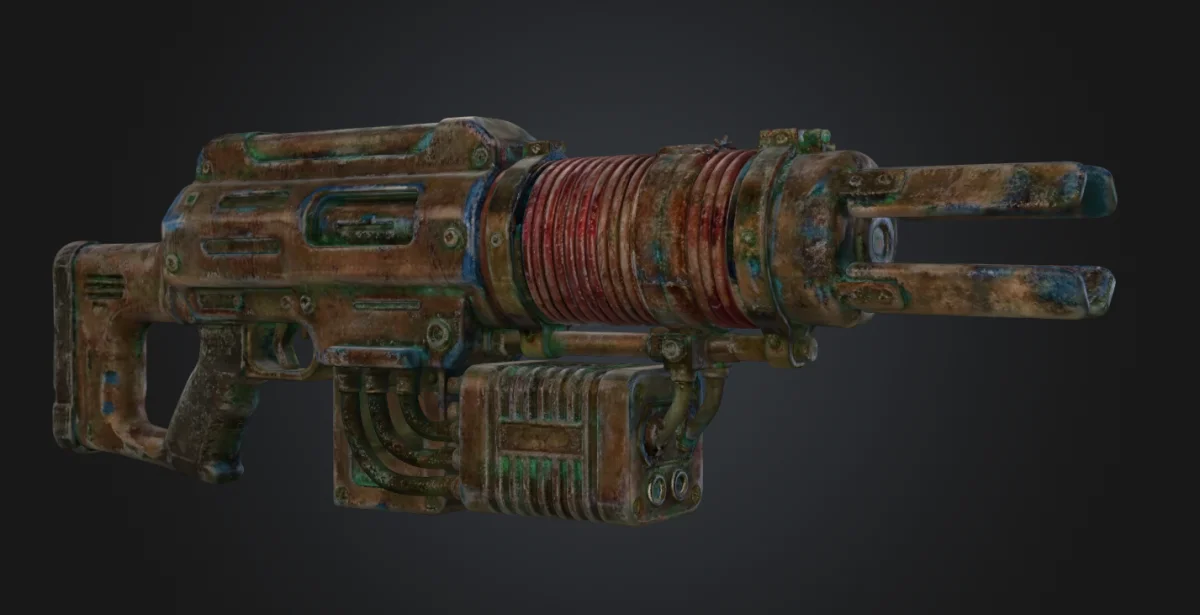
As with some of my recent posts I've been dabbling with AI to produce models for some of the stuff I'm working on - recently used AI to generate a few weapon models as well which came out reasonably close to what I had in mind for example:
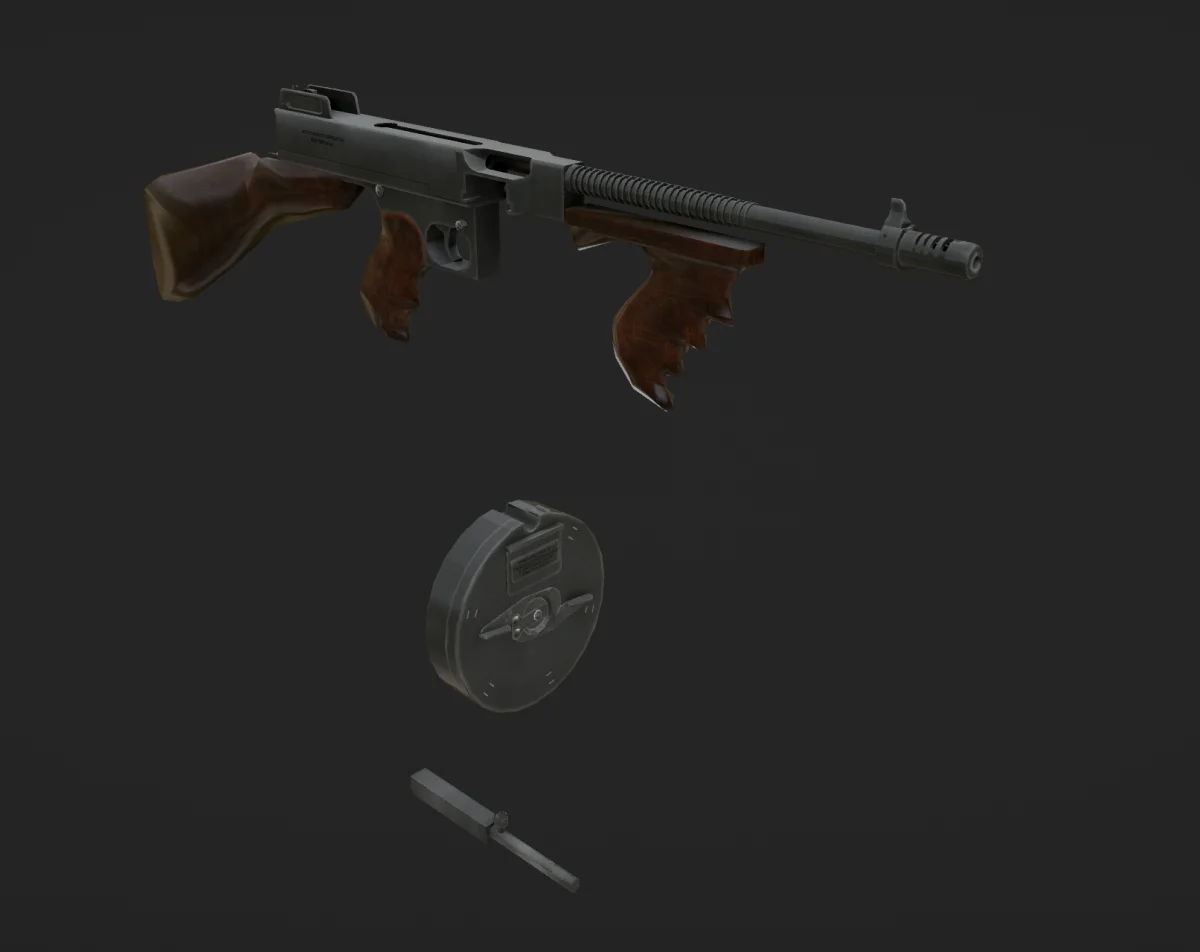
Though I'm reasonably capable of building my own from scratch i.e. here is a Thompson submachine gun (in functional parts) I created from scratch fully modelled by myself with no AI (ignore some of the normals are scuffed and need fixing):
As with some of my recent posts I've been dabbling with AI to produce models for some of the stuff I'm working on - recently used AI to generate a few weapon models as well which came out reasonably close to what I had in mind for example:
Though I'm reasonably capable of building my own from scratch i.e. here is a Thompson submachine gun (in functional parts) I created from scratch fully modelled by myself with no AI (ignore some of the normals are scuffed and need fixing):
Last edited:
Made a thing.
This is an image stitcher which follows the OpenCV library architecture, but is written in javascript and uses WebGL/CPU to accelerate the image stitching. It uses RANSAC+DLT so it's pulling out features and using those, so it will work with non-linear images (ie spherical and chromatic aberrations). This is why the 1001 pixels exist as it's warping the image to work to stitch up the image nicely. Also the time taken is because the image set can be completely unordered, hence it's using more CPU time. An option exists to use sequential stitching. Running in a VM but could run on a raspberry PI.

So there's a process this would. need for checking and coding up for the final solution but it seems fast given it's unordered RANSAC rather than a faster, simpler, phase correlation without any transformational warping or coping with multiple colour channels.
This is an image stitcher which follows the OpenCV library architecture, but is written in javascript and uses WebGL/CPU to accelerate the image stitching. It uses RANSAC+DLT so it's pulling out features and using those, so it will work with non-linear images (ie spherical and chromatic aberrations). This is why the 1001 pixels exist as it's warping the image to work to stitch up the image nicely. Also the time taken is because the image set can be completely unordered, hence it's using more CPU time. An option exists to use sequential stitching. Running in a VM but could run on a raspberry PI.
So there's a process this would. need for checking and coding up for the final solution but it seems fast given it's unordered RANSAC rather than a faster, simpler, phase correlation without any transformational warping or coping with multiple colour channels.
So this is now a full pipeline process - you can see the 9 steps in the bottom table of the console output below:

Now running and heavily using the web browser machine GPU (it's a combined CPU/GPU memory infrastructure Mac mini VM), the entire process takes 1.6 seconds. Previously just the step 6 on CPU took 5.57 seconds.
Now running and heavily using the web browser machine GPU (it's a combined CPU/GPU memory infrastructure Mac mini VM), the entire process takes 1.6 seconds. Previously just the step 6 on CPU took 5.57 seconds.
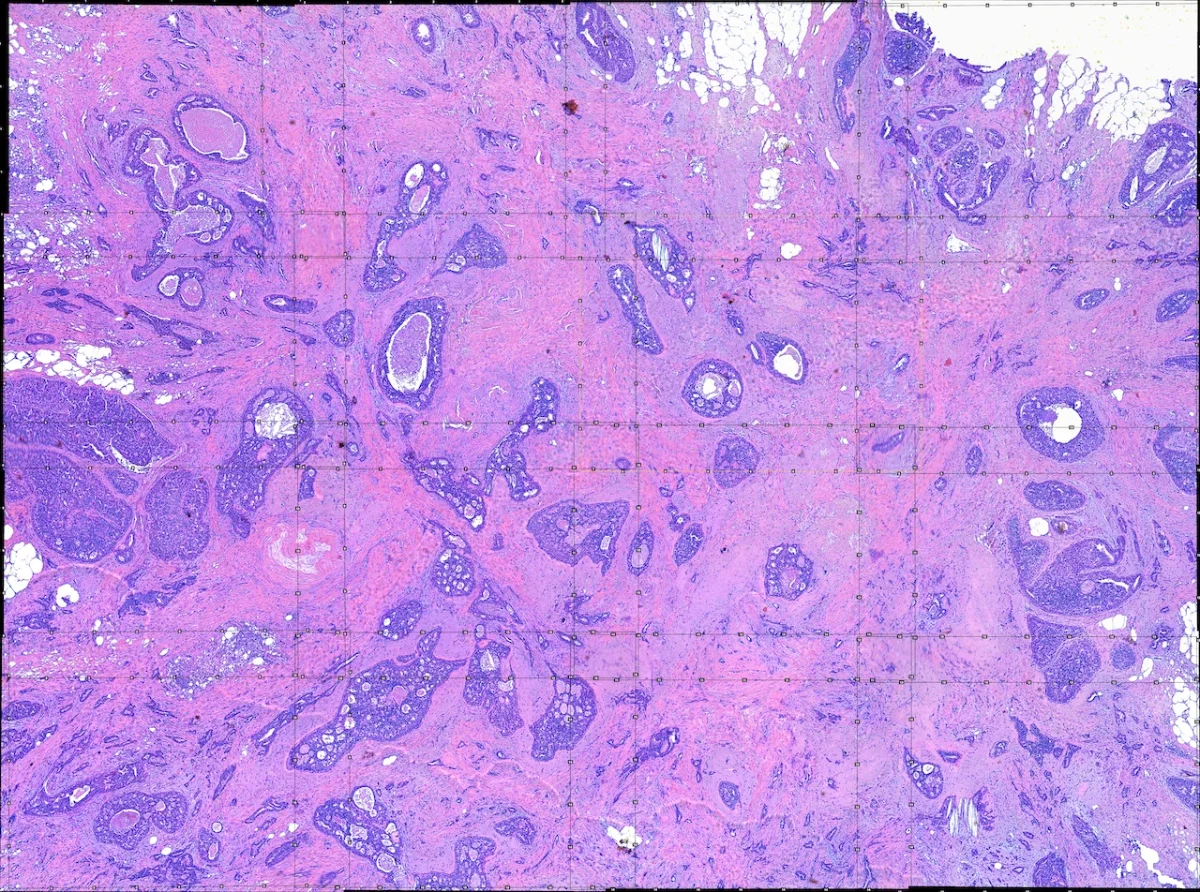
This is slowly coming together. I've another improvement coming to help identify quick registrations before it gets into attempting complex stuff. It should help prevent some of the 'ghosting' scenarios. However I've just added a debug view because it's desperately needed:

Each tile is a 9.9 megapixel image, so this 50% (ie 1/4 size) stitched image is 6822x2785px 47 MBytes for debugging...
16 tiles... this is jpegged and resized to 1280 pixels to save the forum!
Each tile is a 9.9 megapixel image, so this 50% (ie 1/4 size) stitched image is 6822x2785px 47 MBytes for debugging...
16 tiles... this is jpegged and resized to 1280 pixels to save the forum!
Last edited:
I can't claim credit for the idea, I saw it on reddit and wanted to give it a go myself.
Oh well cant seem to add an animated gif, but its an (rooted) amazon spot dashboard.
Oh well cant seem to add an animated gif, but its an (rooted) amazon spot dashboard.
Attachments



Been tinkering with an LLM-powered PDF translator. Biggest problem with it: wholesale LLM translation of a PDF does strange things to images and graphs on the page. So I'm having to deconstruct the PDF into parts which is a right pain as PDFs were never designed with that in mind

I made www.voxodius.com - completely AI assisted as some basic HTML is about as far as I ever got with programming.
Lots of fun to play!
Now working on a pixel art style diaorama builder inspired by tiny glade.
Lots of fun to play!
Now working on a pixel art style diaorama builder inspired by tiny glade.
Thats great, well done - what did you use?I made www.voxodius.com - completely AI assisted as some basic HTML is about as far as I ever got with programming.
Lots of fun to play!
Now working on a pixel art style diaorama builder inspired by tiny glade.
Started off using Opus, then let Fable 5 have a run at some of the bosses, but they weren't quite there, then Astra managed to get them to the state they are in now.Thats great, well done - what did you use?
All the audio was generated by Claude based on a "progressive dark synthwave soundtrack that increases intensity with the multiplier"
Amazing the results that can come out of it.Started off using Opus, then let Fable 5 have a run at some of the bosses, but they weren't quite there, then Astra managed to get them to the state they are in now.
All the audio was generated by Claude based on a "progressive dark synthwave soundtrack that increases intensity with the multiplier"