Why you SHOULD be using Firefox

percent key (eg %over ) has revolutionized my FF usage to quickly swap to other tabs, even in different FF windows.

With recent switch to new machine with W11, I am trying to reduce my use of chrome&opera which I had often used if I needed to log into google,
but didn't want all other google tabs in ff to then be logged in/tracked too;
a private session is a woraround, but these do not persist after restart; so having multiple FF profiles seems only solution.

I still hsave to use opera for chromecasting to a chromecast audio.

 
I have used FF for ages, but I have been using Brave instead for a few weeks and it is so much better than FF, so I
now use Brave instead and I would suggest that others should test Brave as well (everything is faster, runs smoother etc).
 
Page is the niblets for new tab page (below) and Google for homepage.

Screenshot%202026-02-16%20203620.png


Anything else is diabolical :p

Check this guy out. He uses Bing AI :p
 
Nope, don't like installing malware on my machines.


Brave is not malware, but may sometimes get a false positive for such; do double check your concerns again pls (and download the Brave installer from the main site).
 
Last edited:
Brave is not malware, but may sometimes get a false positive for such; do double check your concerns again pls (and download the Brave installer from the main site).

I don't think you got my point... When software installs other software (Brave's VPN) silently without communicating it, it is malware. When software injects affiliate links too earn the company money without communicating it, and insinuating it would go elsewhere I consider it malware. When software injects crypto-scams for said affiliate links, I consider it to be malware. Their ever increasing shift away from the 'ad-free' mentality is also laughable when people still follow and evangelise them like a cult is amusing. From their introduction to 'sponsored images' to 'deprecating' useful privacy features such as Advanced Fingerprinting they've obviously decided that being a privacy-first browser is not profitable.

But feel free to use malware if you want to.

Not even getting into the ethical and political side of the Founder, at least Mozilla had to decency to kick him out when he was unmasked.
 
Brave is not malware, but may sometimes get a false positive for such; do double check your concerns again pls (and download the Brave installer from the main site).
I posted this link last year, but you probably missed it because it's now a few pages back in this thread:
List of Brave browser CONTROVERSIES - Reddit

Put it this way, you'd have to be brave to use Brave.
 
I posted this link last year, but you probably missed it because it's now a few pages back in this thread:
List of Brave browser CONTROVERSIES - Reddit

Put it this way, you'd have to be brave to use Brave.
It's not like Firefox has a squeaky clean history either, they have to make money somehow, and Brave seems to be the least bad Chromium browser. Firefox supposedly has a lot more security issues too. I've been switching between Firefox and Brave recently after using Firefox for over 10 years, and I quite like how fast and smooth everything is in Brave.
 
It's not like Firefox has a squeaky clean history either, they have to make money somehow, and Brave seems to be the least bad Chromium browser. Firefox supposedly has a lot more security issues too. I've been switching between Firefox and Brave recently after using Firefox for over 10 years, and I quite like how fast and smooth everything is in Brave.
Oh I agree, but I think much of the badness in Firefox can be disabled, such as AI and telemetry.

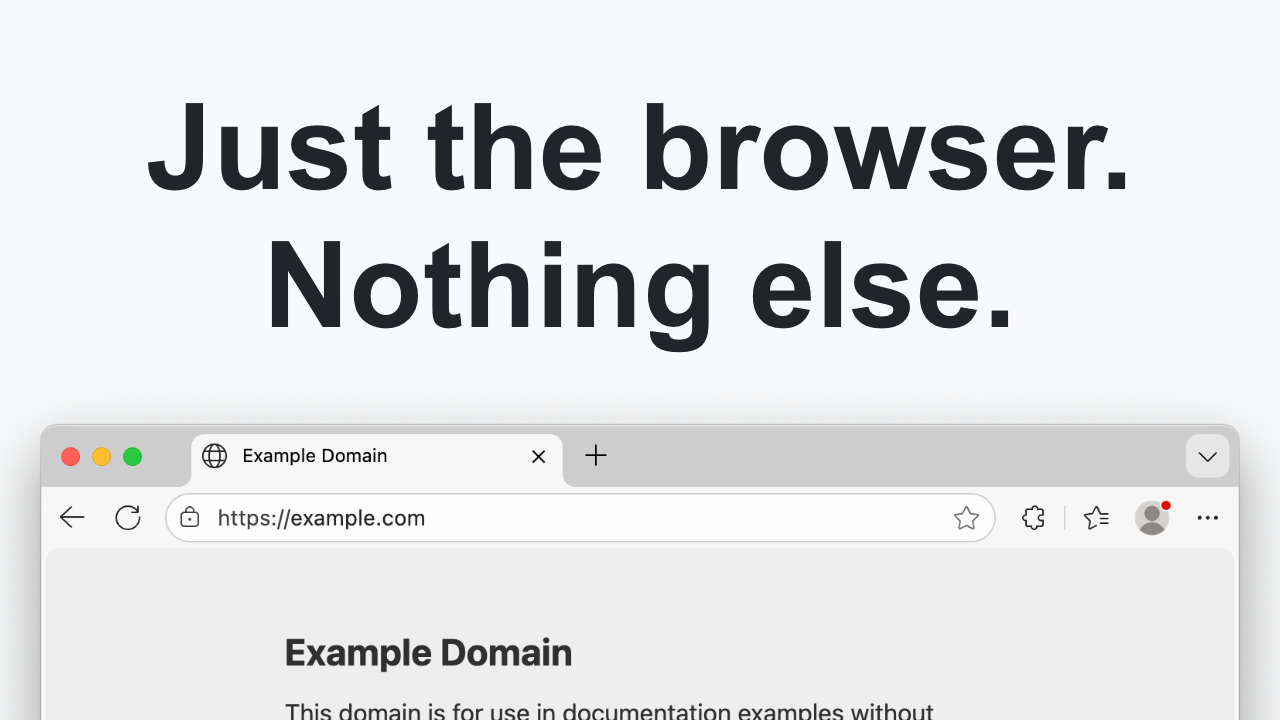
Some users might be interested in a project on GitHub, called Just the Browser, which helps disable some AI and telemetry. It can be used on Chrome, Firefox and Edge.

Just the Browser helps you remove AI features, telemetry data reporting, sponsored content, product integrations, and other annoyances from desktop web browsers. The goal is to give you "just the browser" and nothing else, using hidden settings in web browsers intended for companies and other organizations.

This project includes configuration files for popular web browsers, documentation for installing and modifying them, and easy installation scripts. Everything is open-source on GitHub.
 
Last edited:
Oh I agree, but I think much of the badness in Firefox can be disabled, such as AI and telemetry.
You can disable stuff you don't want in Brave too, I don't see a problem with them promoting their own VPN and stuff as long as it's optional. From that list of controversies I don't see anything really bad that would harm users.
 
as long as it's optional.

That's the point, it wasn't optional because they installed it without users permission. It was akin to Yahoo Toolbar. Or similar back in the day. They have a horrible habit of forcing things such as the crypto and url-injection on to people without communicating it, because they're unethical and want to earn money and only revert when it becomes public enough that a large amount of people are calling them out. How they've gained such a cult following I will bever know. The trend for software run by awful people with awful ethics being super-popular is strange.
 
Starting with Firefox 148, which rolls out on Feb. 24, you’ll find a new AI controls section within the desktop browser settings. It provides a single place to block current and future generative AI features in Firefox.

Just a reminder that the new version is due out that allows control of AI.
 
Last edited:
That's the point, it wasn't optional because they installed it without users permission. It was akin to Yahoo Toolbar. Or similar back in the day. They have a horrible habit of forcing things such as the crypto and url-injection on to people without communicating it, because they're unethical and want to earn money and only revert when it becomes public enough that a large amount of people are calling them out. How they've gained such a cult following I will bever know. The trend for software run by awful people with awful ethics being super-popular is strange.
Admittedly it's not great, but if installing a bit of inactive bloatware is the worst thing they've ever done and they quickly reversed the decision then they're not doing too badly, people love to over exaggerate and call it malware. Windows 11 comes with a ton of bloatware, I just uninstall all of it. As long as they continue to respect user privacy and the user experience is good I think I'll finally switch from Firefox because it's like getting a free computer upgrade with how much faster and smoother it feels.

Edit:
I read more about the auto installed VPN and I'm not even sure if it would qualify as bloatware as it was just a manually triggered Windows service only activated when someone purchased the VPN, not something a normal user would've even noticed and needed to uninstall. It's very disingenuous to compare it to Yahoo toolbar.

The affiliate URL injection appears to have been a genuine error that was quickly fixed, didn't compromise user privacy, and which they didn't make any money off of.
 
Last edited:
Admittedly it's not great, but if installing a bit of inactive bloatware is the worst thing they've ever done and they quickly reversed the decision then they're not doing too badly, people love to over exaggerate and call it malware. Windows 11 comes with a ton of bloatware, I just uninstall all of it. As long as they continue to respect user privacy and the user experience is good I think I'll finally switch from Firefox because it's like getting a free computer upgrade with how much faster and smoother it feels.

Edit:
I read more about the auto installed VPN and I'm not even sure if it would qualify as bloatware as it was just a manually triggered Windows service only activated when someone purchased the VPN, not something a normal user would've even noticed and needed to uninstall. It's very disingenuous to compare it to Yahoo toolbar.

The affiliate URL injection appears to have been a genuine error that was quickly fixed, didn't compromise user privacy, and which they didn't make any money off of.

That Brave link doing a lot of heavy lifting there - 'an error that could make us lots of money, suuure' you're free to defend malware all you want. If you're fine with software silently installing things without your permission then it's a free world (currently) I am not. Their privacy is also pants, their thumprinting sucks and they deprecated the actual strict thumprinting because 'reasons' - also wouldn't touch W11 with a bargepole, I have a custom debloated ISO I run when needed - but don't want to turn this thread into a war between Firefox/Brave - both have their issues, I would rather continue to use Firefox until something better comes.
 
That Brave link doing a lot of heavy lifting there - 'an error that could make us lots of money, suuure' you're free to defend malware all you want.
The explanation is believable enough and binance confirmed they didn't make any money from it. Even if it was deliberate I don't see how it would make it malware as it wouldn't harm the user, and trying to classify it as such only diminishes the meaning of the word.

If you're fine with software silently installing things without your permission then it's a free world (currently) I am not.
Intent is important, and I fail to see the supposedly bad intentions by installing a manually triggered windows service for their VPN to function when purchased.

Their privacy is also pants, their thumprinting sucks and they deprecated the actual strict thumprinting because 'reasons'
How is their privacy worse than Firefox? I tested it on https://coveryourtracks.eff.org/ and it had the same bits of identifying information as Firefox, but it's probably slightly better overall because some of it was randomized. They clearly explained the reason for removing strict fingerprinting mode in that reddit thread, it broke too many websites and such a small percentage of people used it that it had the opposite effect and made them more identifiable.
 
They clearly explained the reason for removing strict fingerprinting mode in that reddit thread, it broke too many websites and such a small percentage of people used it that it had the opposite effect and made them more identifiable.

One last response on this. The 'percentage' of people who 'used' it - is anomolous as most people who used it would have disabled any and all telemtry identifying what/where/why/when they were using in terms of fingerprinting because they were more privacy focused. Indeed if they could tell how many people were using it regardless of settings then they had anti-privacy telemetry (not saying they did)
 
Yes, I missed that link, so ty for the info..; I'm going back to FF and will take another look at better browsers.

TY

At the moment I prefer Brave. It's faster and ad blocking is better, especially on YouTube. The fud about malware and privacy is very much overstated IMO. Each to their own.

That said this is "Love Firefox" thread. You're only going to get one answer here. So you've posted in the wrong thread about Brave.

FF a decent browser. But It's always worth giving all browsers a test drive now and then to see what's new. I flip between a few of them depending what I'm doing..


Firefox 148 release binaries are now available ahead of the official release announcement on Tuesday. Most notable is the new AI controls found with Firefox 148 for those wishing to disable Firefox's growing AI capabilities.
 
Last edited:
Back
Top Bottom